
Edward Onslow-Ford
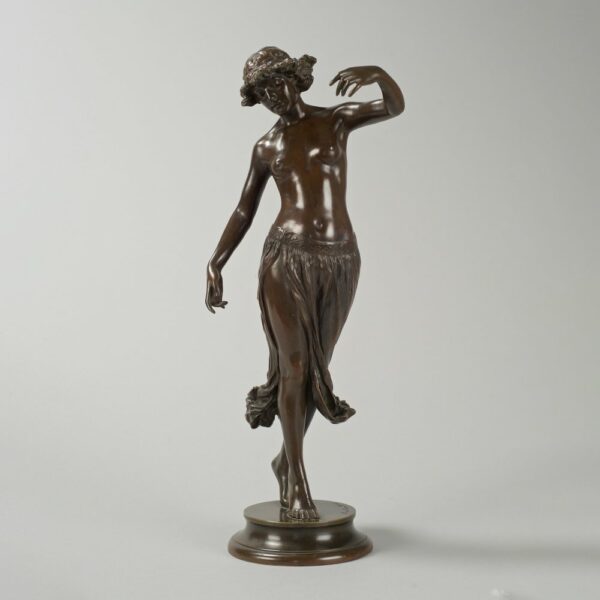
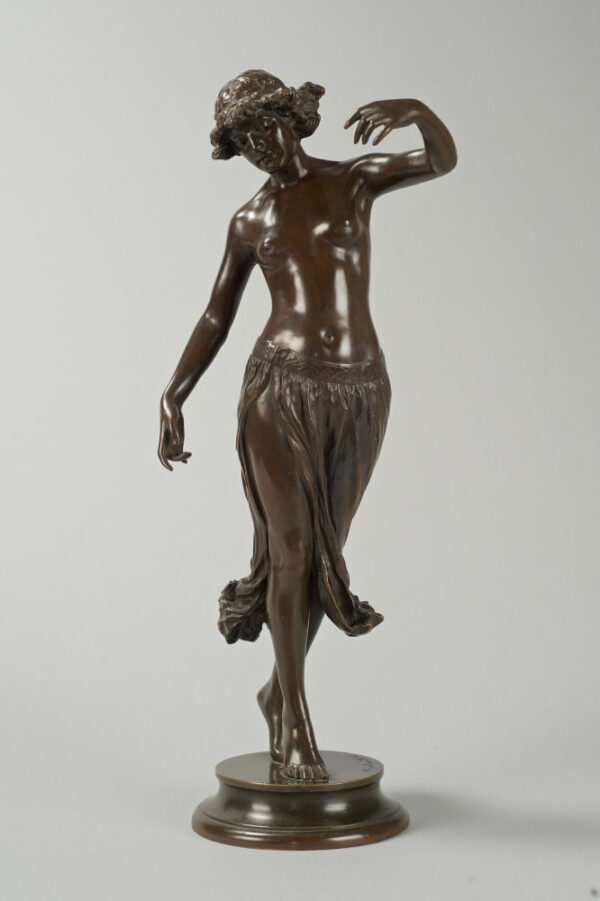
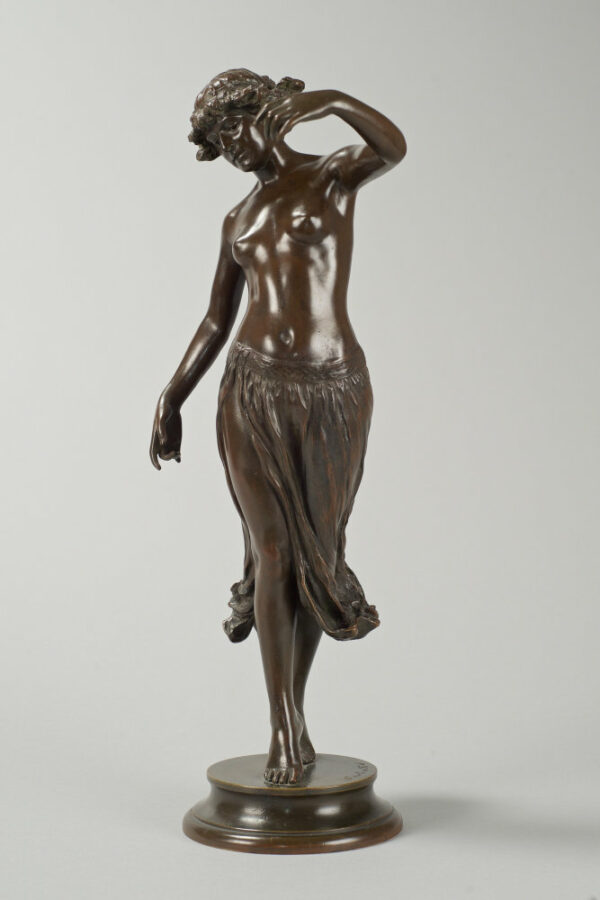
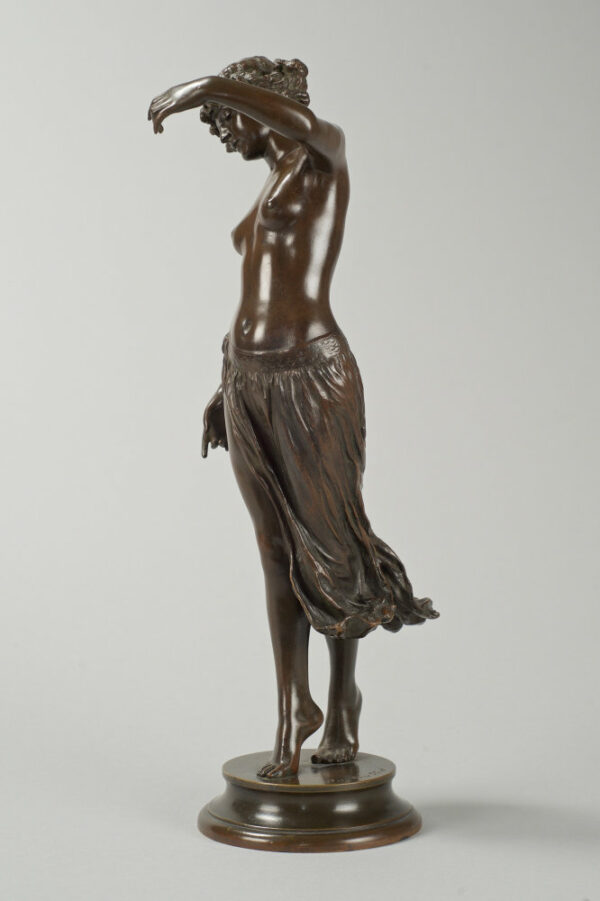
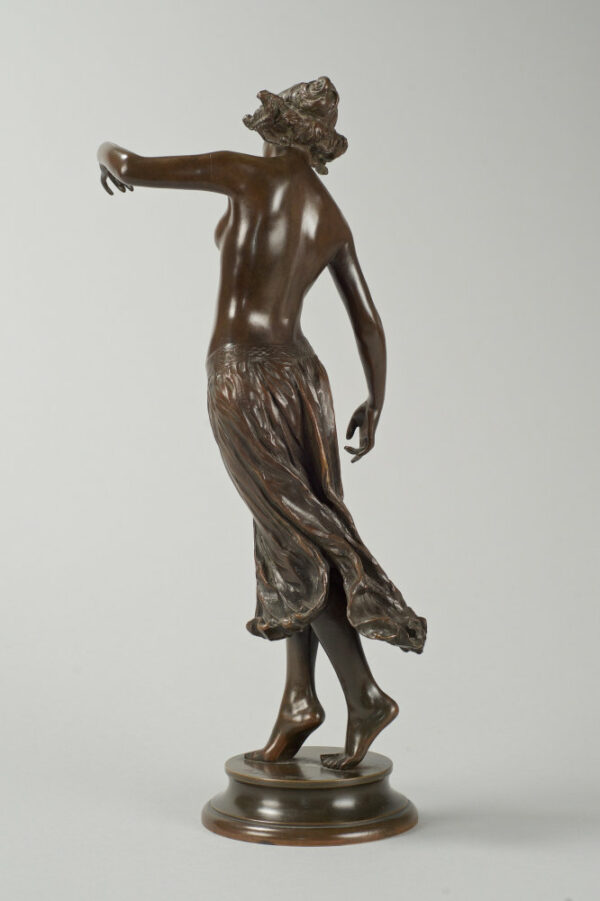
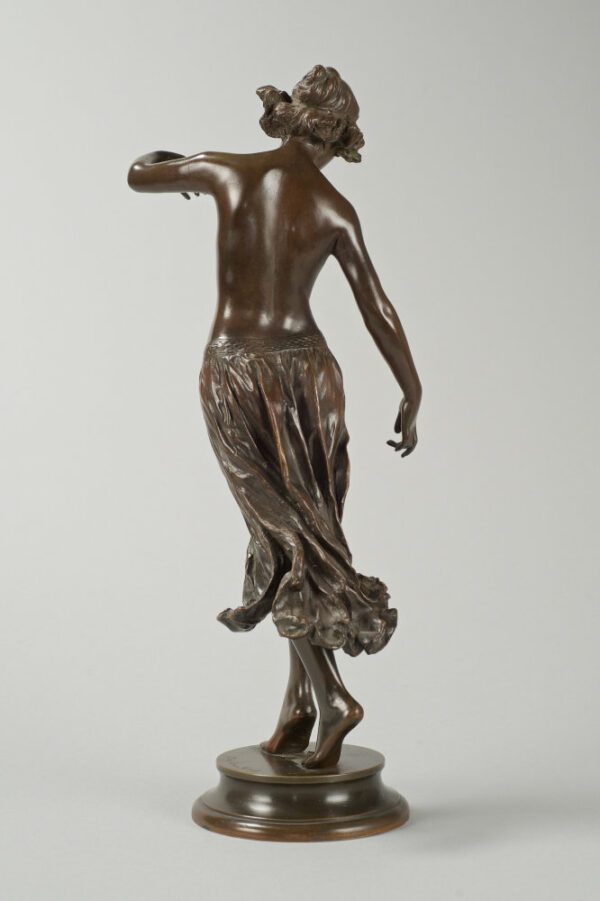
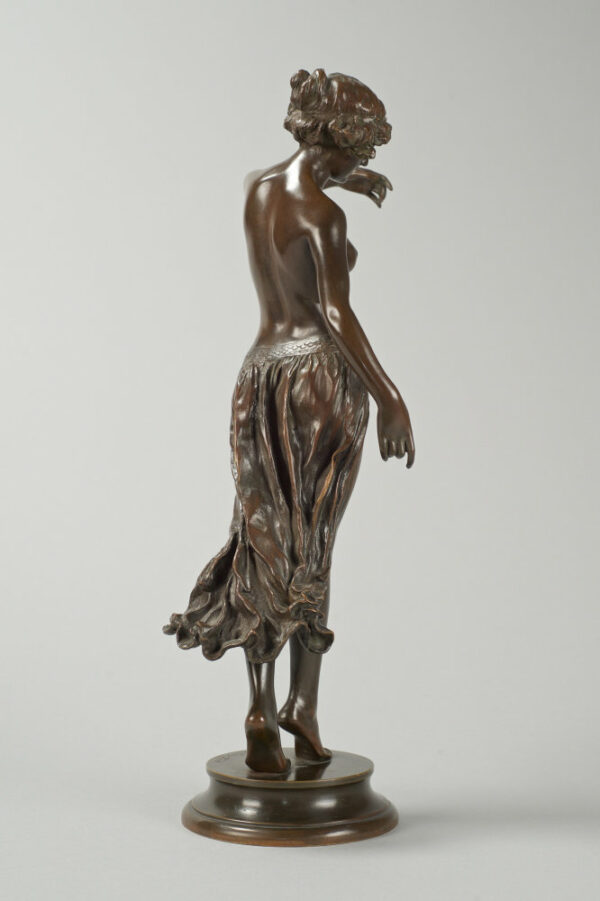
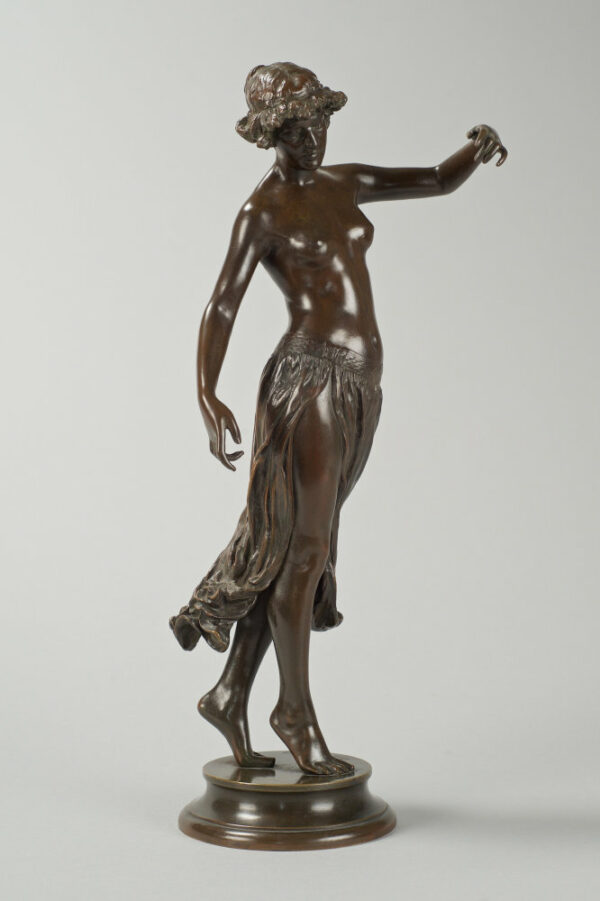
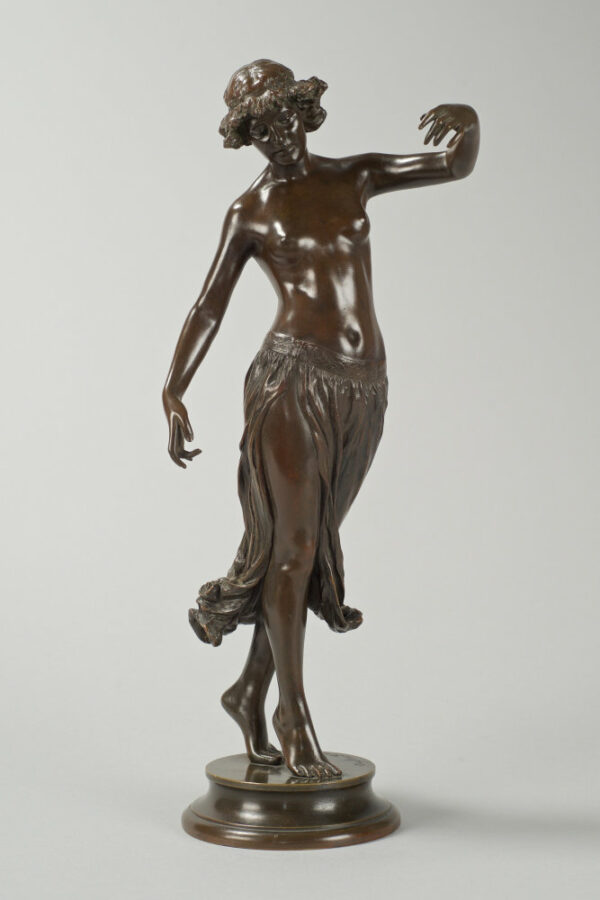
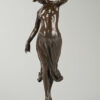
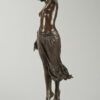
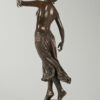
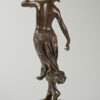
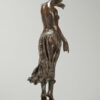
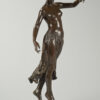
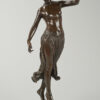
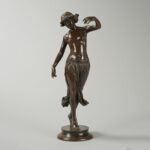
Dancing
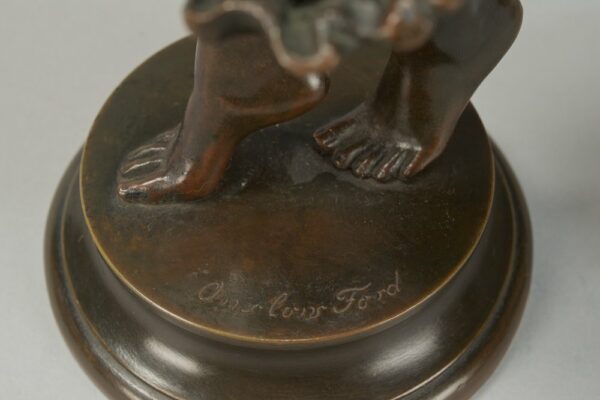
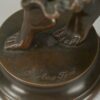
Signed Onslow Ford
Conceived and cast circa 1890
Bronze
Height: 13.7″ (34.8 cm)
ABOUT THE ARTWORK
Edward Onslow Ford was born in London in 1852. Unlike many of his contemporaries, the artist initially studied in Europe. At the age of 18, he studied painting for one year in Antwerp at the Koninklijke Academie voor Schone Kunsten. He was then encouraged by one of his professors, Michael Wagmüller, to take up sculpture at the Akademie der Bildenden Künste in Munich.
Ford returned to London with his newly-wed wife, Anne Gwendoline von Kreuzer, in 1874. Ten years later, the sculptor took a studio opposite Alfred Gilbert in Fulham and they became firm friends, sharing their European experiences and experimenting with the cire perdue method of casting.
Having established his practice as a portrait sculptor, it was only in 1884 that Ford plead his allegiance to the New Sculpture movement. In that year, Linus was exhibited at the Royal Academy together with Rodin’s Age of Bronze, which was first created in 1876 and made the fortunes of the master in Paris. As well as deriving inspiration from the French master’s composition, Linus also demonstrated Ford’s ability to assimilate the contemporary English taste, imbuing his model with mythological references.
In the 1880s and 1890s, Ford had a number of successes at the Royal Academy. His models Folly (1886), Dancing and Music (1890), The Singer (1889) Peace (1891) and Applause (1893) set a new standard for the representation of female subjects in the late-Victorian period and are some of the artist’s most accomplished works. In particular, Singer and Applause (now at TATE Britain) are agreed to be two of the best examples of 19th-century mixed media sculpture.
The success Ford received at the Royal Academy attracted many commissions for monuments and public works. Amongst these are the monument to General Gordon (1890), which depicts the distinctive general proudly sat astride a camel. While the piece’s composition is particularly impressive, it is the Shelley Memorial (1892) at University College, Oxford, which has been considered by many Ford’s most exceptional memorial sculpture.
In Ford’s original model for Dancing, conceived as a pendant to Music (1890), the half-nude figure wears a large ornamental headdress with two wings. This was illustrated in the 1890 edition of the Magazine of Art, where the author suggests that the headdress was inspired by Alfred Gilbert’s Enchanted Chair (1886). This model was later exhibited at the Fine Art Society in 1902. Another life-size cast of the work, without the headdress, is in the collection of the Lady Lever Art Gallery in Liverpool. The present model is a reduction of the Lady Lever version, with the position of the left hand differing slightly.
As is typical in Ford’s work, the dainty, idealised figure is left free from any classical connotations or mythological themes. The graceful swooping of the dancer’s arms and her delicate posture merely serve to illustrate the movement and joys of dance itself, rather than answering a specific iconographic rule. The result is a charming and elegant piece, whose compositional lightness is of the highest quality in late-Victorian sculpture.

 English
  Chinese