
爱德华·昂斯洛-福特
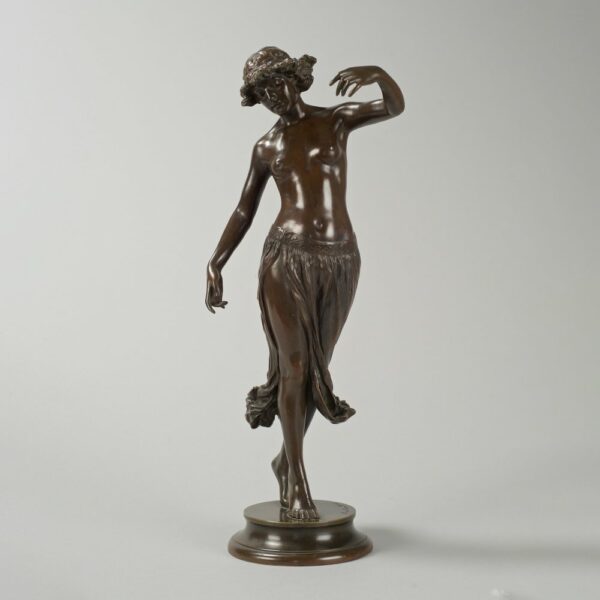
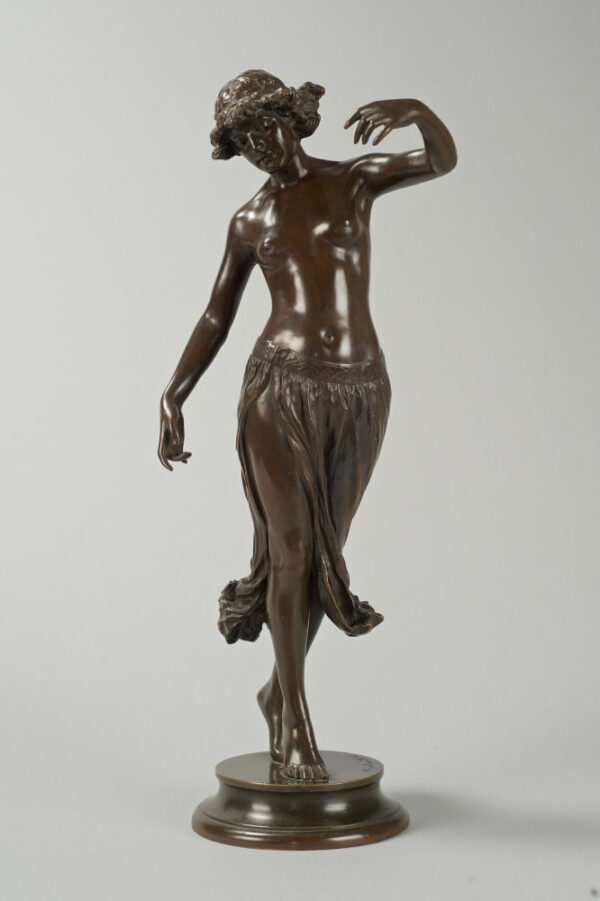
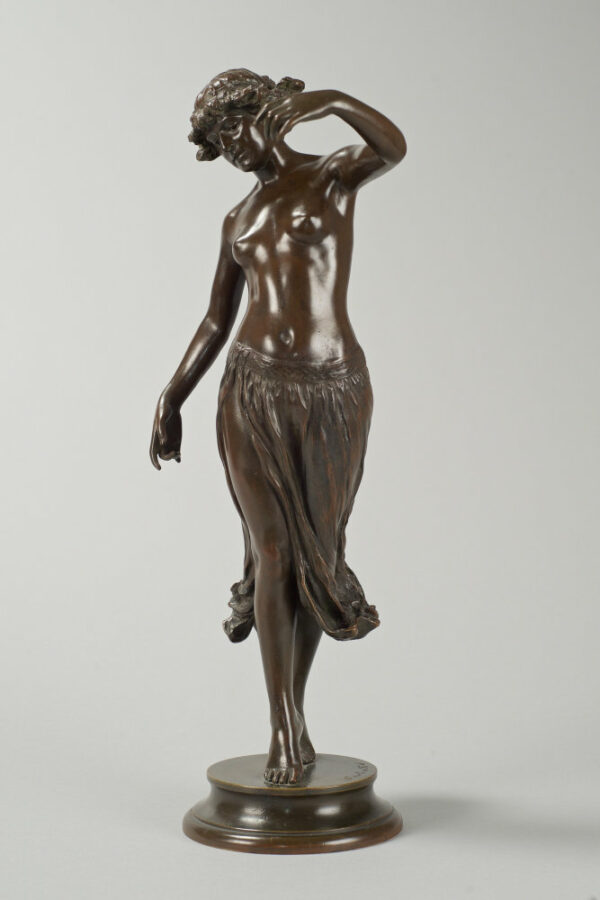
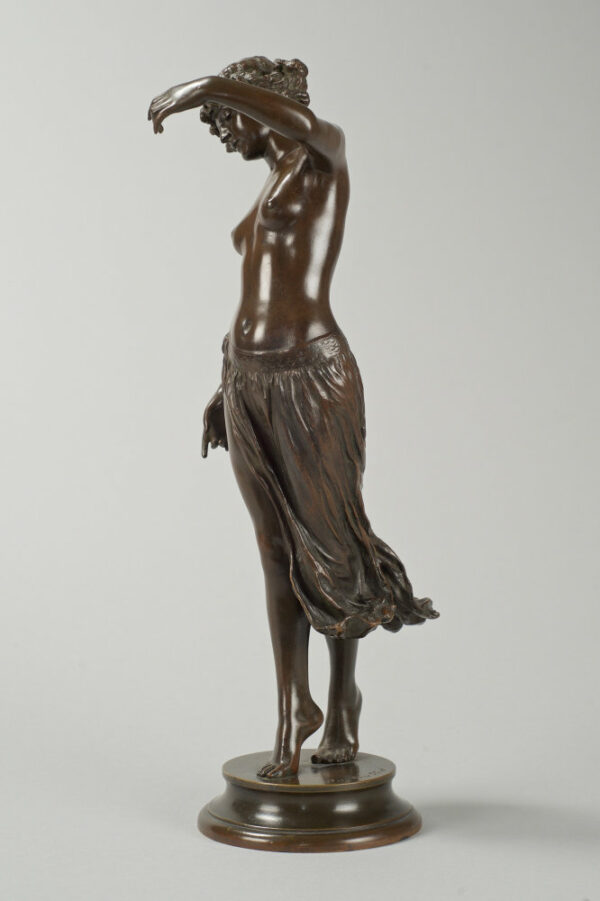
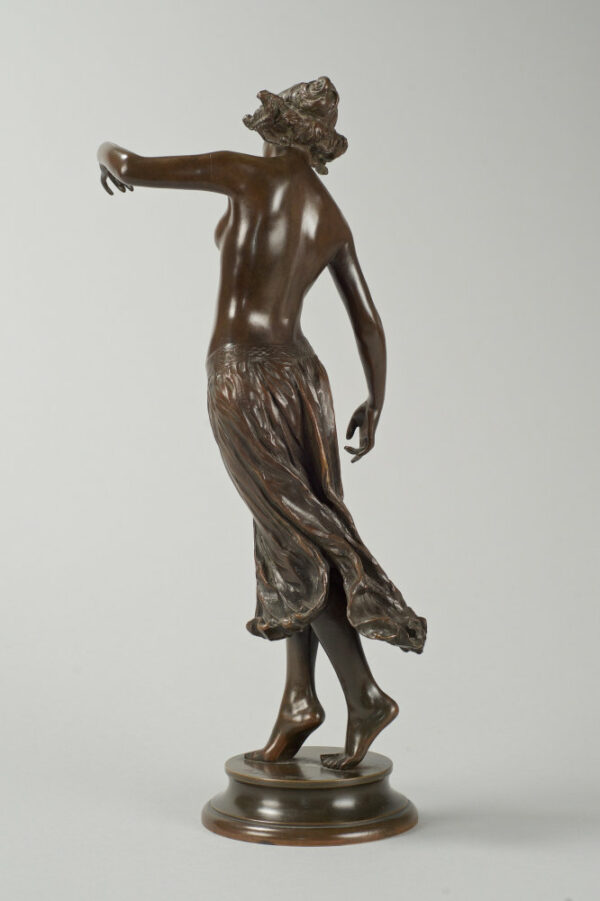
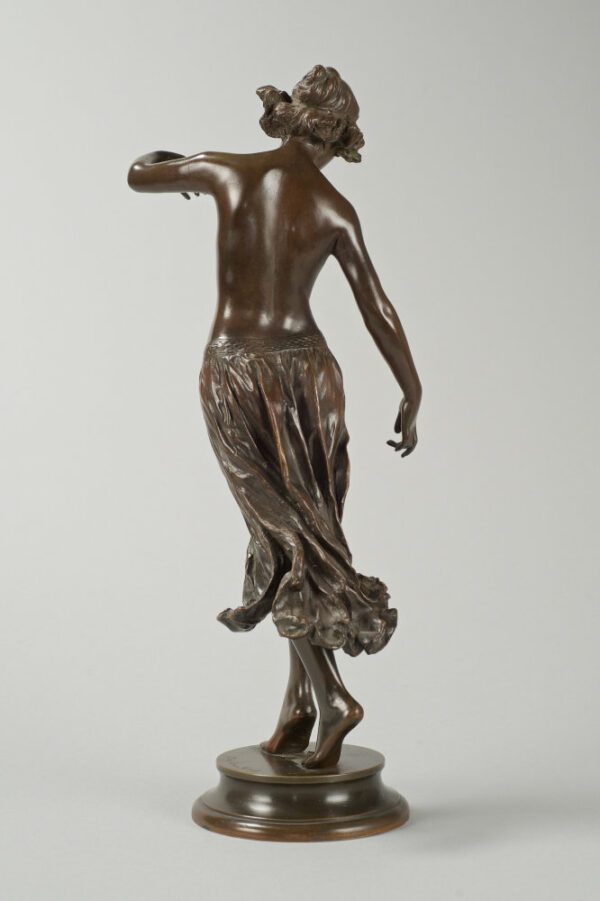
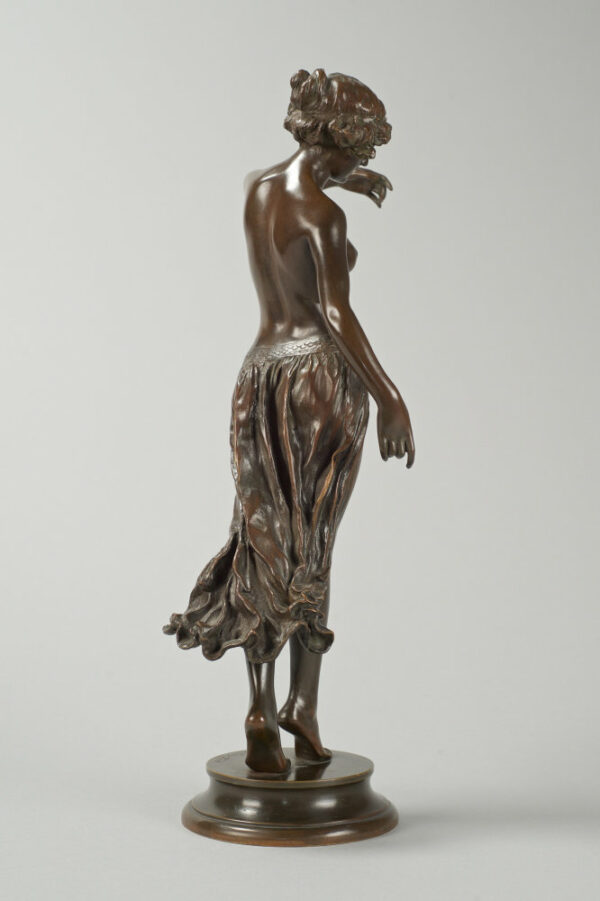
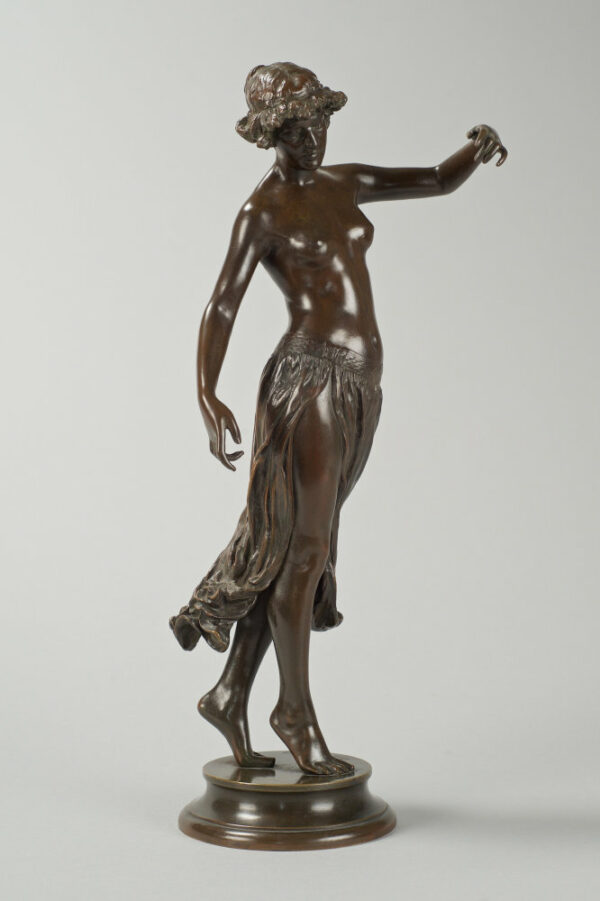
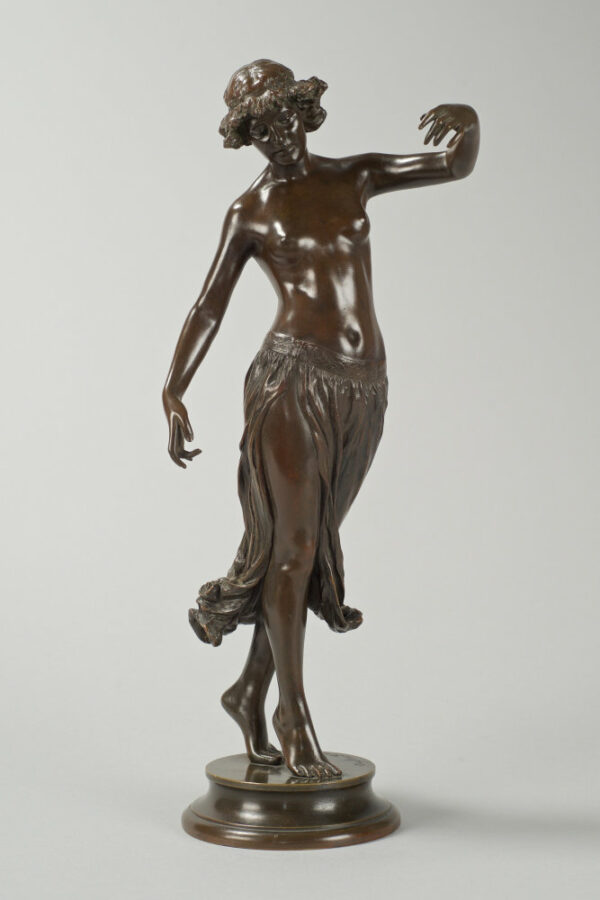
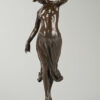
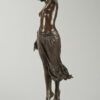
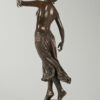
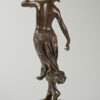
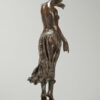
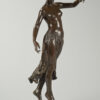
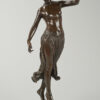
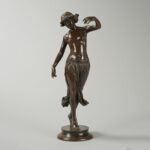
跳舞
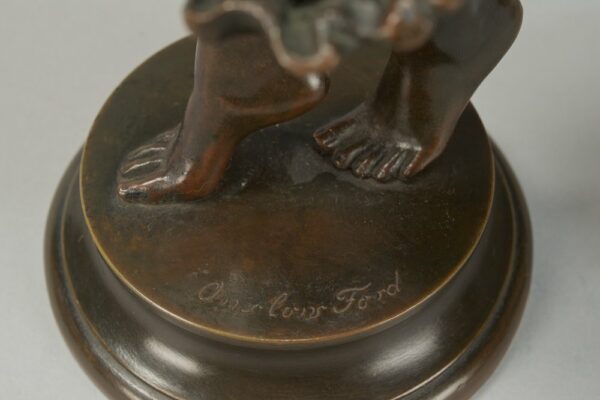
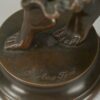
签名的 Onslow Ford
构思和铸造时间约为 1890 年
青铜
高度:13.7 英寸(34.8 厘米)
关于艺术品
Edward Onslow Ford was born in London in 1852. Unlike many of his contemporaries, the artist initially studied in Europe. At the age of 18, he studied painting for one year in Antwerp at the Koninklijke Academie voor Schone Kunsten. He was then encouraged by one of his professors, Michael Wagmüller, to take up sculpture at the Akademie der Bildenden Künste in Munich.
Ford returned to London with his newly-wed wife, Anne Gwendoline von Kreuzer, in 1874. Ten years later, the sculptor took a studio opposite Alfred Gilbert in Fulham and they became firm friends, sharing their European experiences and experimenting with the cire perdue method of casting.
Having established his practice as a portrait sculptor, it was only in 1884 that Ford plead his allegiance to the New Sculpture movement. In that year, 莱纳斯 was exhibited at the Royal Academy together with Rodin’s Age of Bronze, which was first created in 1876 and made the fortunes of the master in Paris. As well as deriving inspiration from the French master’s composition, 莱纳斯 also demonstrated Ford’s ability to assimilate the contemporary English taste, imbuing his model with mythological references.
在 19 世纪 80 年代和 90 年代,福特在皇家艺术学院取得了许多成功。他的模型 蠢事 (1886), 跳舞 和 音乐 (1890), 歌手 (1889) 和平 (1891年) 掌声 (1893 年)为维多利亚晚期女性题材的描绘树立了新标准,是艺术家最杰出的作品之一。尤其是 歌手 和 掌声 (now at TATE Britain) are agreed to be two of the best examples of 19日-century mixed media sculpture.
The success Ford received at the Royal Academy attracted many commissions for monuments and public works. Amongst these are the monument to General Gordon (1890), which depicts the distinctive general proudly sat astride a camel. While the piece’s composition is particularly impressive, it is the Shelley Memorial (1892) at University College, Oxford, which has been considered by many Ford’s most exceptional memorial sculpture.
在福特最初的模型中 跳舞, conceived as a pendant to 音乐 (1890), the half-nude figure wears a large ornamental headdress with two wings. This was illustrated in the 1890 edition of the Magazine of Art, where the author suggests that the headdress was inspired by Alfred Gilbert’s 魔法椅 (1886 年)。该模型后来于 1902 年在美术协会展出。利物浦的 Lady Lever 美术馆收藏了另一尊真人大小的模型,没有头饰。本模型是 Lady Lever 版本的缩小版,左手的位置略有不同。
正如福特作品的典型特征一样,这个精致、理想化的人物没有任何古典内涵或神话主题。舞者手臂的优雅摆动和她精致的姿势只是为了展示舞蹈本身的运动和乐趣,而不是遵循特定的图像规则。最终的作品是一件迷人而优雅的作品,其构图的轻盈感在维多利亚晚期雕塑中达到了最高水平。

 Chinese
  English