








Albert Toft
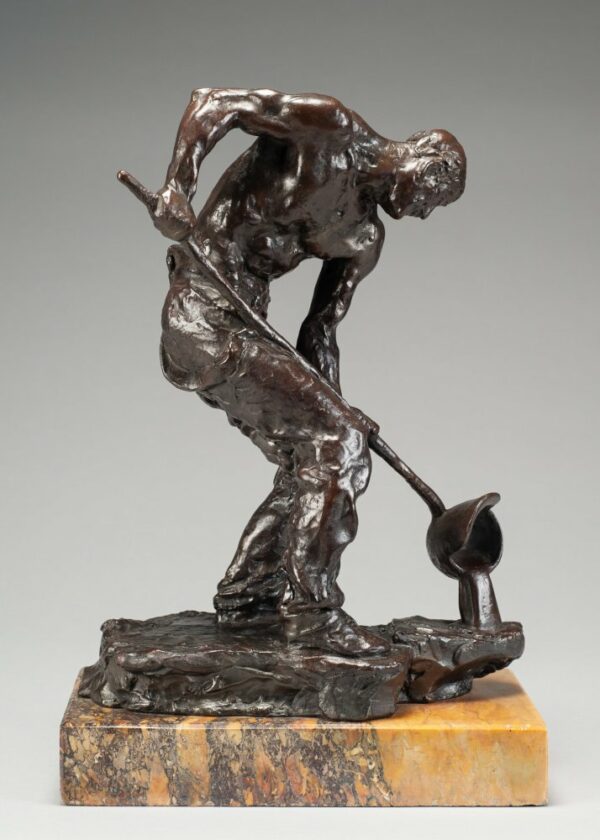
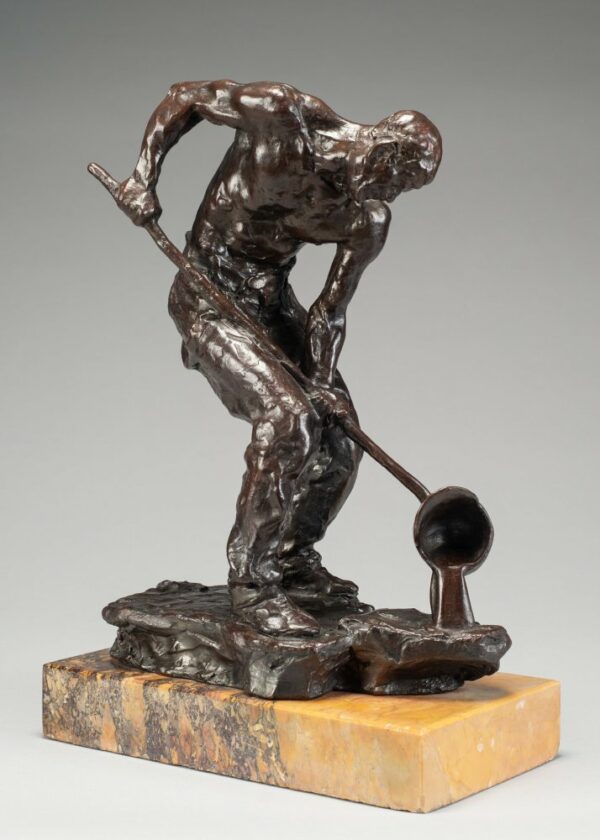
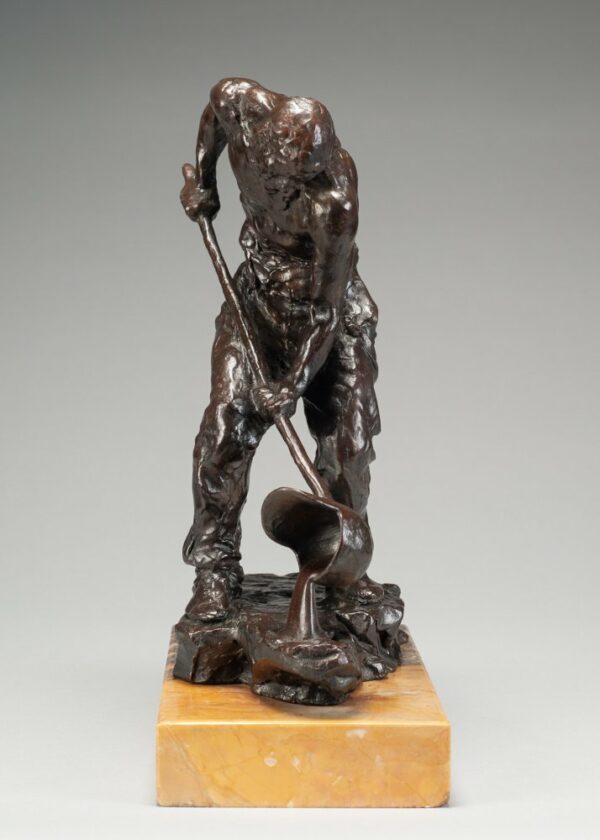
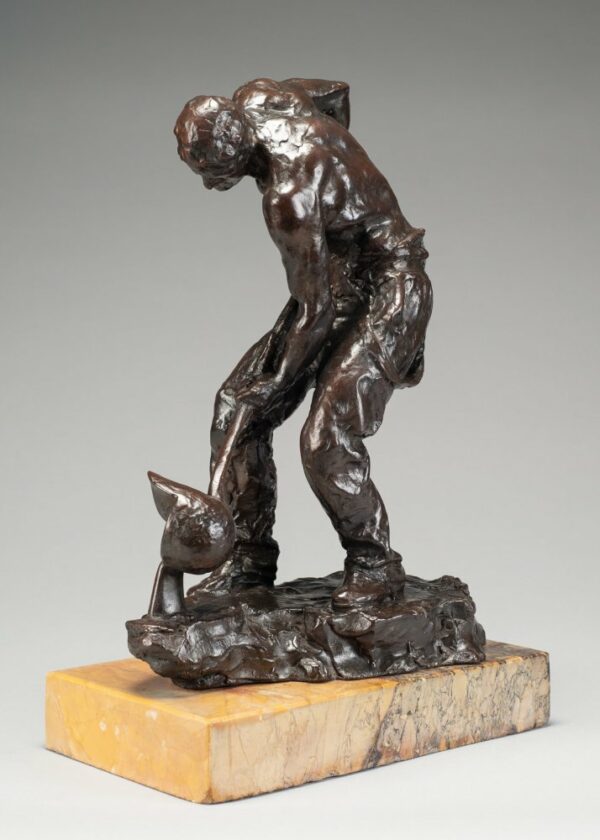
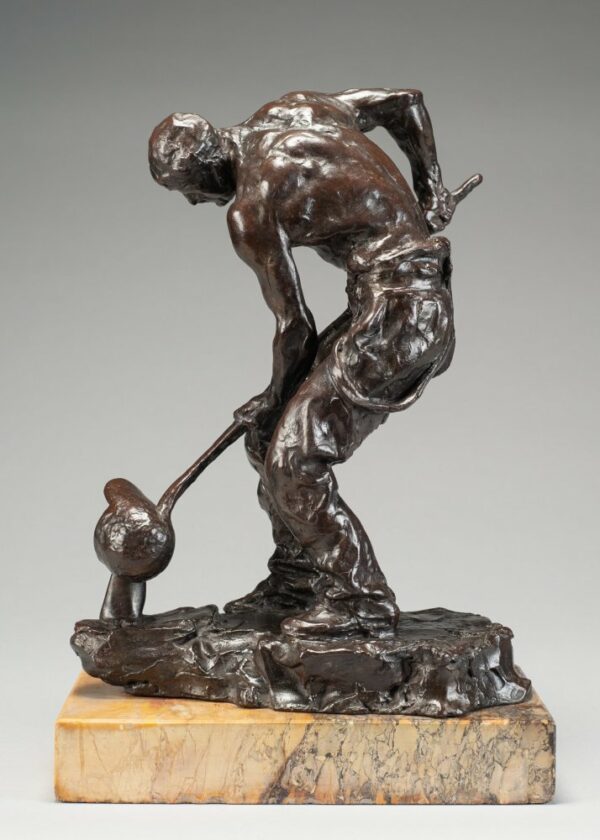
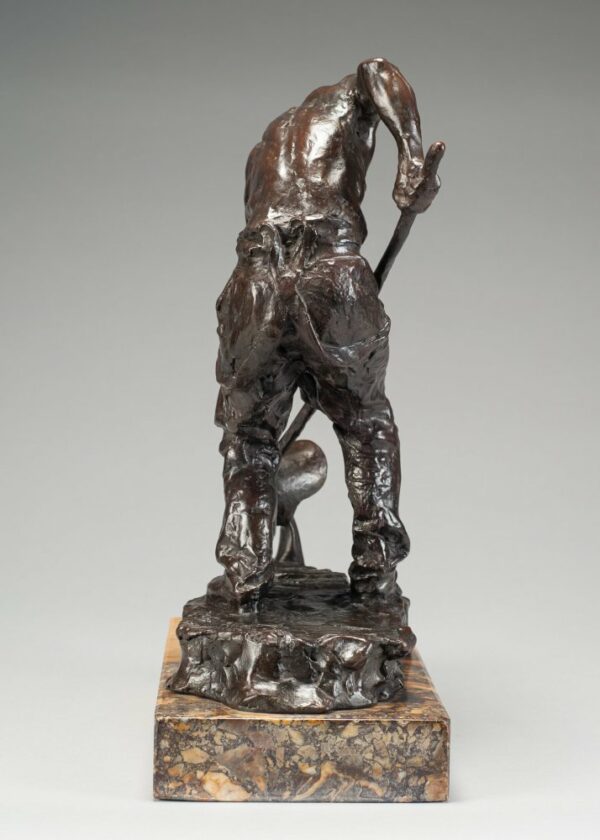
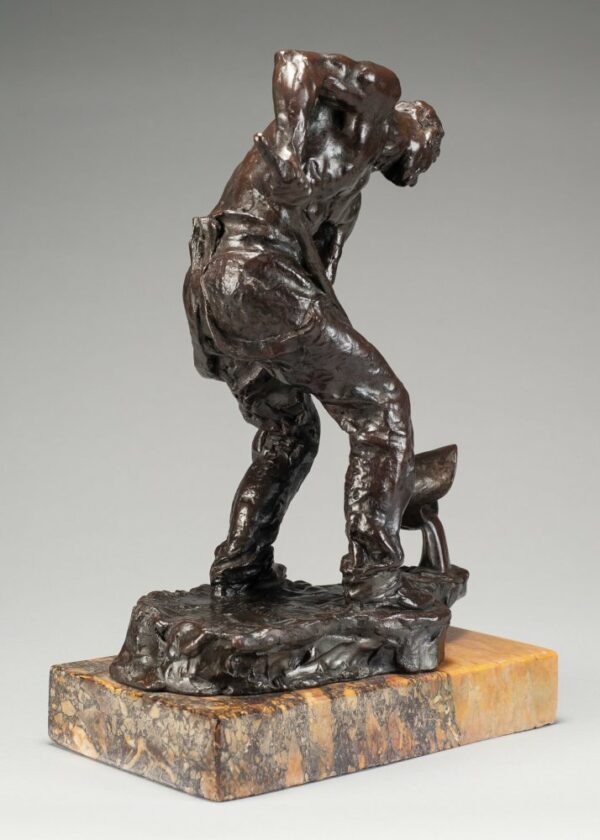
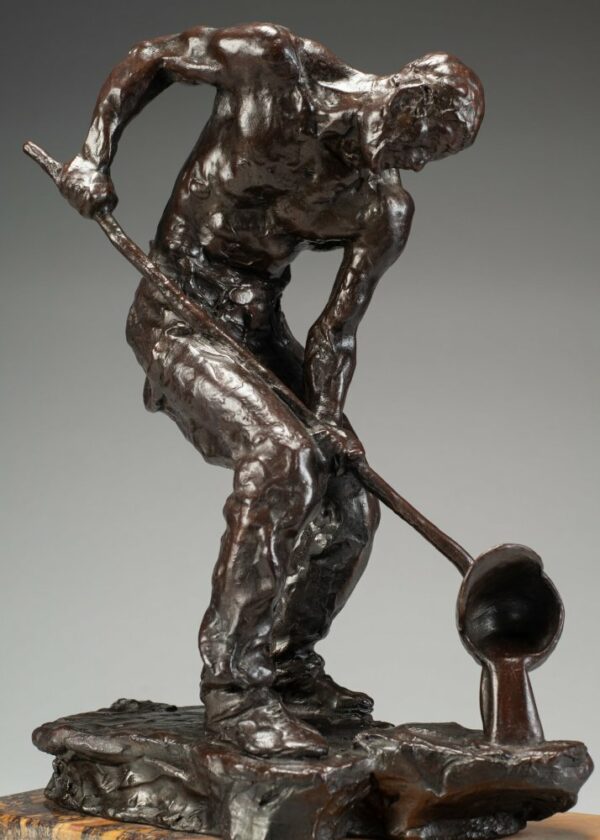
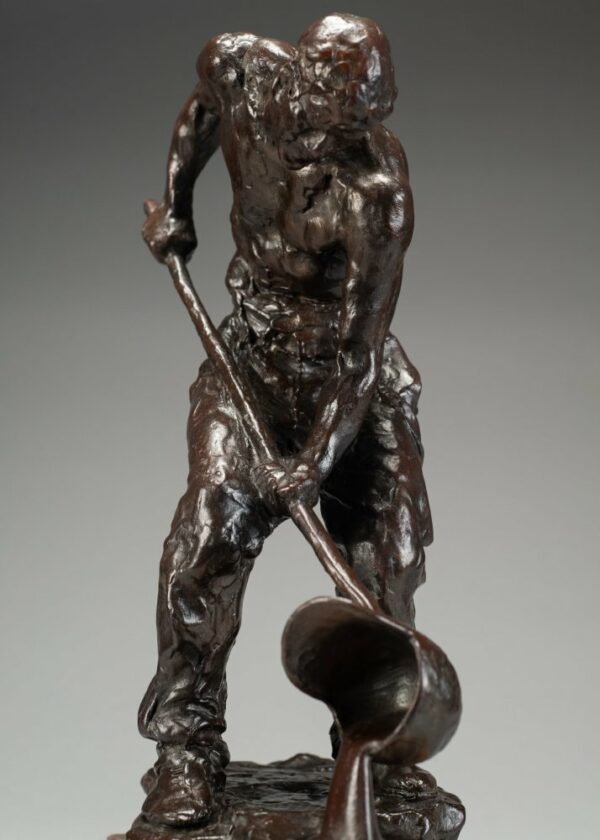
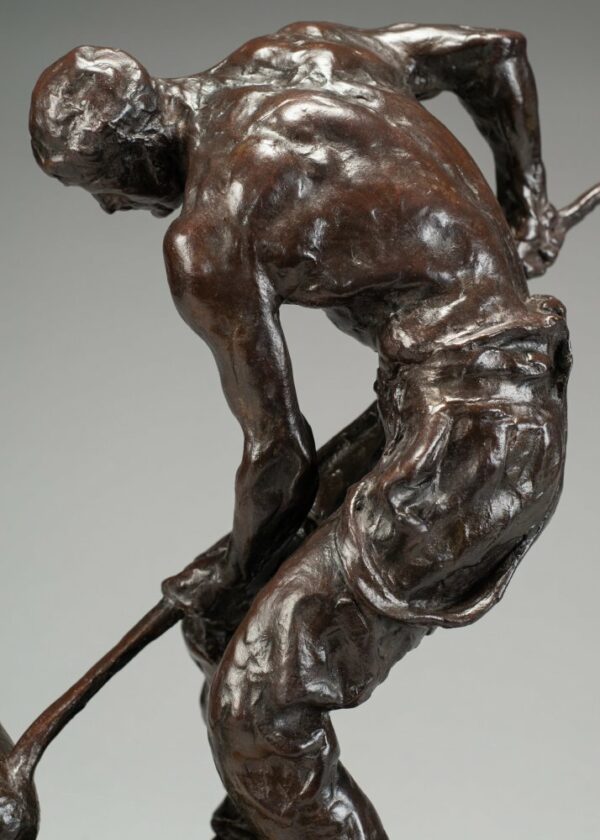
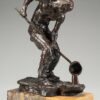
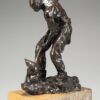
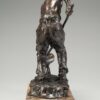
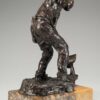
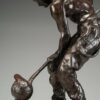
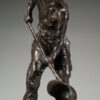
Metal Pouring, 1913
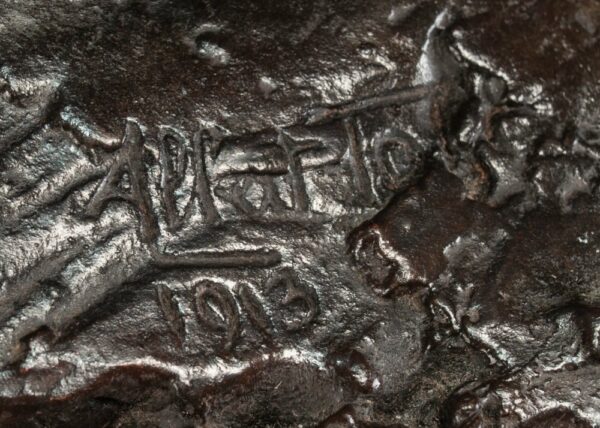
Signed and Dated
Bronze on a marble base
Height: 14 1/2″ (36.5 cm)
Conceived and cast 1913
ABOUT THE ARTWORK
Albert Toft was one of the most productive artists forming the second generation of the New Sculpture movement. His network of friendships and collaborations captures the close-knit relationships that shaped the development of the period, being a close friend of Alfred Gilbert, Frederic Leighton, and the painter John William Waterhouse, among others. As a sculptor, he contributed to the development of the discipline in England by mingling the style of his teacher Édouard Lantéri with the more symbolist leanings of Gilbert.
Toft was born near Birmingham in 1862, where his father worked as a modeller for the electroplating firm Elkington & Co. During his teenage years, he was apprenticed at the world-renowned pottery manufacturers Wedgwood, while also taking evening classes at the Hanley and Newcastle-under-Lyme art schools.
In 1880 he received a scholarship to study at the National Art Training School in London, where he was awarded silver medals for his second-, and third-year submissions. It was here that Toft would learn from the renowned sculptor Lantéri, whose influence, along with that of Dalou, can be seen in Toft’s best-known ‘ideal works’, such as Fate-Led (1892) and The Spirit of Contemplation (1901).
Toft exhibited at the Royal Academy from 1885 with numerous successes. Some of his most notable works are The Sere and Yellow Leaf (1892), Spring (1897), The Spirit of Contemplation(1901) and The Metal Pourer (1915). In 1915 his sculpture The Bather was purchased using the Royal Academy’s Chantrey Fund and is currently part of the TATE collection.
Toft was elected as a member of the Art Workers Guild in 1891. He became a Fellow of the Royal Society of British Sculptors in 1938.
The influence for the present work can perhaps be more accurately traced back to Toft’s childhood in Birmingham, where the burgeoning economy had been fuelled by metalworking since the late 18th century. Indeed, the early 19th century had seen this trend continue, with demand increasing for the production of train carriages, along with advances in the manufacture of lead and copper piping. By 1889 Birmingham had officially been named a city and was quickly taking its place at the heart of industrial Britain.
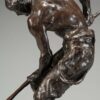
The present work depicts a labourer pouring molten metal, a process that would have been carried out in factories throughout the North of England during this time. The sculpture does not depict the subject as a heroic figure, but rather a muscular and rugged individual, very much a product of the new industrialised world. Other examples of this sculpture can be found in the collections of the Art Gallery of New South Wales, Australia, and the National Museum of Wales. The latter of these was given as a gift to the Museum by the sculptor Sir William Goscombe John in 1928 and is currently on display. Toft also exhibited a 6-foot-high version of the work at the Royal Academy, England in 1916.


 English
  Chinese