


William Turnbull
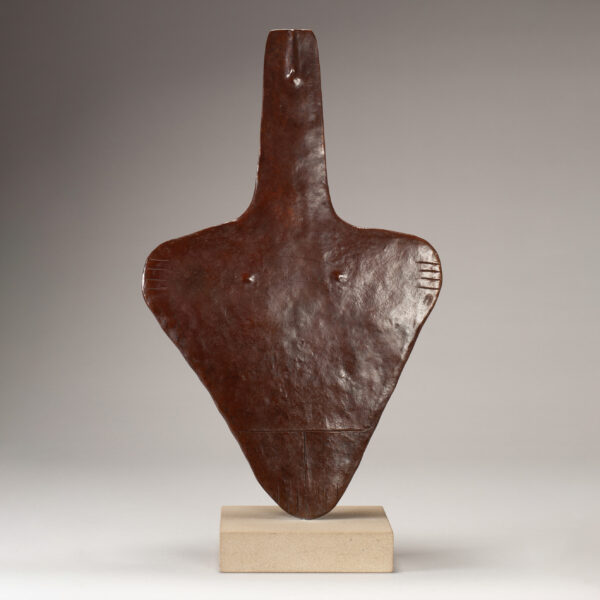
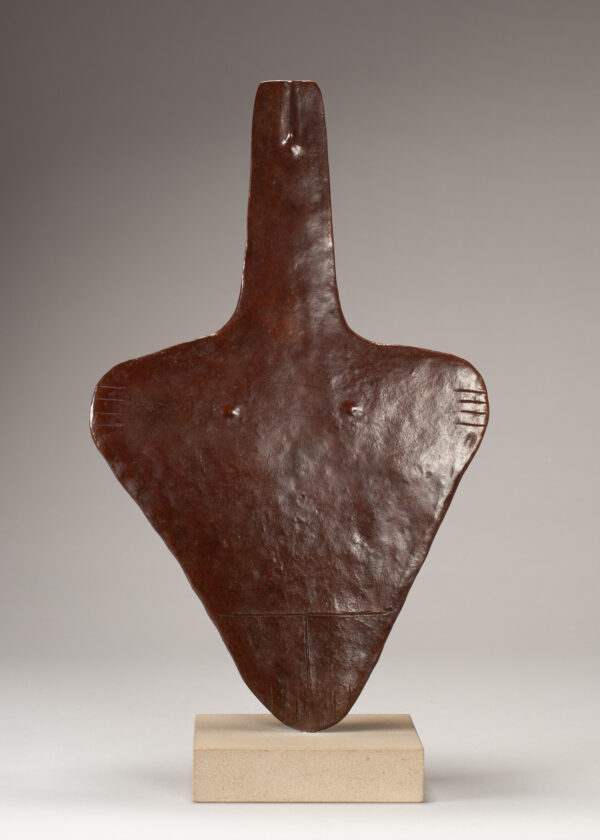
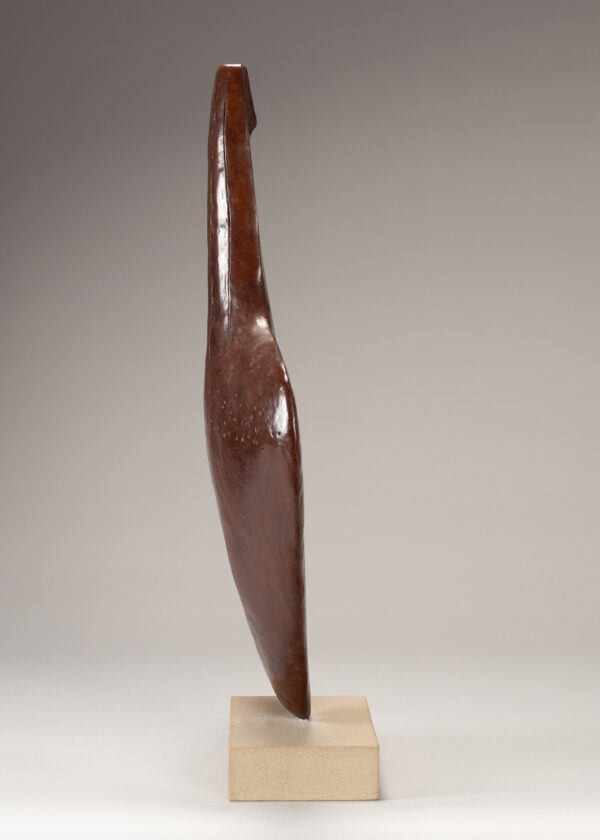
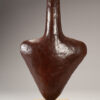
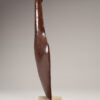
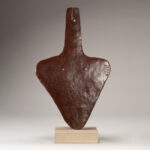
Metamorphic Venus
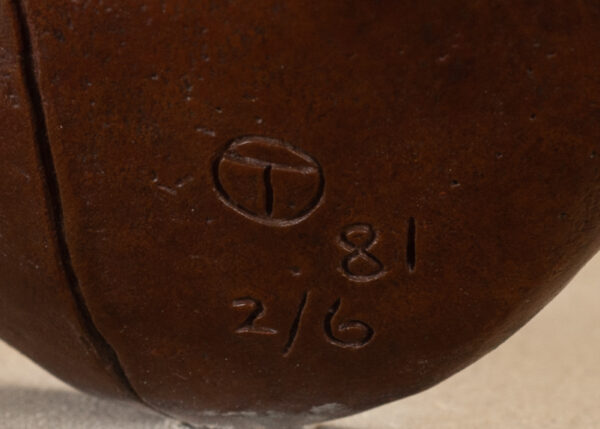
Stamped with the artist’s monogram, dated 81 numbered 2/6
Bronze with a dark brown-red patina
Height: 20 5/8″ (52.4 cm)
Edition 2 of 6
Conceived 1981, cast within the artist’s lifetime
ABOUT THE ARTWORK
William Turnbull was born in Dundee in 1922. He initially worked as a pilot in the RAF in 1941 and turned down a lucrative offer to become a commercial pilot in order to pursue his artistic career. In 1946, he enrolled in the Slade School of Fine Art, where he met Paolozzi who became a close friend.
During his time in Paris from 1948 to 1950, he formed connections with artists like Giacometti and Brancusi while also travelling widely. His inaugural solo exhibition took place at the Hanover Gallery in 1950, where he showcased his sculptures. He later displayed his work in various London galleries, including Waddington from 1967 onward. His art was featured in prestigious events such as the Venice Biennale in 1952 and 1957, as well as the Carnegie International in Pittsburgh in 1958 and 1961. In 1973, at the age of 51, Turnbull was awarded a major retrospective at the Tate Gallery.
Turnbull began to make Idols in the mid-1950s. They had a primal essence that evoked works from other civilisations. At the British Museum, Turnbull had studied Cycladic and African sculpture, as well as utilitarian objects, such as spoons, which possessed symbolic significance. After his retrospective in 1973, he returned to these motifs but only began casting these works in 1979.
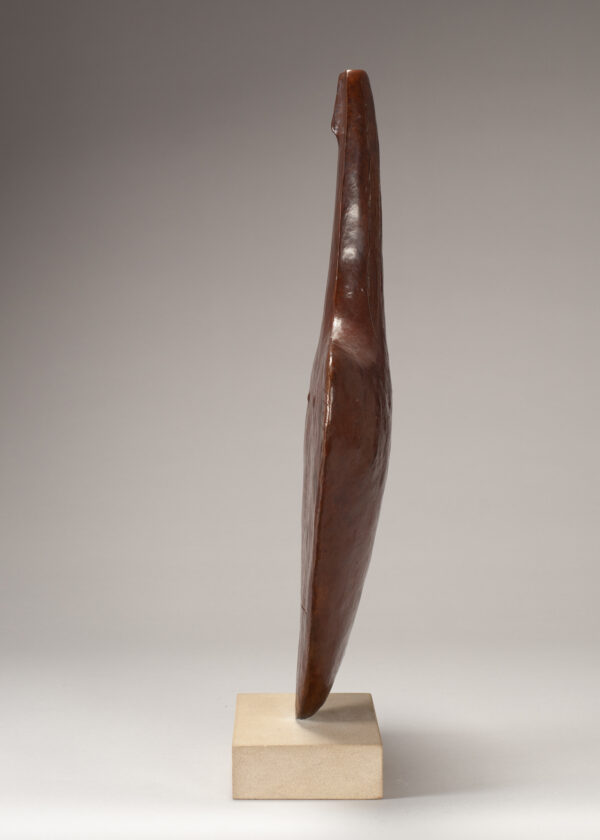
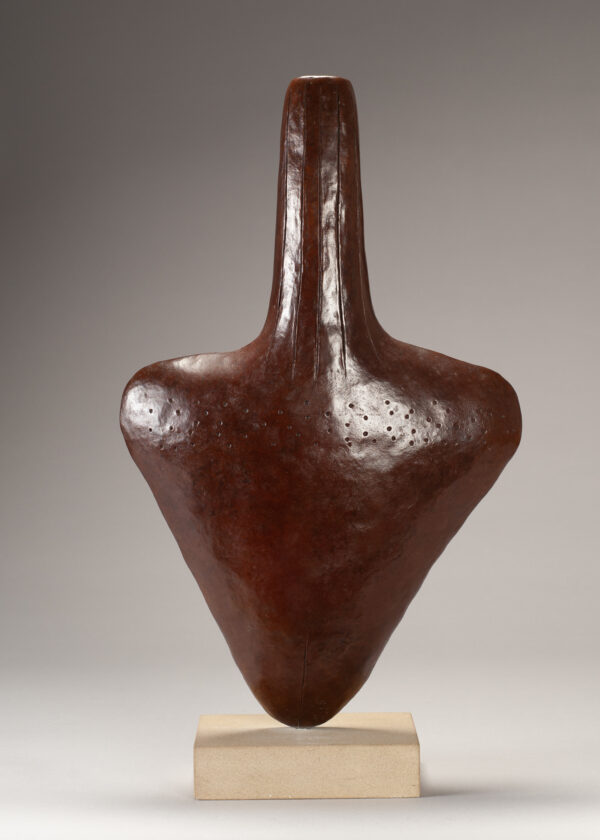
Here, the flat, arrow-like shape of Metamorphic Venus has notable similarities to the forms of neolithic tool material remains. It also has echoes of the flat diamond form of Ancient Egyptian schists and of Early Cycladic figurines, which have similarly wide-shouldered torsos and long thin noses. Turnbull’s figure forms present a sense of containment and silence, which is enhanced by their gentle symmetry. The simplicity of the silhouette draws our attention to a certain organic quality in the surface and unique quality of the patination. The soft curvature of the form denotes the female figure, suggesting an impression of maternal comfort and support.
Through the title of the work, Turnbull invites a recognition of the enigmatic figure of Venus and the plethora of mythological and iconographic material associated with her. By recalling such an association with Venus, alongside the textured archaic surface of the work, the viewer may draw their own understanding from other sources such as the famous Venus of Willendorf.
Such depictions of fertility and femininity have become synonymous with the title of Venus, regardless of any actual links to the Classical Roman goddess herself. Indeed, it is exactly this ambiguity that imbues the work with its timeless essence as it seemingly embodies multiple eras, being both strikingly contemporary, whilst also carrying ancient associations and meaning. The current sculpture is cast 2 out of an edition of 6.

 English
 Chinese