
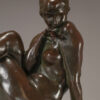
Sir William Reid Dick
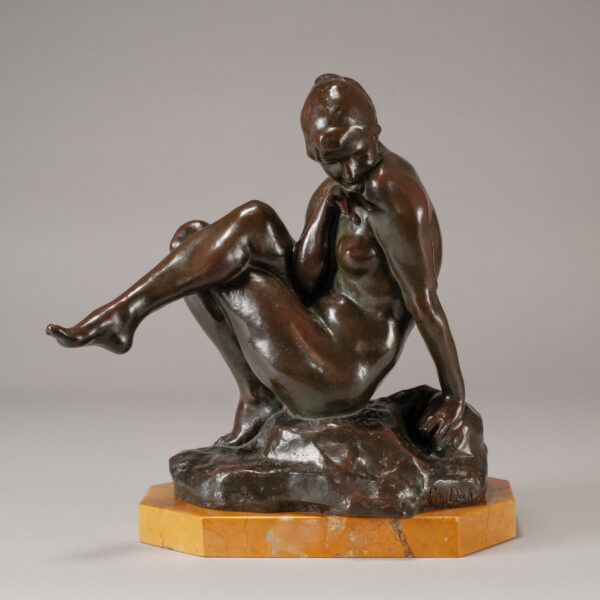
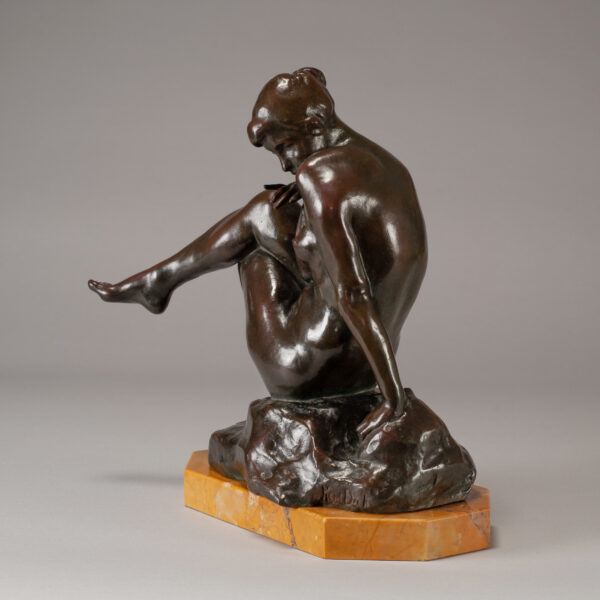
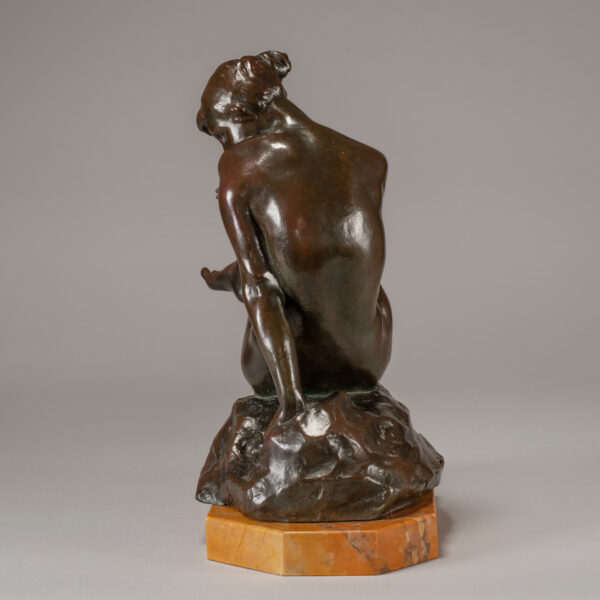
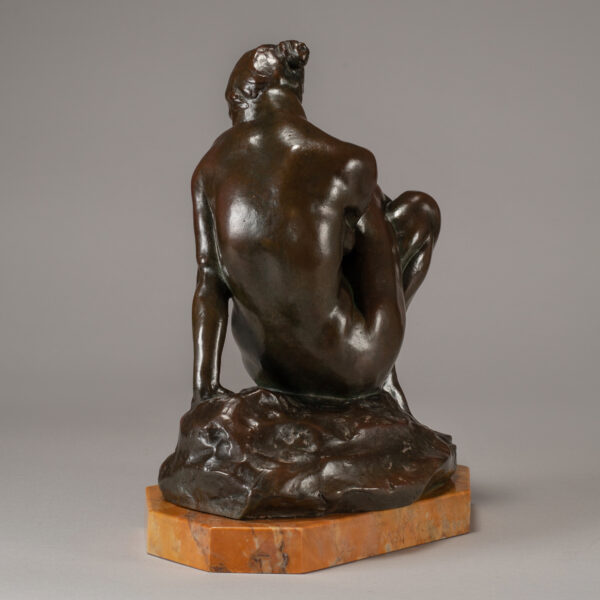
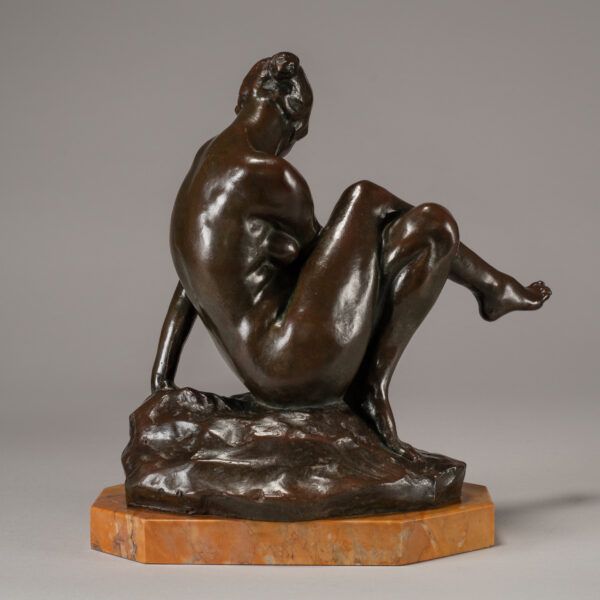
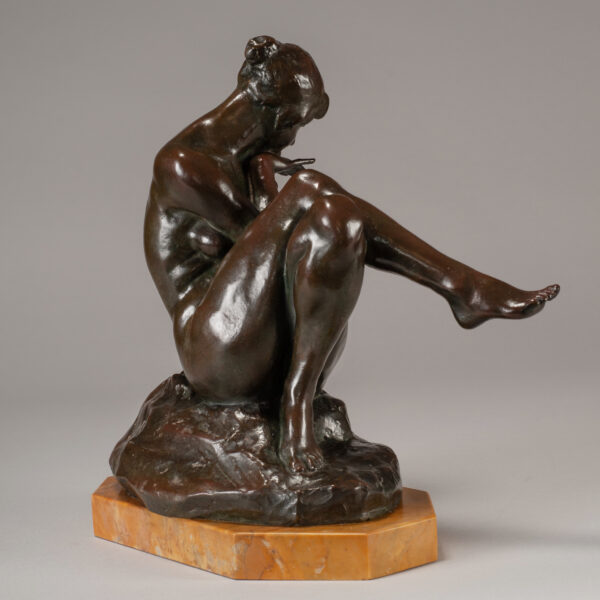
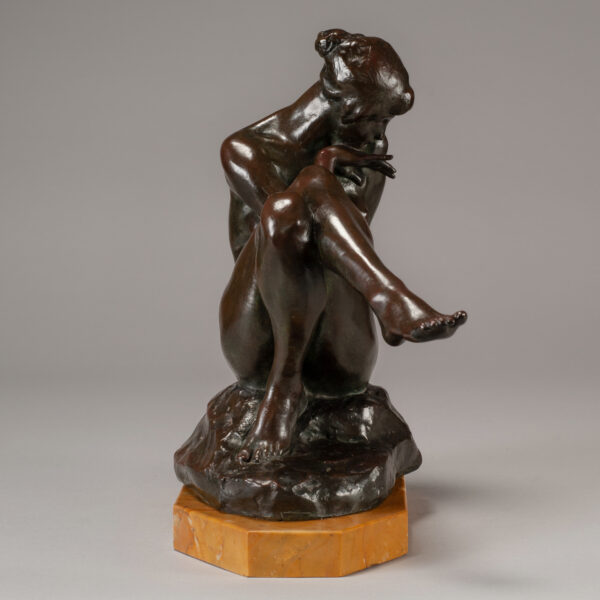
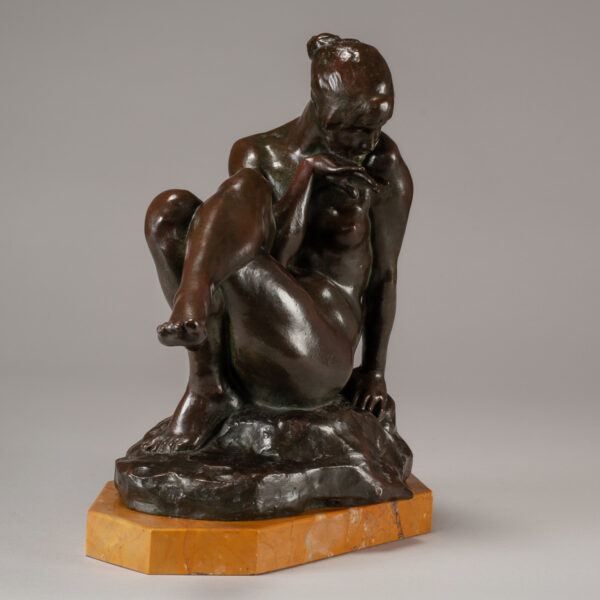
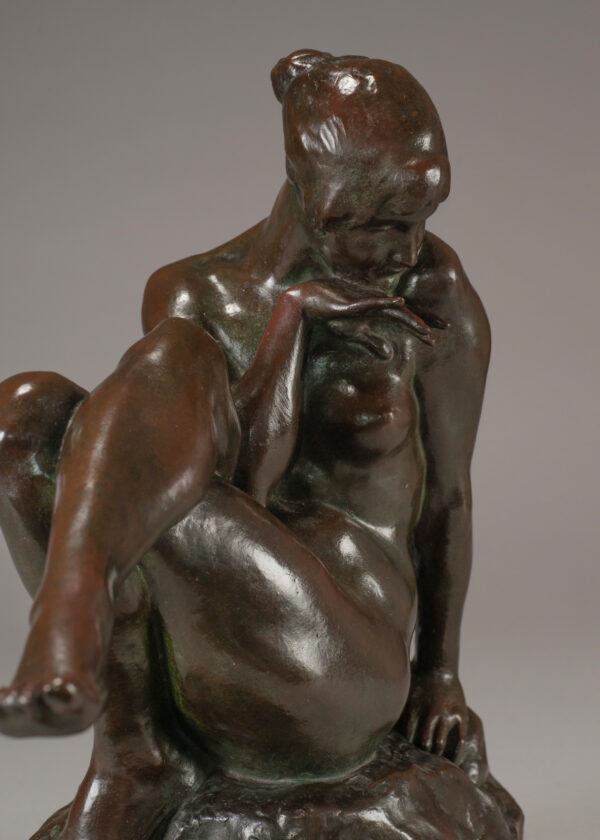
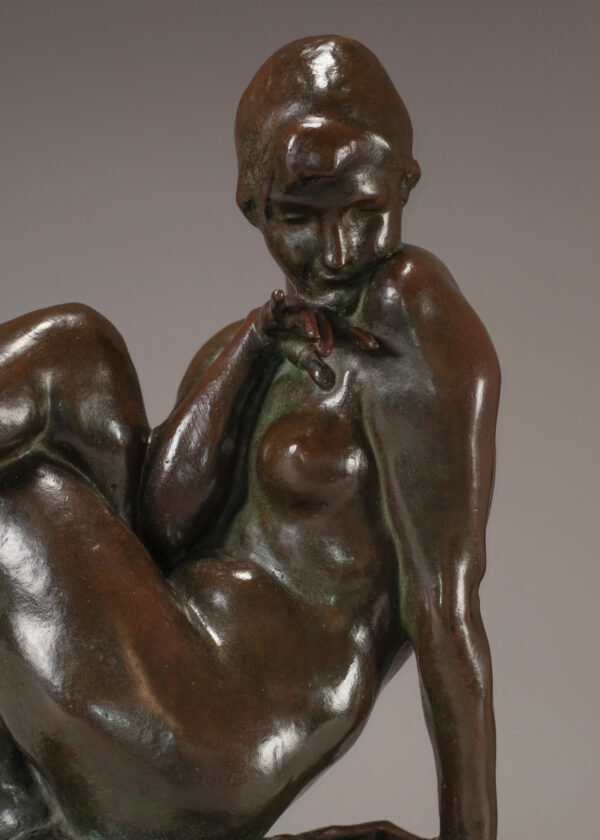
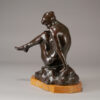
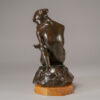
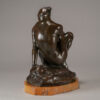
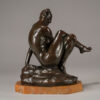
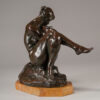
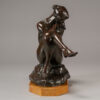
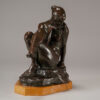
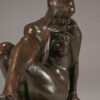
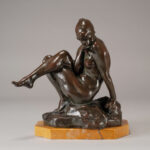
The Nymph or The Kelpie
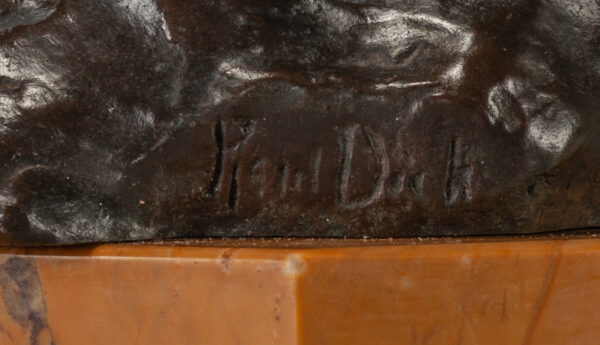
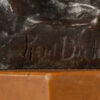
Signed Reid Dick
Bronze with rich mid and dark brown patina
On a yellow marble base
Height : 10 3/4″ (27cm)
Conceived in 1913 and cast circa 1920
ABOUT THE ARTWORK
Sir William Reid Dick was born in Glasgow and received his early training at the local School of Arts. In 1907 he moved to London where he enrolled in the City and Guilds School.
Reid Dick made an immediate impression in London, exhibiting at the Royal Academy for the first time in 1908. He continued to exhibit at the Academy for many years and the success he enjoyed led to an abundance of official commissions for monuments and statues. Amongst his patrons were King George VI who appointed him King’s Sculptor between 1938 and 1952 and Queen’s Sculptor in Ordinary for Scotland from 1952 until his death.
The long and distinguished list of his prominent monuments includes the Kitchener Memorial Chapel in St Paul’s Cathedral, The Lion on the Menim Gates at Ypres, the equestrian group entitled Controlled Energy at Unilever House and the Eagle on top of the Royal Airforce Memorial on Embankment of the Thames.
As a portrait sculptor, Dick also made a number of important busts, including those of the British Royal family.
Reid Dick was made an associate of the Royal Academy in 1921 and elected Royal Academician in 1928 before being offered the appointment of President of the Royal British Society of Sculptors in 1935, a post he held for three years. His successful career was crowned in 1935 when he received his knighthood. Eleven years later his portrait of Franklin D. Roosevelt was unveiled in Grosvenor Square, London.
A kelpie is a nymph from Scottish folklore who seduced and drowned travellers as they crossed rivers, they of course share a linkage to that of the Sirens in Greek myth. Kelpies often took the form of horses, although in Dick’s version here, we see a beautiful woman, ready to lure her victims into the depths.
We see a number of Scottish artists of the period depicting specifically subjects from folk law and national tradition – indeed this celebration of nation is found throughout Europe at the start of the new century. Paintings of nude ‘Kelpie’ femme fatales exist in the works of Scots artists Thomas Millie Dow and James Draper, or indeed earlier, famously in the words of Robby Burns:
When thowes dissolve the snawy hoord
An’ float the jinglin icy boord
Then, water-kelpies haunt the foord
By your direction
An’ nighted trav’llers are allur’d
To their destruction.
Robert Burns, Address to the Deil, 1786.
Wood Nymph or The Kelpie was exhibited at the Exhibition of the Royal Scottish Academy of Painting, Sculpture and Architecture, The Ninety-Ninth, in 1925. It was later exhibited at The Eighty-First Annual Exhibition of the Royal West of England Academy, 1926-1927, £47 5s. It was also exhibited at the Royal Academy, London, 1961, no.1286 as ‘Nymph’.

 English
  Chinese