
















Sir William Hamo Thornycroft
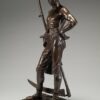
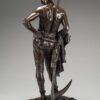
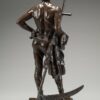
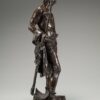
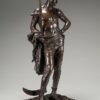
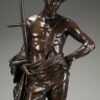
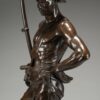
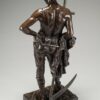
The Mower
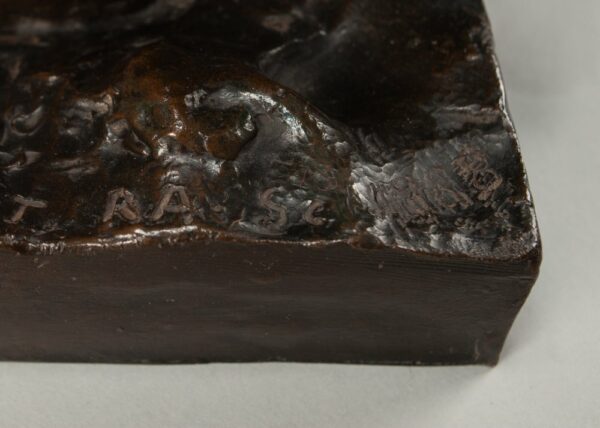
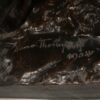
Signed and dated ‘HAMO THORNYCORFT RA. Sc. 1888’ and ‘Hamo Thornycroft 1904’
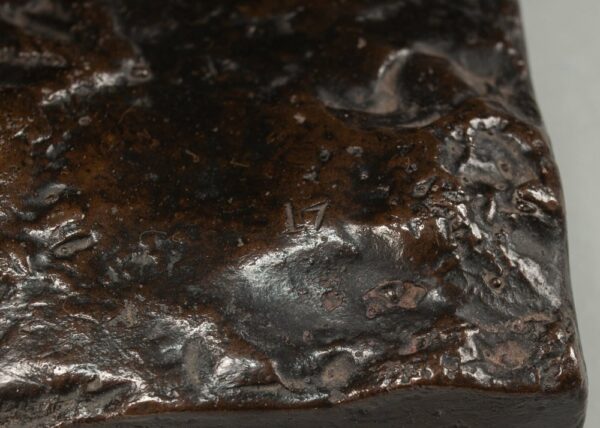
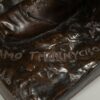
Numbered 18 and marked L7
Bronze, dark brown patina
Height: 23 ¼” (59 cm)
Conceived in 1888. This bronze cast in 1904.
Provenance:
Property from descendants of Their Majesties King George V and Queen Mary
ABOUT THE ARTWORK
A mower, who, as the tiny swell
Of our boat passing heaved the river grass,
Stood with suspended scythe to see us pass’
Matthew Arnold, Thyrsis, lines 127–129
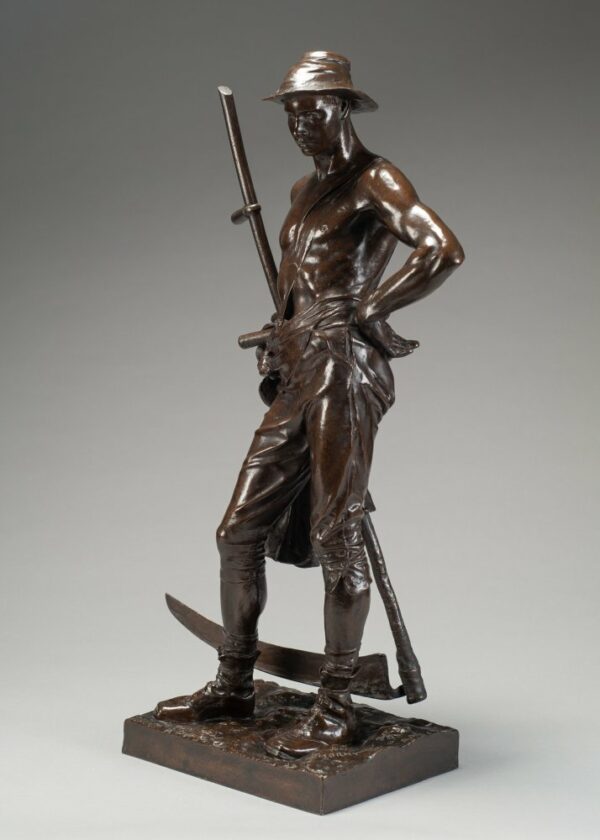
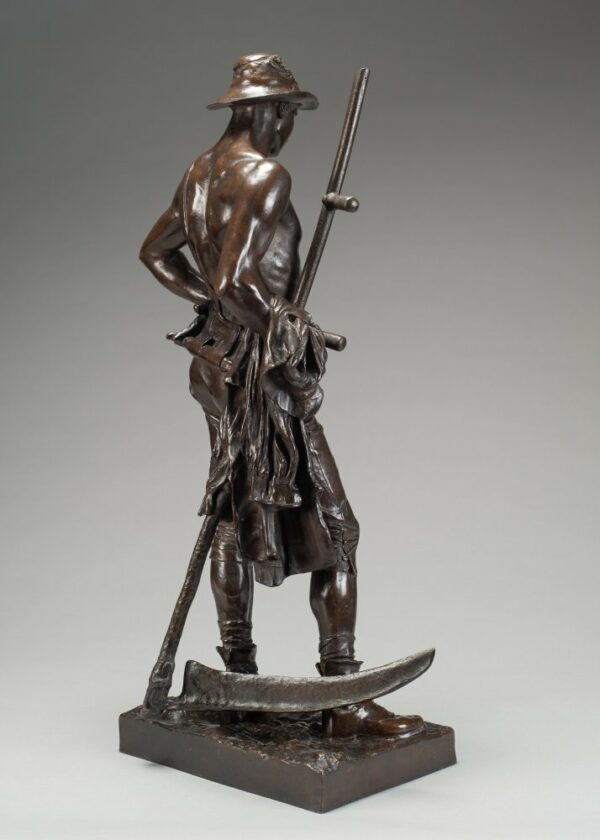
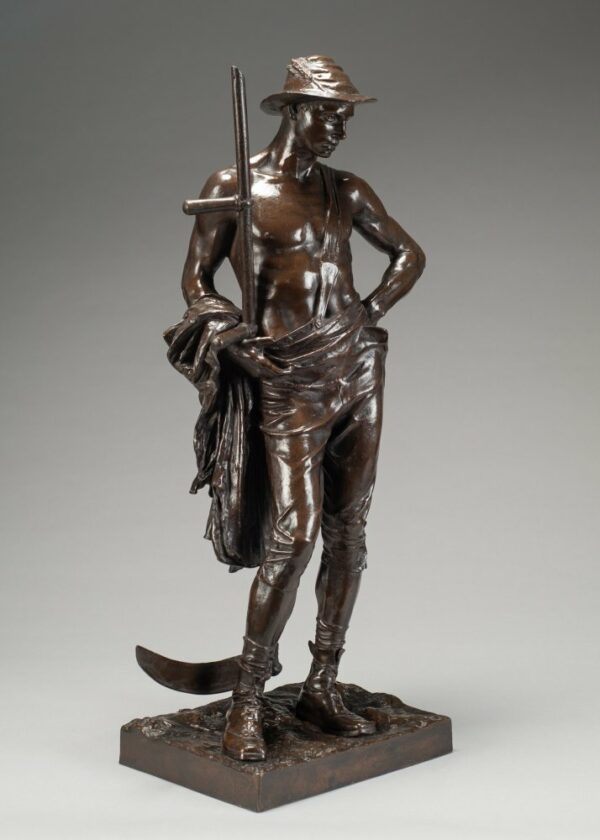
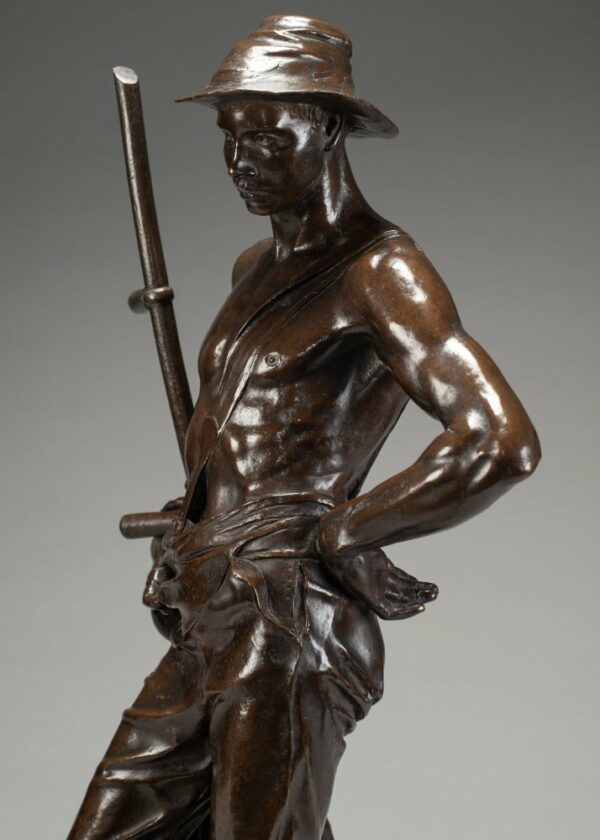
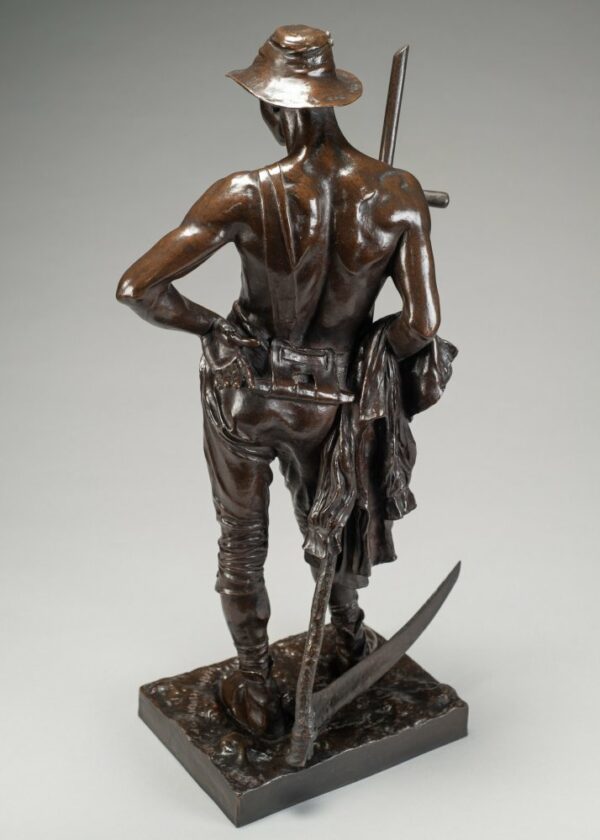
The Mower is one of Thornycroft’s most celebrated sculptures. The artist conceived the work around 1882, as he was boating down the River Thames, catching sight of a young farmer resting along its banks. Thornycroft sketched the figure quickly, writing in a letter to his fiancé Agatha Cox:
‘He will keep his hat on and carry his shirt on his right arm along with the scythe. A brace will pan over his left shoulder, which will take off the nude look and connect the hat with the breeches somewhat. This gives the hang of the shirt. It is a great help in solidifying the composition and supporting the scythe’.
Thornycroft used his favourite model, the Italian Orazio Cervi, to pose for the piece. Upon its completion in 1884, the Mowerwas displayed at the Royal Academy accompanied in the catalogue with lines from Matthew Arnlod’s poem Thyrsis, quoted above.
The Mower is a pioneering sculpture in light of its subject matter as it is arguably the first ever free-standing statue of a labourer in worker’s clothes in the history of European sculpture. Its idealised composition is far removed from the realist and dignified depictions of labourers produced in France and Belgium by Aimé-Jules Dalou and Constantin Meunier towards the end of the century. With its contrapposto pose, the Mower is instead an image of sheer youthful beauty, steeped in the arcadian, Classical tradition.
Thornycroft produced several wax studies for the work, the earliest of which dates to 1882 and is currently held in the collection of the TATE Gallery (London). The original, lifesize version of the bronze is currently part of the Walker Art Gallery collection in Liverpool. The sculpture’s success led the artist to produce a 60cm reduction of the model for the collector’s market. Smaller casts, such as the present one, are currently part of the TATE collection and the National Museum of Wales (Cardiff), among others.
When the present cast was produced, Thornycroft was already an Associate Member of the Royal Academy, and his abbreviated title, ARA, is inscribed immediately after the name at the base of the piece.


 English
 Chinese