
Click main image for larger preview
Rufus Martin
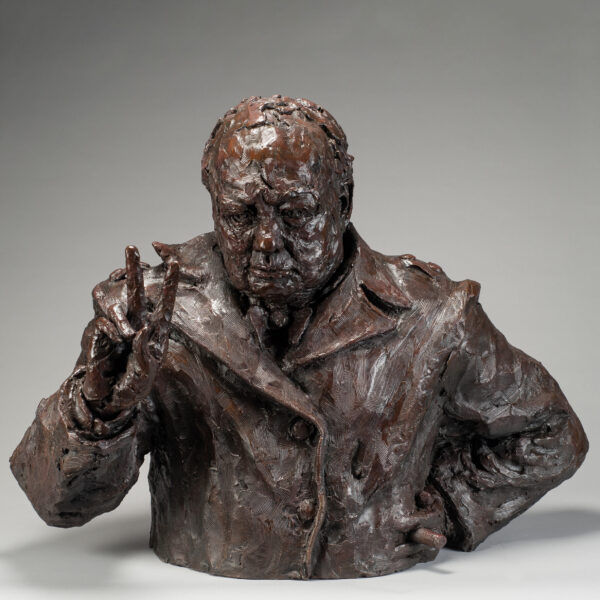
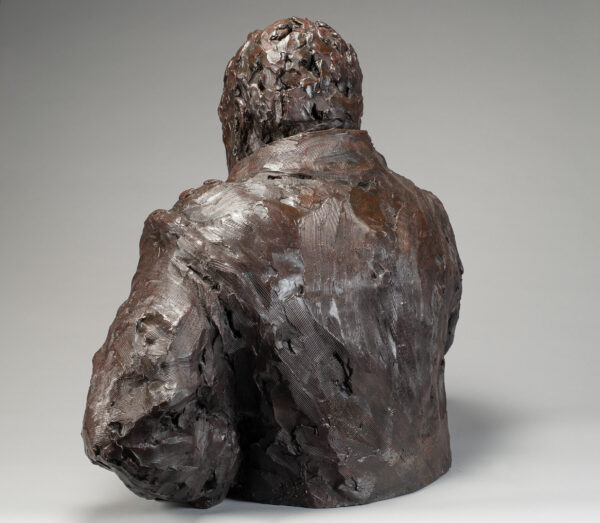
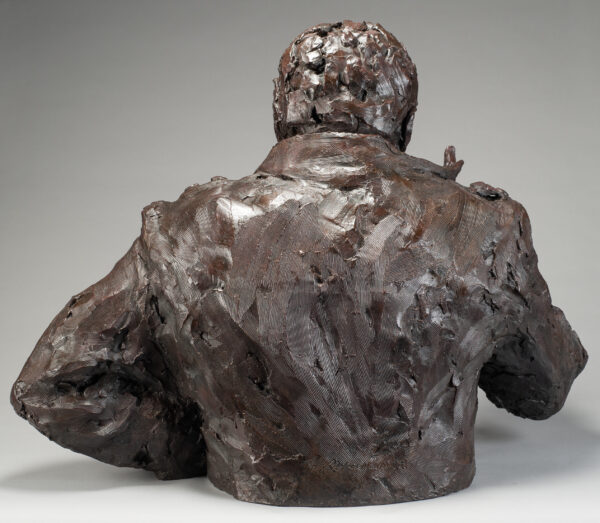
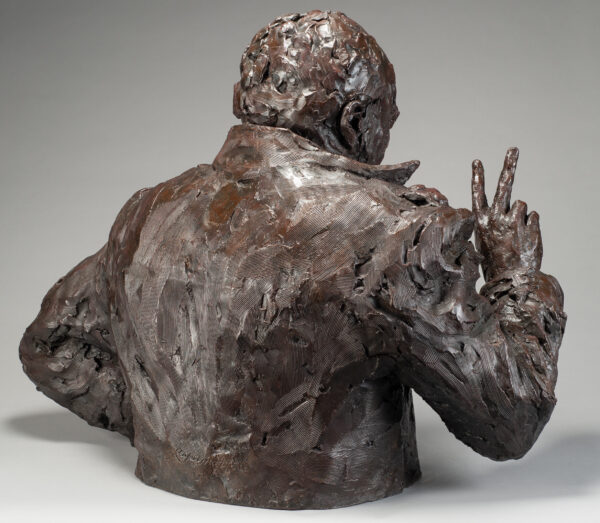
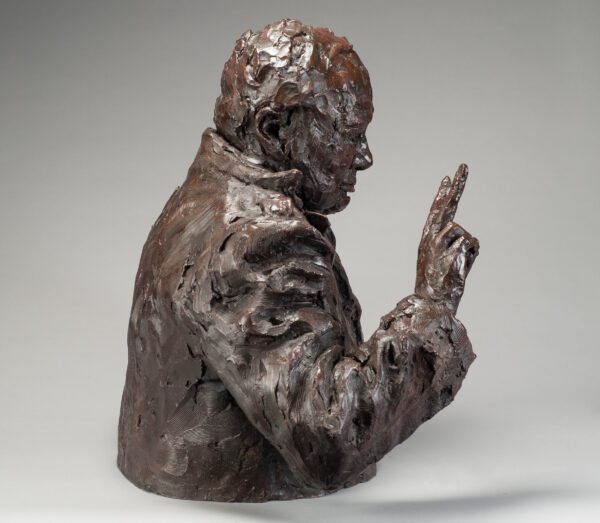
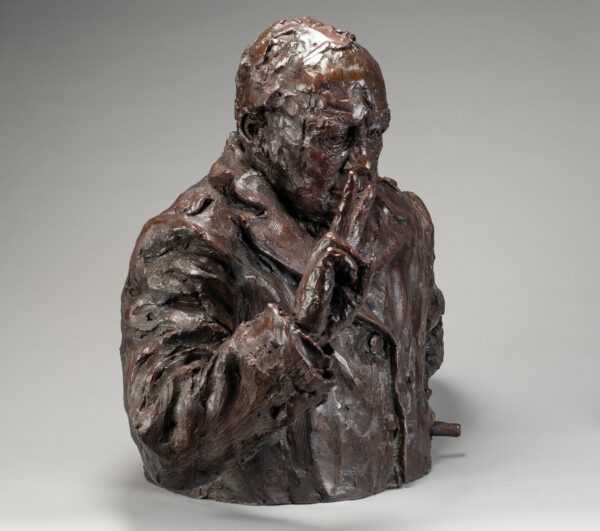
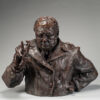
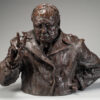
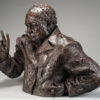
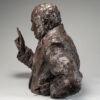
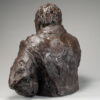
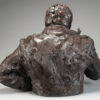
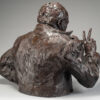
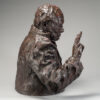
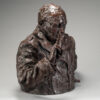
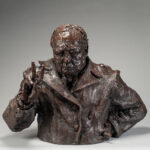
Bust of Winston Churchill
Signed Rufus Martin
Numbered
Bronze with dark brown patina
Height: 24.5″ (62 cm)
Width: 32.5″ (83 cm)
Edition of 12
ABOUT THE ARTWORK
Rufus Martin was born in Dorset and trained at Wimbledon College of Arts in London. He was introduced to sculpture at an early age by his parents. His mother, a portrait painter, first showed him the portrait works of Augusta Savage, Jacob Epstein and Auguste Rodin, which inspired him to create sculptural portraits himself. His first bust was of his mentor, the production designer, Michael Howells. He went on to create sculptures of individuals he found intriguing, always with the intention of capturing the essence of the person as well as the physical likeness. In both 2022 and 2023, he won the prestigious Tiranti Prize for portrait sculpture; the prize is awarded to the best exhibit from a young portrait sculptor of 30 years old or under and it is sponsored by the sculptor’s supplier Pottery Crafts Ltd.
Sir Winston Spencer Churchill (30 November 1874 – 24 January 1965) served as the British Prime Minister twice, famously leading the country during the Second World War. He was born into the British aristocracy at his family’s ancestral home, Blenheim Palace in Oxfordshire, as a direct descendant of the 1st Duke of Marlborough. His father, Lord Randolph Churchill, was a Conservative MP for Woodstock, and his mother, Jennie, was the daughter of a wealthy American businessman.
Churchill studied at Harrow School and went on to train for a military career at the Royal Military Academy, Sandhurst. Upon graduation, he joined the British Cavalry, where he served in Cuba, India, and Sudan. Throughout his early military career, he also worked as a journalist and, with the help of his mother, who sent him books, educated himself in a broad range of subjects. This education was in preparation for a future in politics. At just 25 years old, Churchill became an MP. In 1901, he took his seat in the House of Commons. True to his legacy as a great speaker, his maiden speech received high praise.
His climb up the political ladder, which is well documented, wasn’t always smooth, but he will be forever remembered as the man who led Britain to victory in the Second World War. As well as a statesman and writer, Churchill’s ability as an orator has cemented his place in history. His inspirational speeches are still quoted today.
Naturally, this heroic leader has been immortalised in bronze more than once. The Statue of Winston Churchill by Ivor Roberts-Jones stands proudly in Parliament Square in London and was one of the sources of inspiration for the present piece.
On May 8th, 1945, Winston Churchill broadcast the news of Germany’s surrender to the nation, marking the end of the war in Europe. He declared the day, VE Day, a public holiday and urged people to celebrate with street parties and gatherings. Churchill himself appeared on the balcony of Buckingham Palace with the Royal Family and later addressed a huge crowd on Whitehall.
We mark the historic 80th anniversary of VE Day, on 8th May 2025, with the people, families and communities of our great nation coming together to unite and celebrate 80 years of peace since the end of World War II in Europe which so many millions paid the ultimate sacrifice to achieve it. VE Day 80 is not only a tribute to those who fought for the freedom we all enjoy today, but also a powerful reminder of the resilience and unity that have defined our country ever since.
The moment Churchill declared victory for the Allies at the end of WWII from a balcony in Whitehall to an uproarious crowd was chosen as the ideal pose for the sculpture. Martin was keen to portray the complexity of emotion at this moment. The monumental announcement that the war in Europe was over was tempered by the sacrifice of so many lives and knowledge that much would have to be done in the aftermath, including defeating the still warring forces in Japan, and acknowledged by the man himself ‘We may allow ourselves a brief period of rejoicing but let us not forget for a moment the toils and efforts that lie ahead.’ Winston Churchill, Downing Street, 8th May 1945.
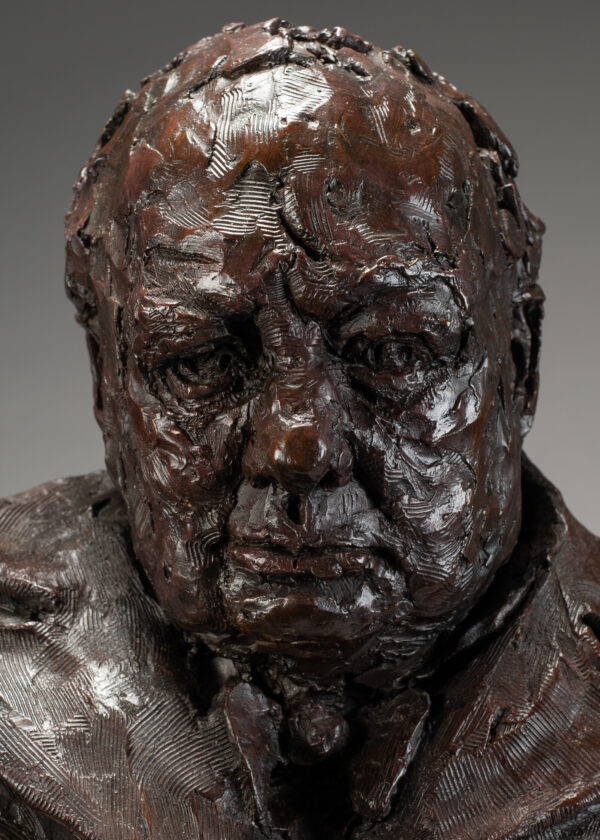
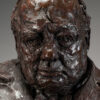
Martin, as with all his portraits, has captured more than a physical likeness. The viewer gets a sense of the man behind the hero. The artist studied paintings of Churchill made from life, including the studies made by Graham Sutherland for the infamous lost portrait, housed in the National Portrait Gallery and the aforementioned bust by Jacob Epstein. To capture the expression, Martin used photographs by Yousuf Karsh, particularly The Roaring Lion, as well as more informal photographs of Churchill at home with his family. It was paramount to the artist to capture what he describes as ‘the solidity, mass and wise complexity’ of the man, and in his own words this was ‘something I felt only an expressive and dynamic form of sculpture could portray. Due to the subject of Churchill, the piece had to also be quite timeless, free of contemporary fashions in sculpture.’
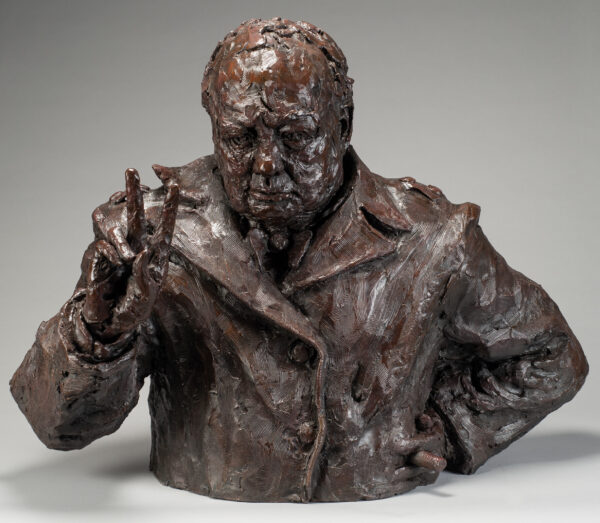
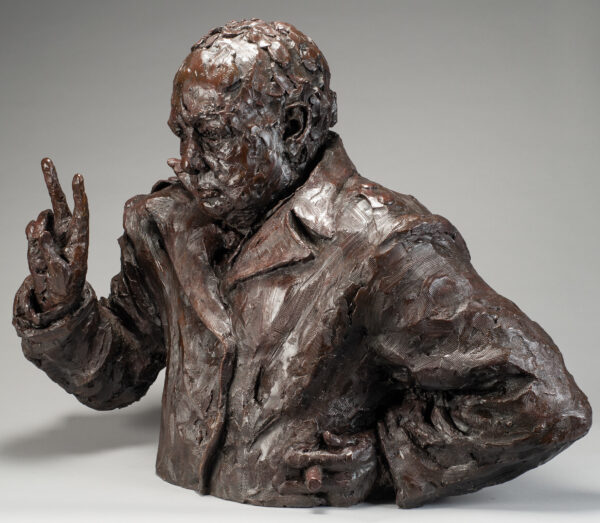
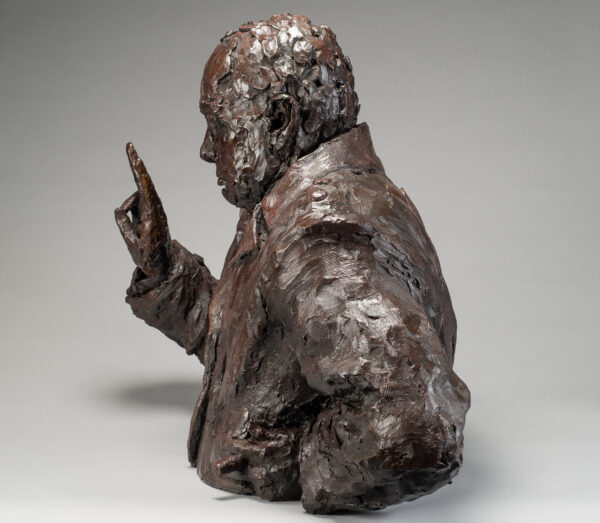
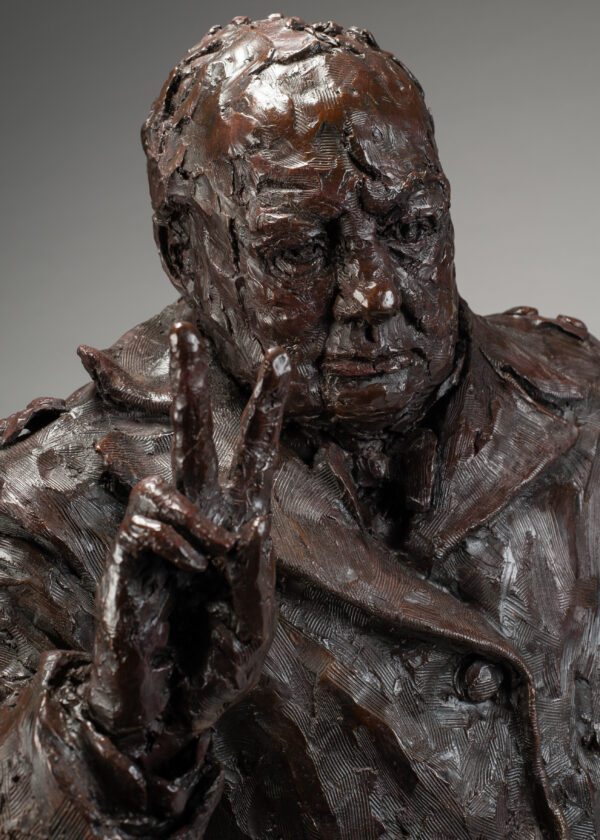
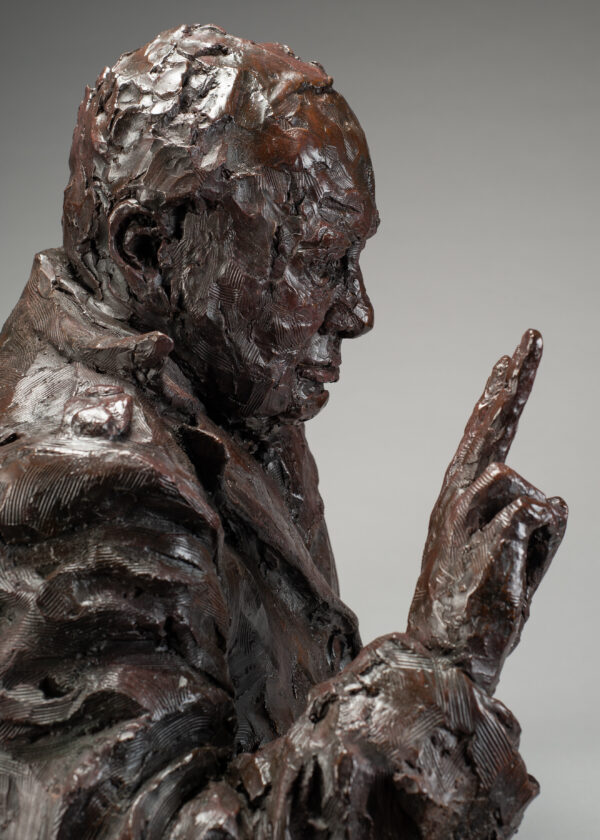
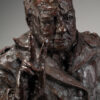
The texture of the clay and the mark-making of the tools used are still present in the bronze cast, giving the piece a remarkable sense of immediacy and motion. The high contrast between raking marks and large flat forms collaborate to give an expression of movement and life. The coat, modelled from an original, has a real sense of materiality. The folds, creases and weight of the coat have been so faithfully recreated that one could almost reach out and straighten the collar or smooth down the lapel.
The facial expression is where the sculpture really excels. The artist has avoided overworking the face, giving it a marvellously expressive quality. While the artist has made a very recognisable study of Churchill, he has also captured a moment in time, a monumental moment in time at that. The intensity of Churchill’s countenance conveys the gravity and significance of this.
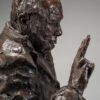
Martin has recreated the trademark ‘v’ gesture as well as Churchill’s ever-present Cuban cigar. From archive photographs and hand studies in the National Portrait Gallery by Graham Sutherland, he found that Churchill had surprisingly long elegant fingers, which he has faithfully recreated.
With its expressive marks and robust solidity, Rufus Martin has created a brilliantly animated portrait of Sir Winston Churchill, worthy of the indomitable force of the man himself.

 English
  Chinese