











Jean-Jacques Pradier
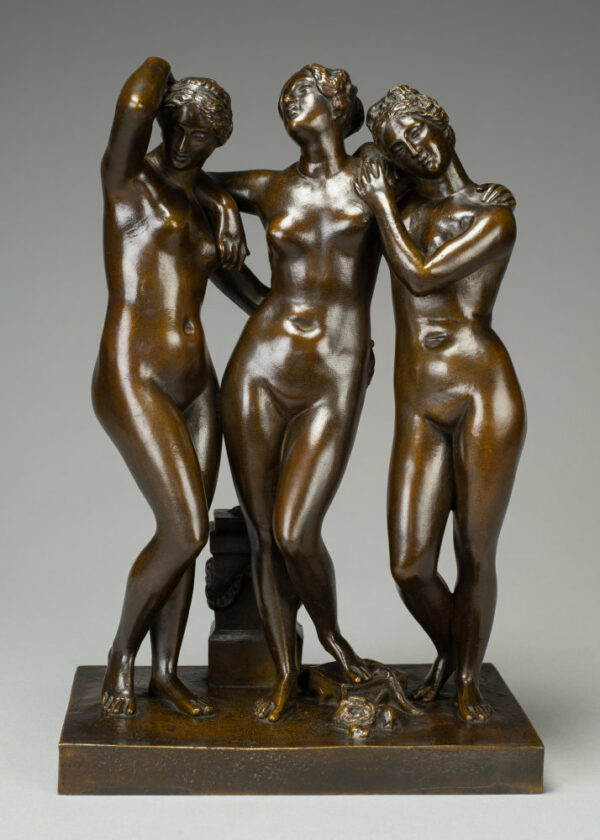
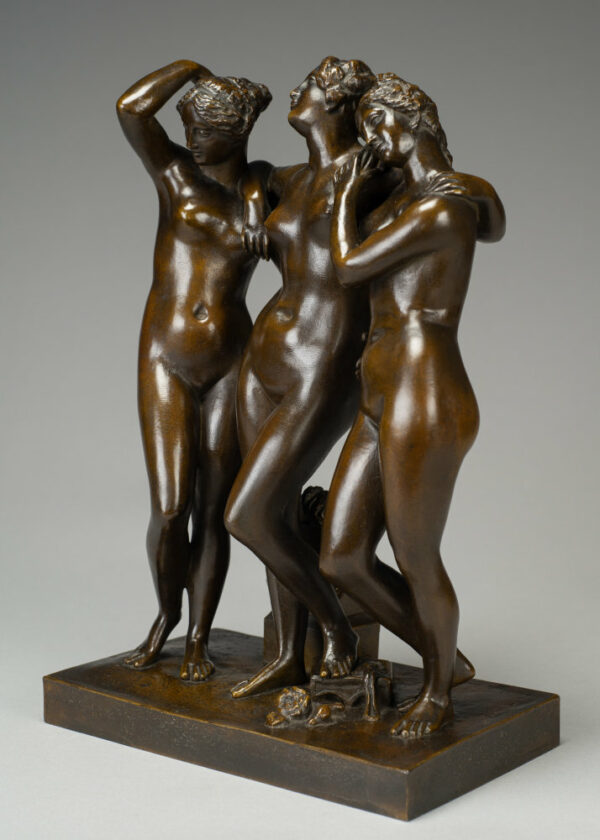
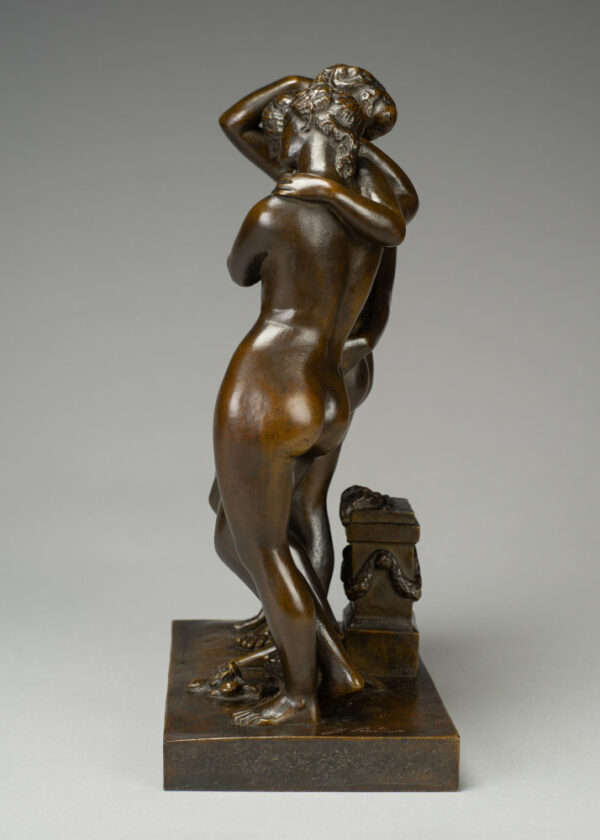
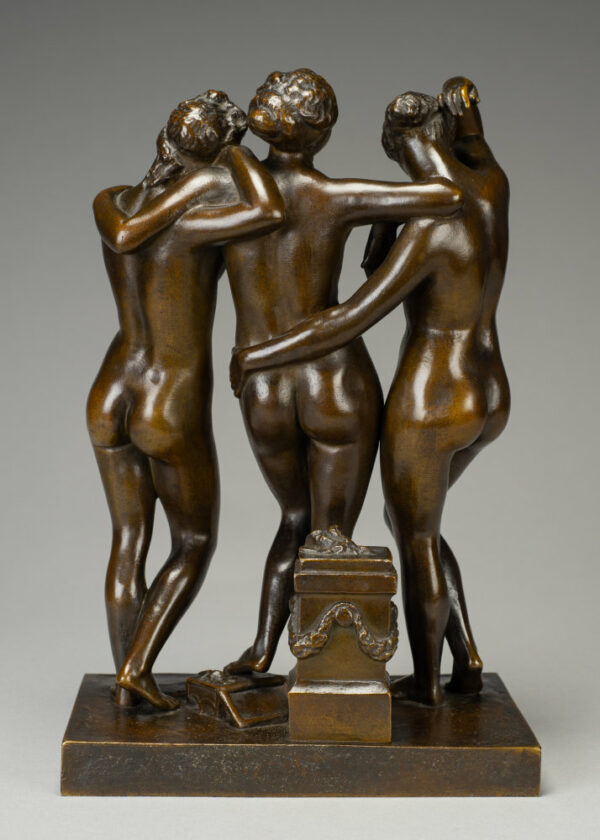
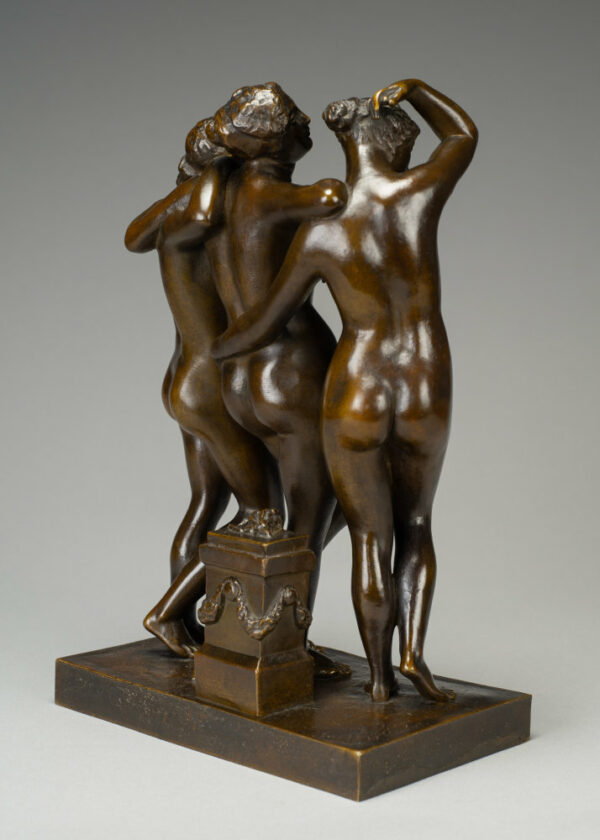
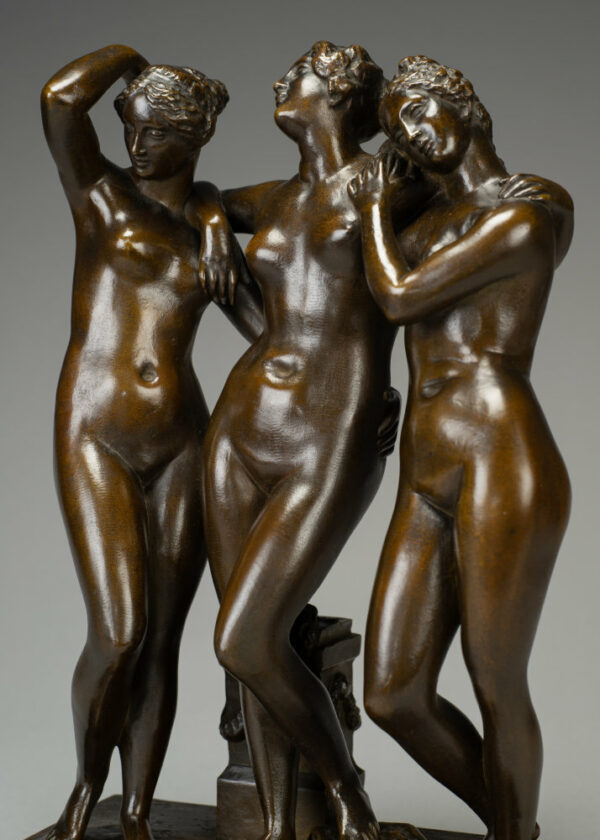
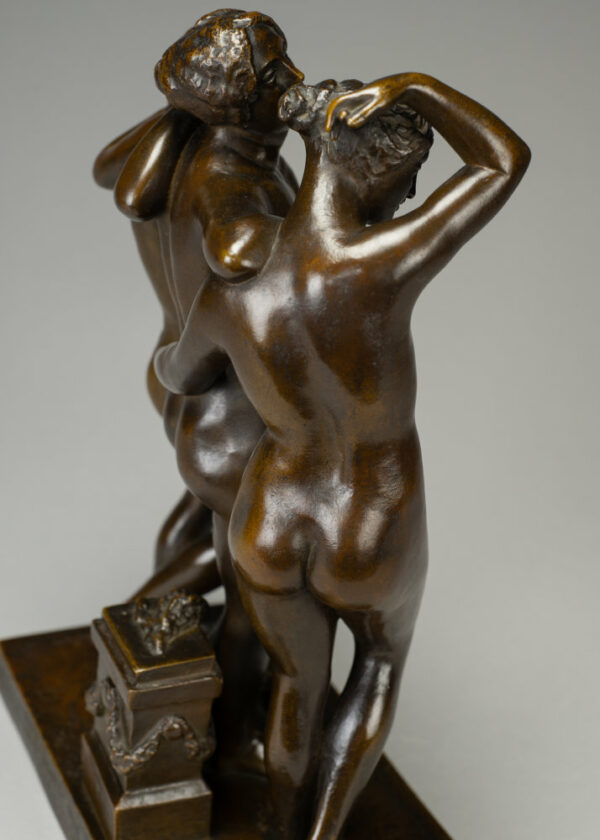
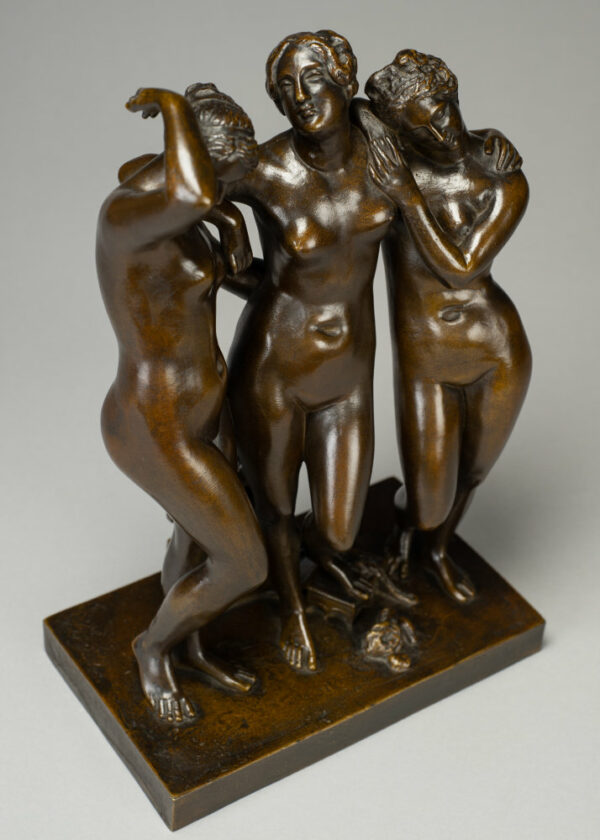
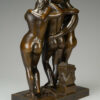
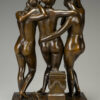
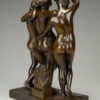
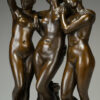
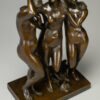
Three Graces
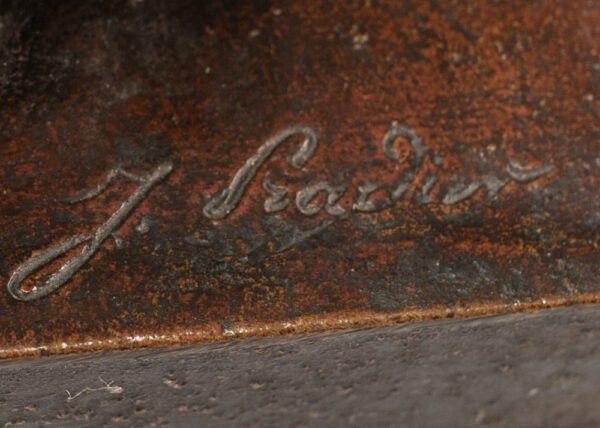
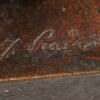
Signed J. Pradier
Bronze with rich mid and dark brown patination
Height: 11.8″ (30 cm)
Conceived in 1839 and cast circa 1850
Its immense popularity in marble prompted Pradier to create a small version in bronze in 1839 for the collectors’ market, cast in an unnumbered unlimited edition by the Colin Foundry. Unlike many of Pradiers works this sculpture was not produced in a posthumous edition by Susse Freres, who cast works by Pradier both during his life-time and after his death.
ABOUT THE ARTWORK
Jean Jacques Pradier, better known as James, was one of the pre-eminent Neoclassical sculptors of the early-19th century. Born in Geneva to a French family, Pradier and his two brothers trained as sculptors from a young age. As the most talented of the trio, James was sponsored by Napoleon’s Superintendent of Arts, Dominique Vivant Denon, to study in Paris at the Ecole de Beaux Arts, where he worked with painter Baron Gérard and studied sculpture under François-Frédéric Lemot.
Pradier’s first major success was winning the Prix de Rome in 1813 with his model of Neoptolemus Prevents Philoctetes from Loosing His Arrows Against Ulysses. He later went on to win a first-class medal at the Salon of 1819 with a marble model of a Nymph. These early successes ensured Pradier a steady stream of public commissions, including his Monument to the Duc de Berry executed in 1821, four bas-reliefs of Fame for the Arc de Triomphe at the Place de l’Étoile in 1829, the monumental statues of Liberty and Public Order for the Chamber of Deputies in the Assemblée Nationale in 1832, several statues for the Palais du Luxembourg, and in 1843 the twelve marble Victories that guard Napoleon’s tomb at the Dôme des Invalides.
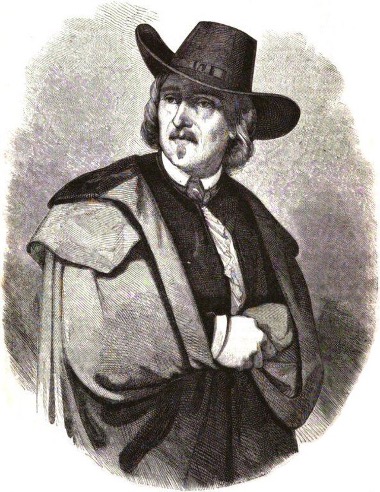 Sculptor Jean Jacques (James) Pradier
Pradier’s salon entries were also highly regarded by the French state and between 1819 and 1852 he sold more of these exhibits to the French Government than any other sculptor. In 1827 he was elected member of the Académie des Beaux-Arts, shortly before becoming chevalier of the Légion d’Honneur in 1828. From 1836 onwards he executed numerous portrait statues for Louis-Philippe’s Galeries Historiques at Versailles.
It is, however, for his statuettes that Pradier truly established himself with the private collectors and connoisseurs. These works were often imbued with an erotic or sensual nature not found in his larger monumental works, which usually depicted scenes from antiquity.
In fact, Pradier’s work epitomises this struggle between the stubbornness of the antique and the evocative power of the more romantic ideologies of modern sculpture. Unlike many of his social contemporaries, Pradier embraced sensuality and eroticism, particularly in his portrait statuettes, echoing the style of Canova, David and Josephine Bonaparte.
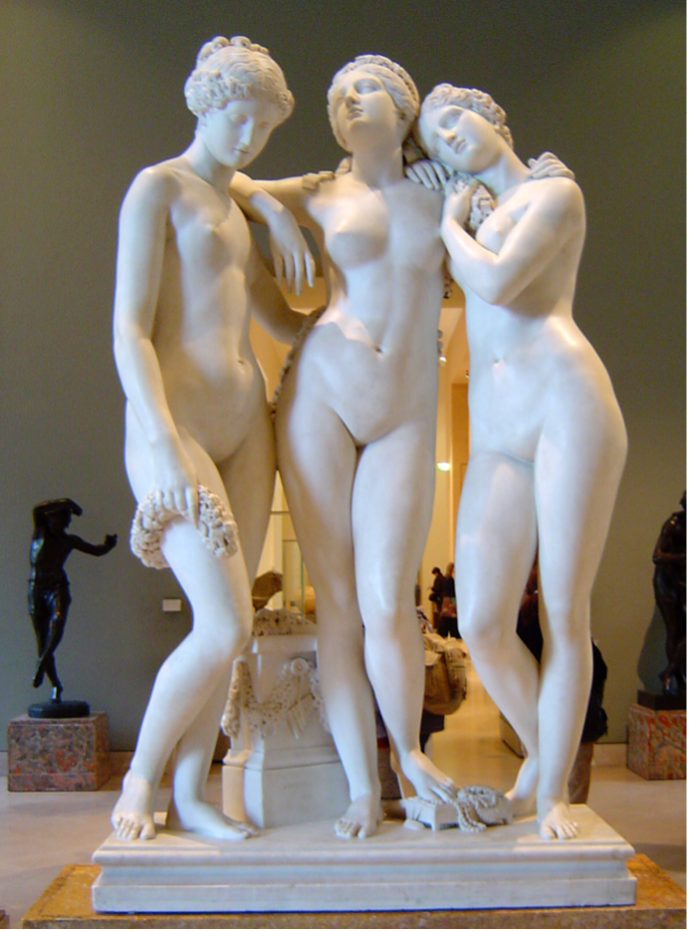 James Pradier, Three Graces (1831), Marble, Louvre, Paris
In 1831 James Pradier produced his own version of the Three Graces in a style that was then termed ‘antiquité voluptueuse’. Carved in marble, it was purchased by the French state under the direction of Louis Philippe and is part of the collection of the Louvre. Its immense popularity prompted Pradier to create a small version in bronze in 1839 for the collectors’ market, cast by the Colin Foundry. Unlike many of Pradiers works this sculpture was not produced in a posthumous edition by Susse Frères, who cast works by Pradier both during his lifetime and after his death.
Pradier’s version of the Three Graces exemplifies the sculptor’s innate ability to impart his sense of grace and feminine beauty onto raw materials. Unlike Antonio Canova’s version, Pradier depicts the mythological three charities (daughters of Zeus) with open and unabashed body language. Whereas Canova’s figures turn away from the viewer and appear to conceal each other’s femineity and nudity, Pradier’s subjects reveal their bodies, their womanhood, with expressions of comfort and exuberance within their own skins.
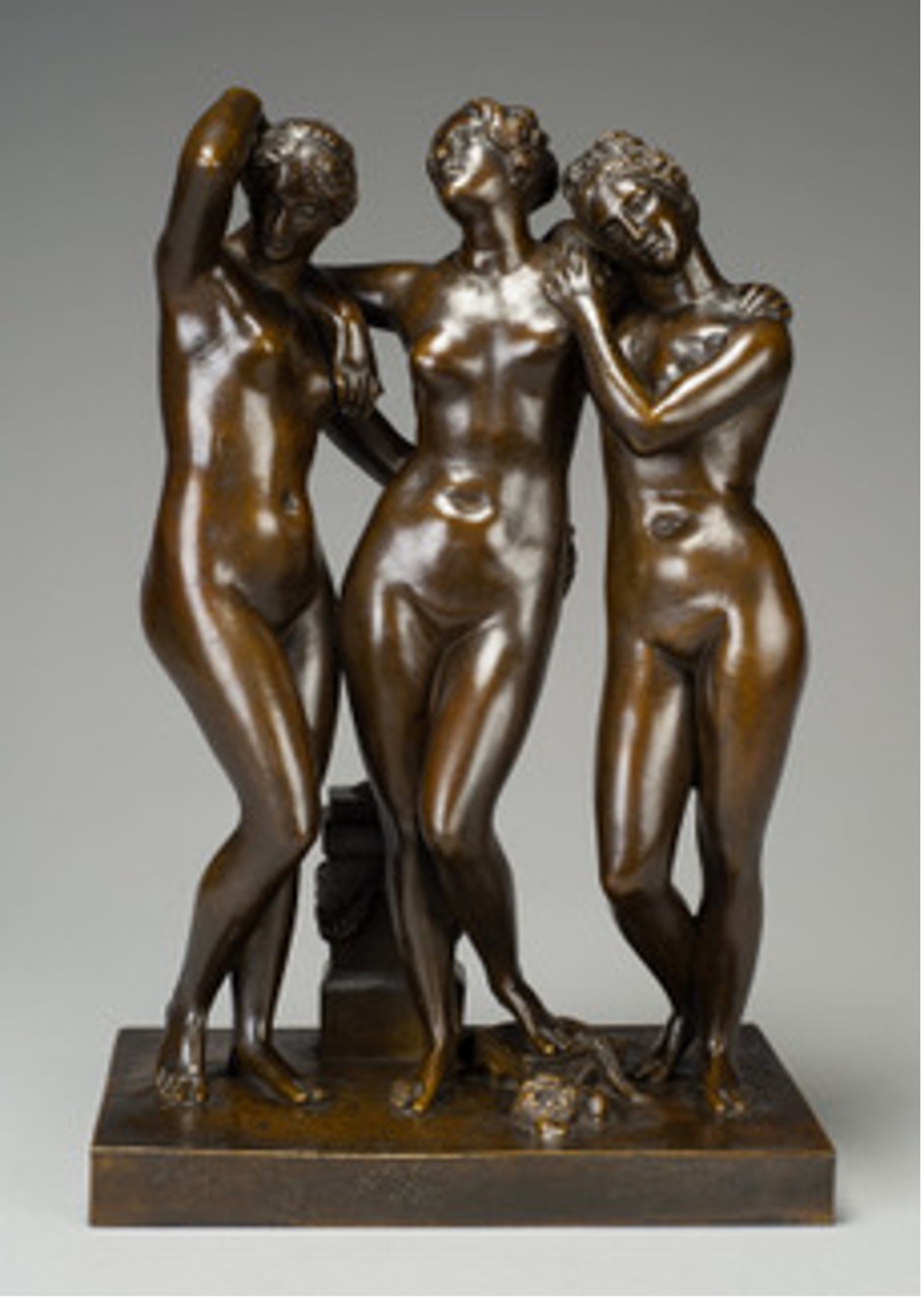 James Pradier, Three Graces, in bronze (circa 1839)
The three daughters of Zeus — Euphrosyne, Aglaea and Thalia — depicted in this sculpture were considered living representations of mirth, elegance and youth/beauty, respectively. Looking at Pradier’s figures from left to right, it is possible to see these traits held within the various poses and shapely figures of the three women.
Pradier’s sensual interpretation of such a well-known image opened the door for romantic sculptors, such as Clésinger and Carpeaux, to better represent emotion, femineity and vitality in their works. By the time of his death in 1852, Pradier was considered one of the principals of modern French sculpture. His monumental as well as his smaller works continue to be displayed in museums, galleries and private collections around the world.


 English
 Chinese