
Jean-Jacques Pradier
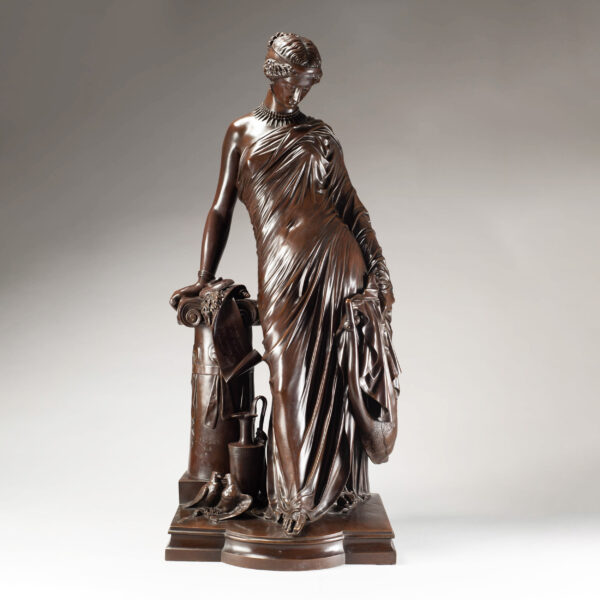
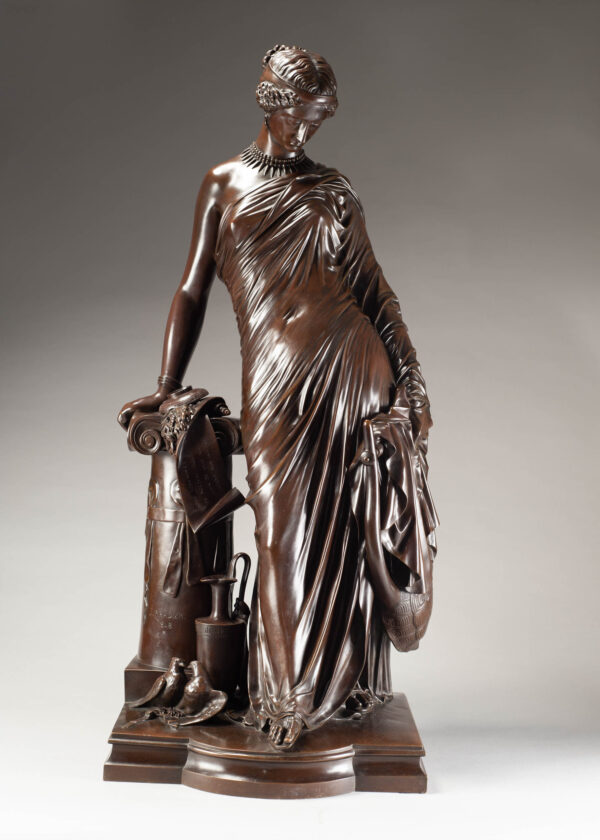
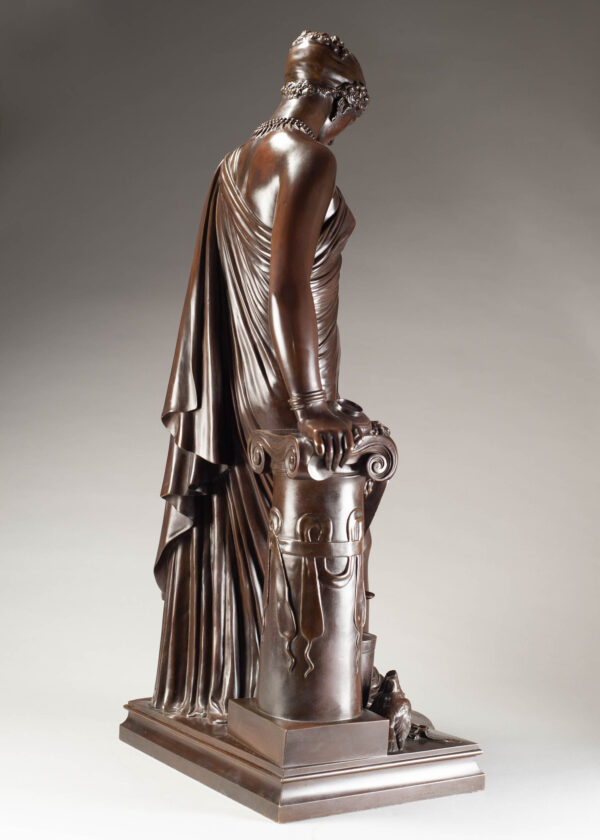
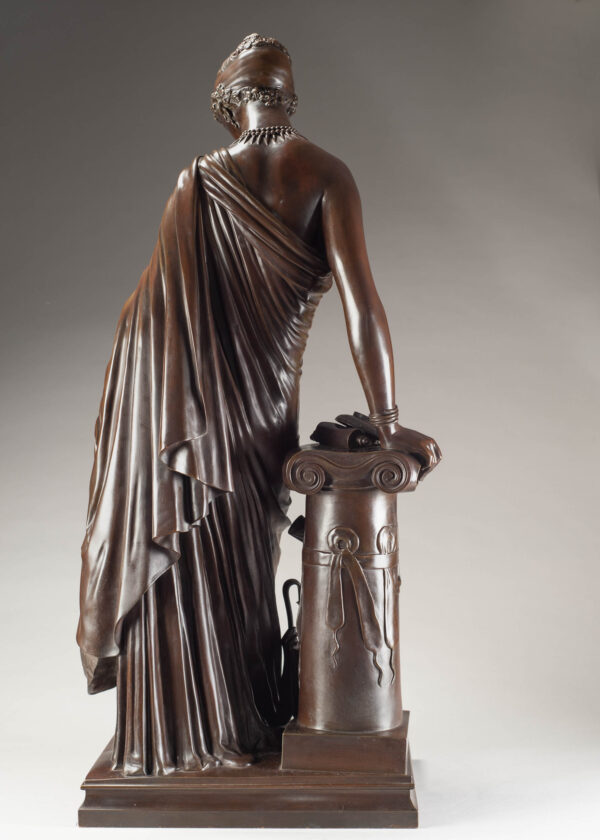
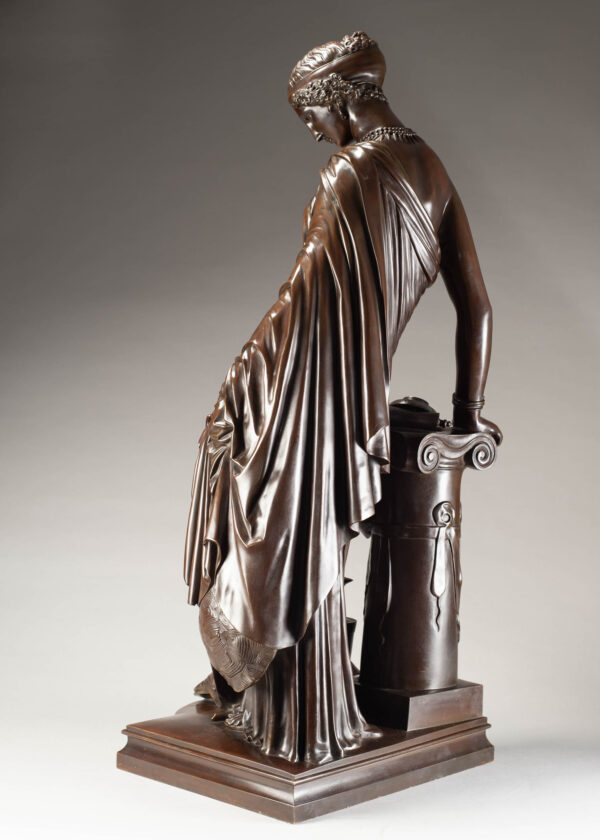
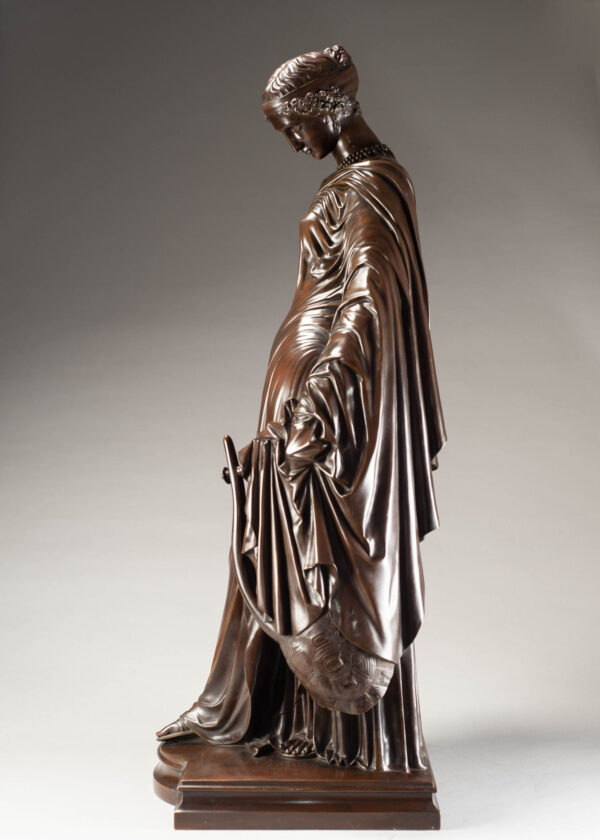
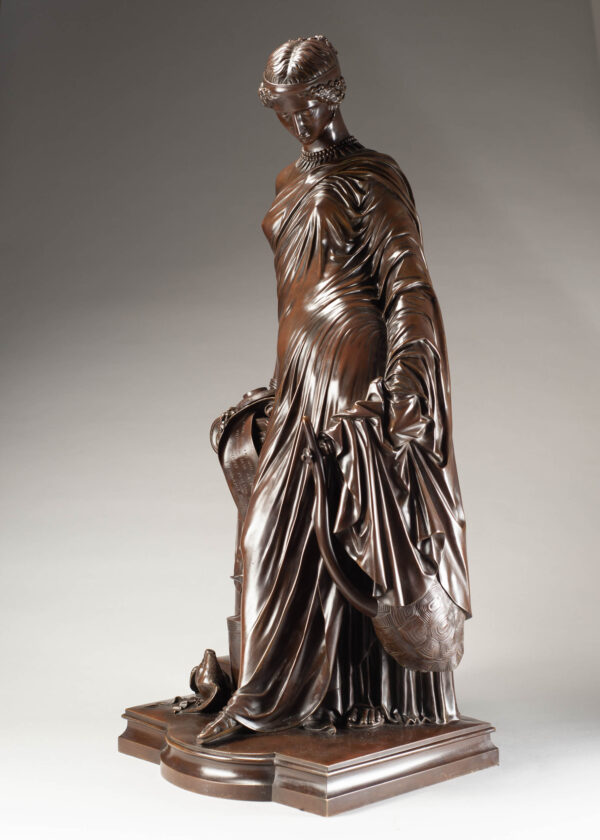
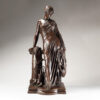
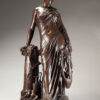
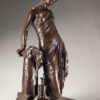
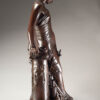
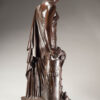
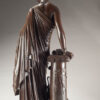
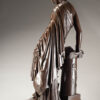
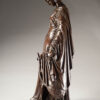
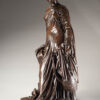
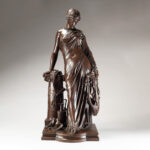
Standing Sappho
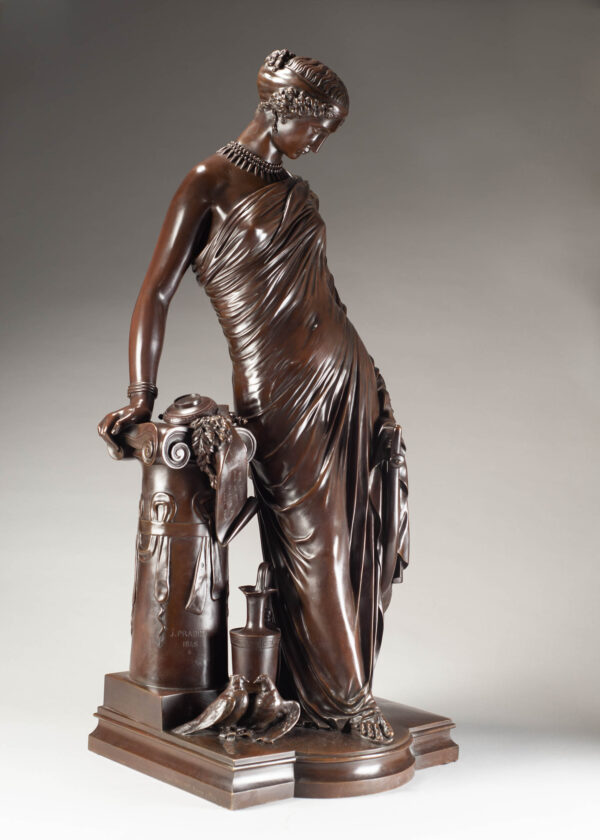
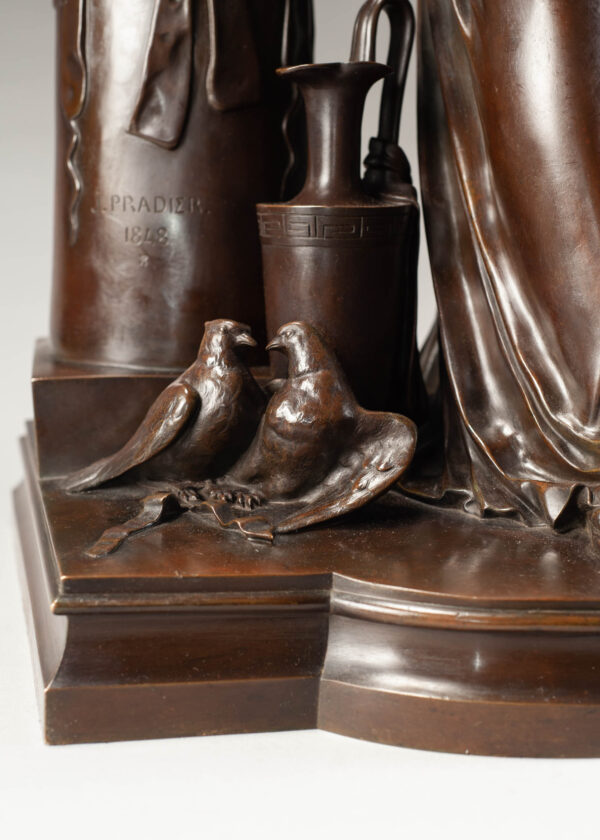
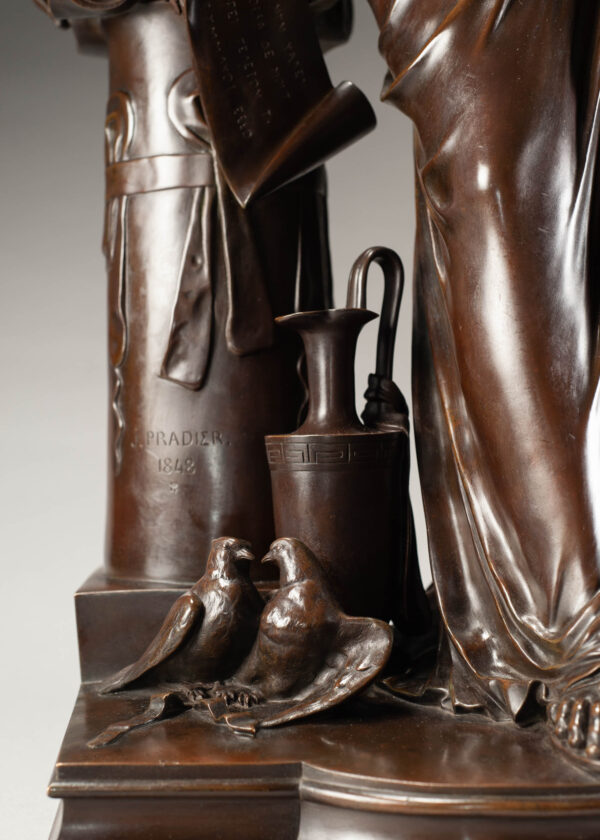
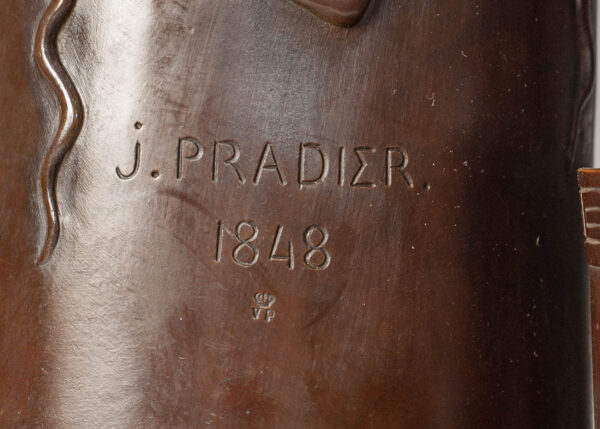
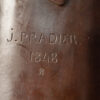
Signed J.Pradier 1848 and stamped with the Victor Paillard foundry mark VP beneath a crown
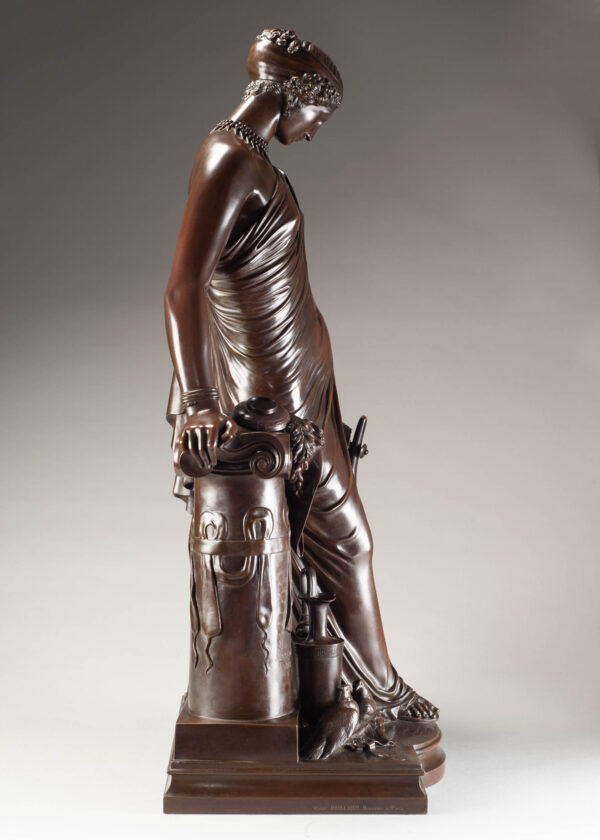
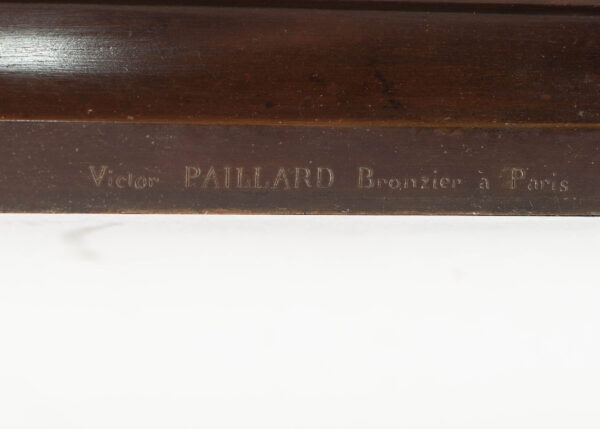
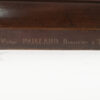
Inscribed Victor Paillard Bronzier à Paris
Bronze with a deep rich mid and dark brown patina
Height: 34.25″ (87 cm)
The present sculpture is a rare large version, one of three currently known bronze casts of this size.
ABOUT THE ARTWORK
Jean Jacques Pradier, better known as James, was one of the pre-eminent Neoclassical sculptors of the early 19th century. Born in Geneva to a French family, Pradier and his two brothers trained as sculptors from a young age. As the most talented of the trio, James was sponsored by Napoleon’s Superintendent of Arts, Dominique Vivant Denon, to study in Paris at the École des Beaux-Arts, where he worked with painter Baron Gérard and studied sculpture under François-Frédéric Lemot.
Pradier’s first major success was winning the Prix de Rome in 1813 with his model of Neoptolemus Prevents Philoctetes from Loosing His Arrows Against Ulysses. He later went on to win a first-class medal at the Salon of 1819 with a marble model of a Nymph. These early successes ensured Pradier a steady stream of public commissions, including his Monument to the Duc de Berry executed in 1821, four bas-reliefs titled Fame for the Arc de Triomphe at the Place de l’Étoile in 1829, the monumental statues of Liberty and Public Order for the Chamber of Deputies in the Assemblée Nationale in 1832, several statues for the Palais du Luxembourg, and in 1843 the twelve marble Victories that guard Napoleon’s tomb at the Dôme des Invalides.
Pradier’s Salon entries were also highly regarded by the French state and between 1819 and 1852 he sold more of these exhibits to the French government than any other sculptor. In 1827 he was elected member of the Académie des Beaux-Arts, shortly before becoming chevalier of the Légion d’Honneur in 1828. From 1836 onwards he executed numerous portrait statues for Louis-Philippe’s Galeries Historiques at Versailles.
While Pradier excelled in monumental public commissions, his smaller statuettes garnered equal acclaim among private collectors for their intimate sensuality. These works were often imbued with an erotic or sensual nature not found in his larger monumental works, which usually depicted scenes from antiquity. Pradier’s work epitomises this struggle between the formality of the antique and the evocative power of the more romantic ideologies of modern sculpture. Unlike many of his social contemporaries, Pradier embraced sensuality and eroticism, particularly in his portrait statuettes.
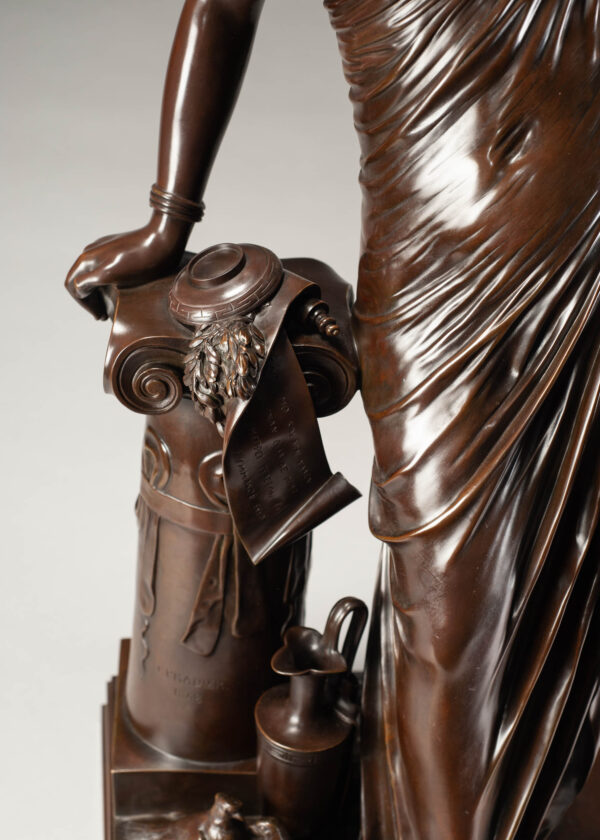
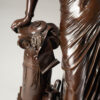
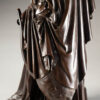
The current sculpture represents Sappho, the most famous female Archaic Greek poet, renowned for her lyric poetry and music. She has often been given titles such as ‘The Tenth Muse’ or ‘The Poetess’. Throughout the ages, she has been a symbol of romantic love and the art of poetry. The model was first shown at the 1848 Salon, and in 1851 another version was shown at the Great Exhibition of the Works of Industry of All Nations in London.
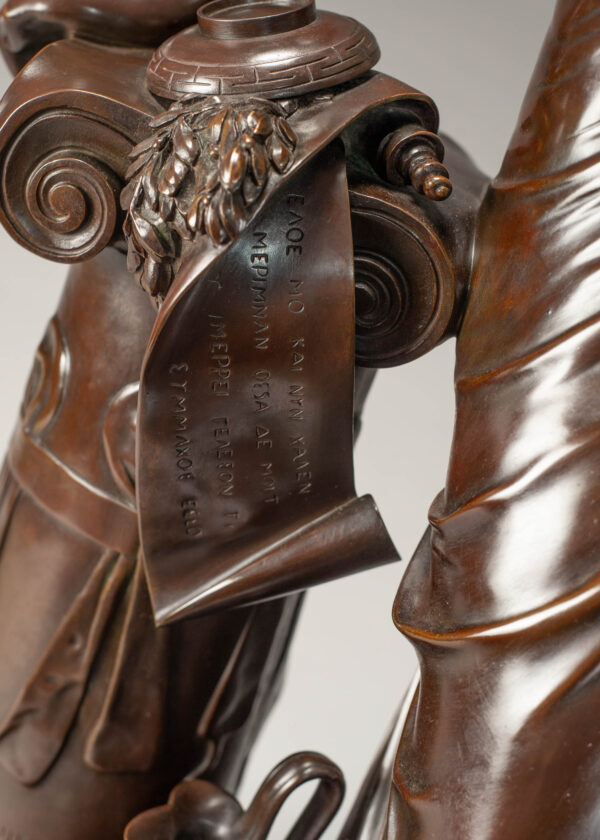
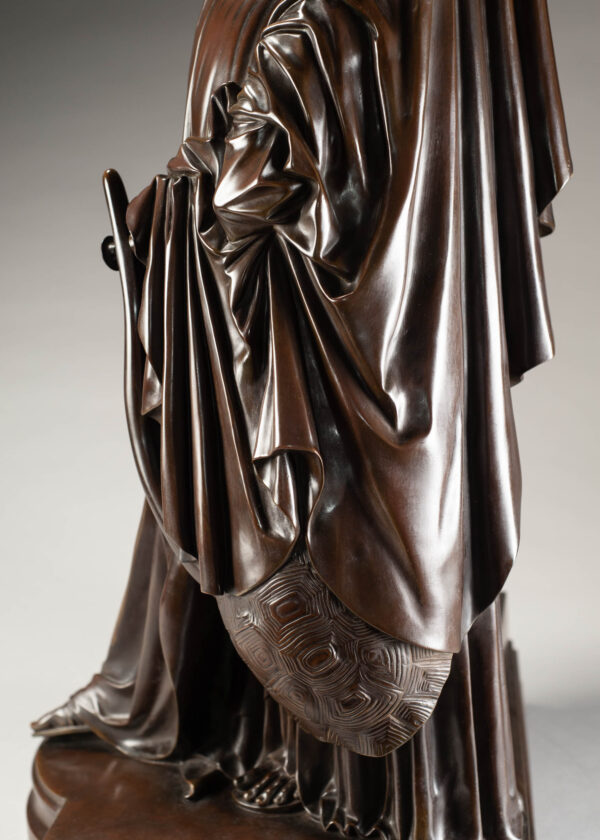
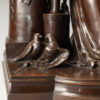
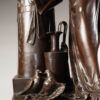
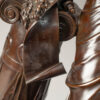
Pradier portrays Sappho with a rare tortoiseshell lyre. The scroll hanging from the column contains a verse from her most famous poem Ode to Aphrodite. The tortoiseshell lyre and scroll (inscribed with a verse from ‘Ode to Aphrodite’) symbolize Sappho’s dual legacy as a poet and musician. This rare large cast also includes further attributes, which are not included in other versions, a Greek ewer and a cooing dove couple, as additional allusions to antiquity and romantic love.
The present sculpture is a rare large version, one of three currently known bronze casts of this size (87 cm), which have the extra attributes. One is in the collection of The Dahesh Museum of Art (New York), and another is currently in the Royal Collection, displayed at Osborne House. One further version has been cast in silver and is currently in the collection of the Bowes Museum, making the present cast the only known cast that is not in a public collection.

 English
  Chinese