








Herbert Ward
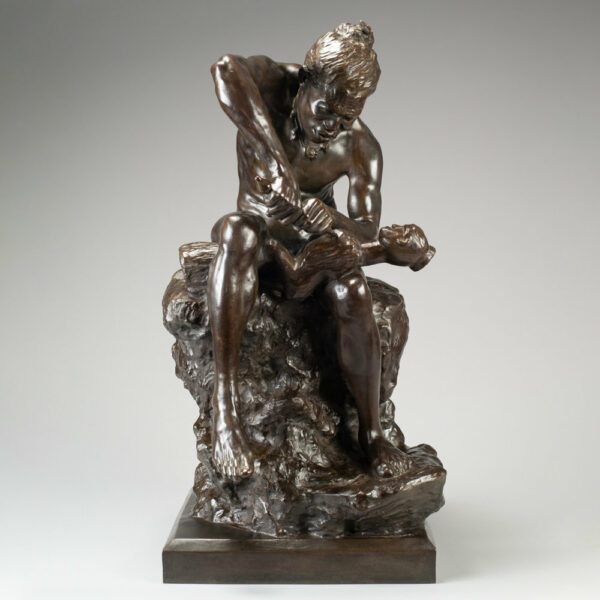
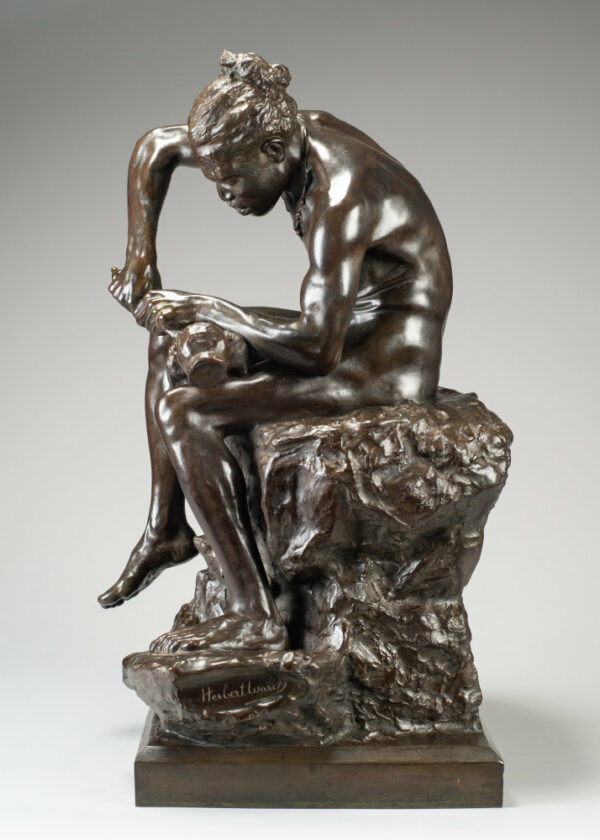
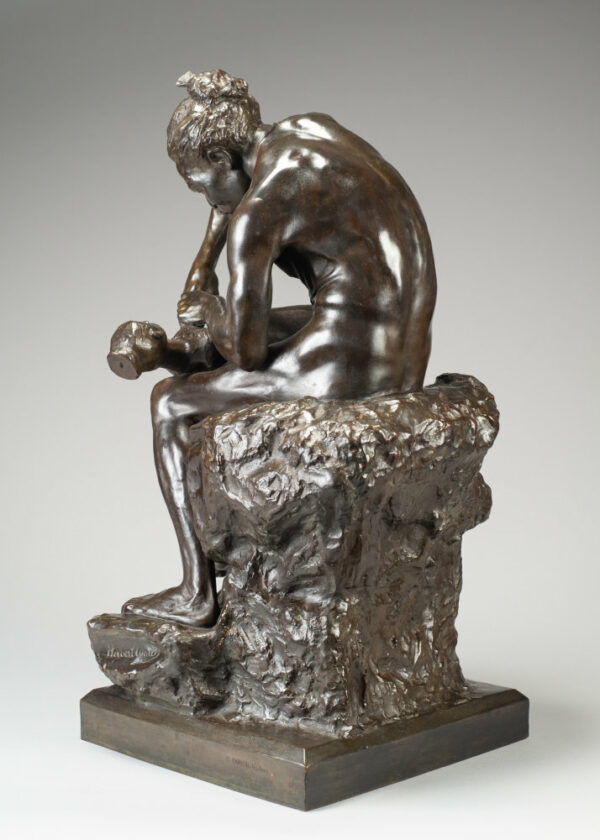
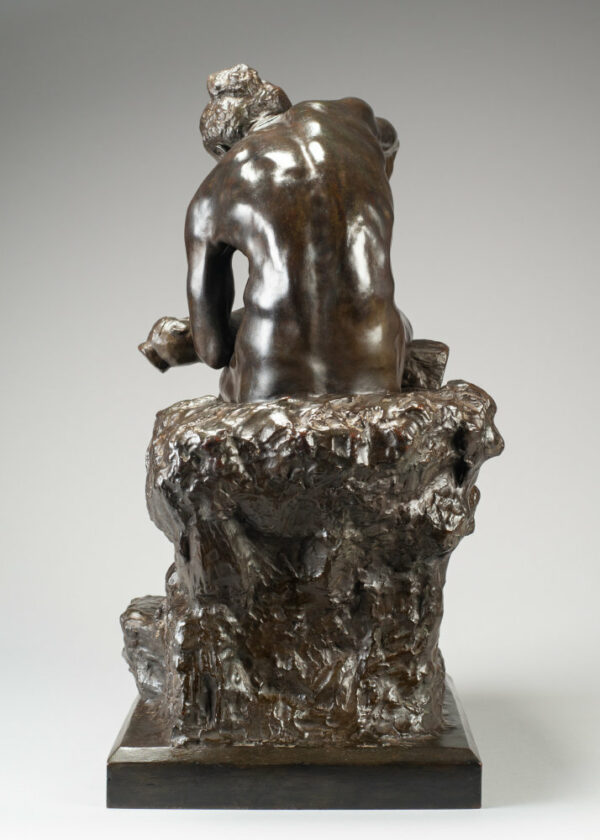
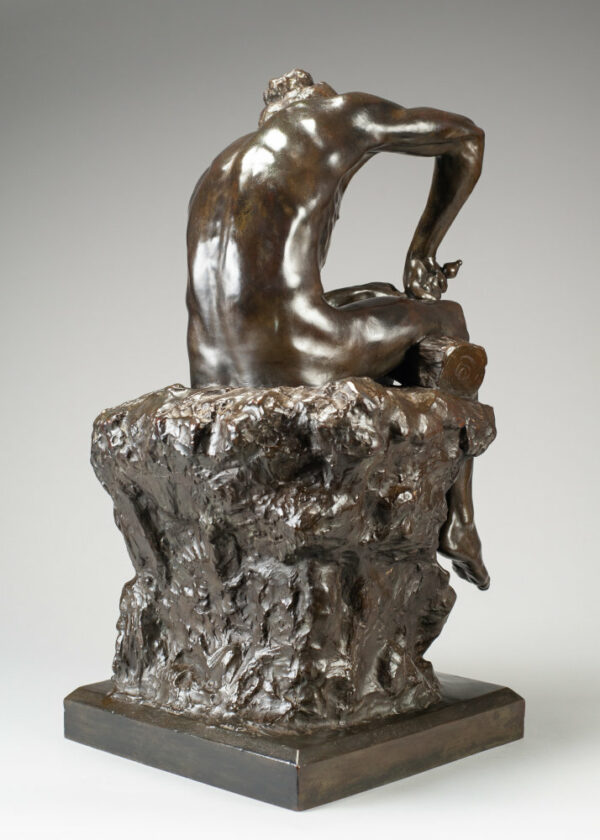
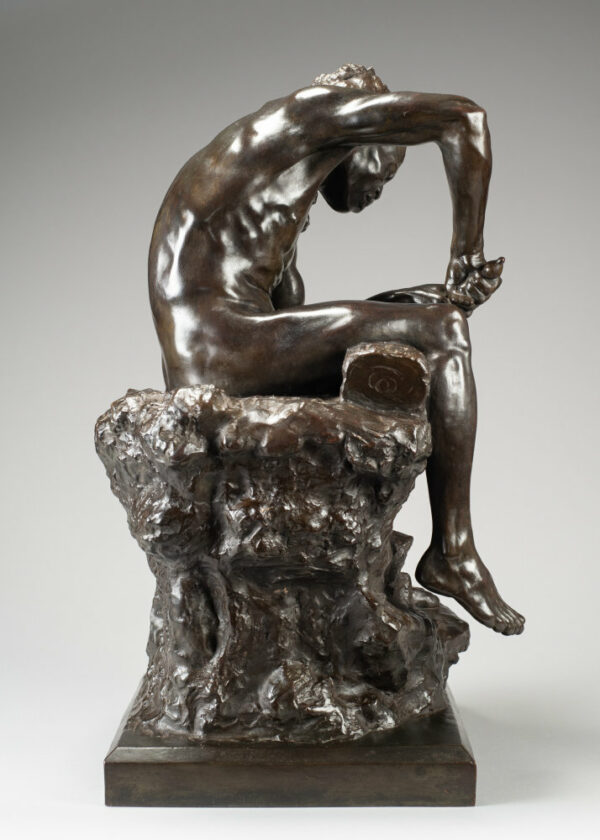
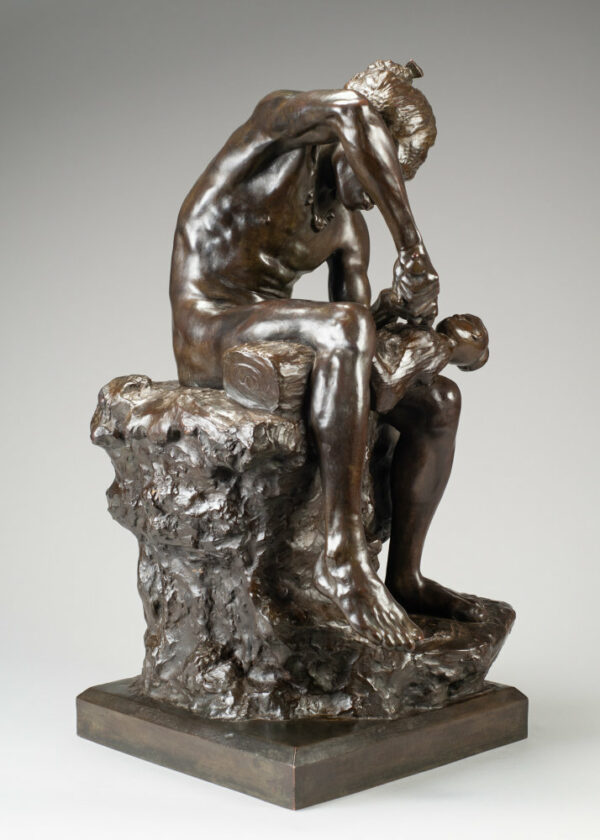
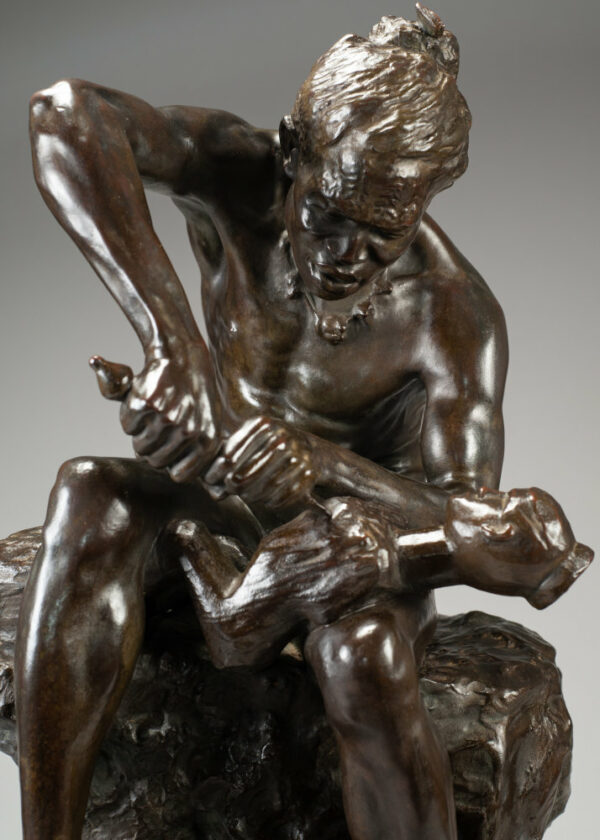
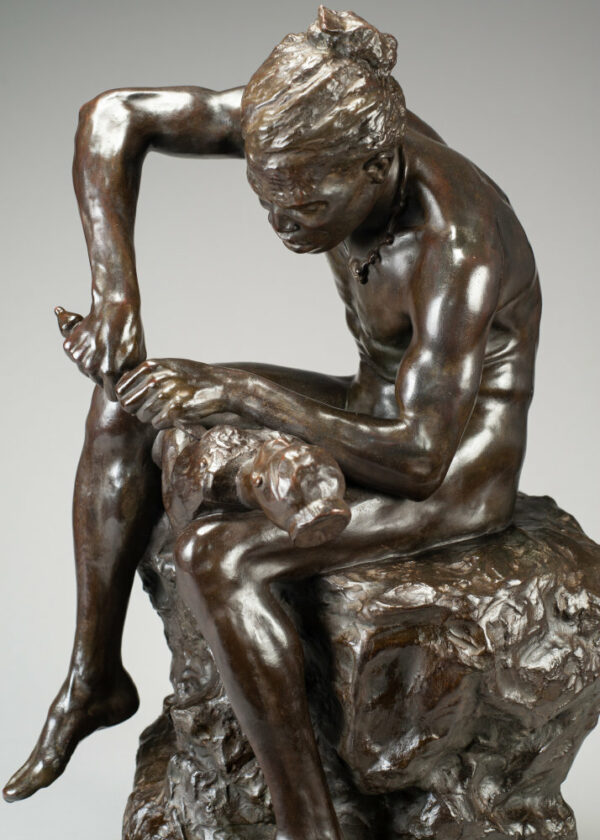
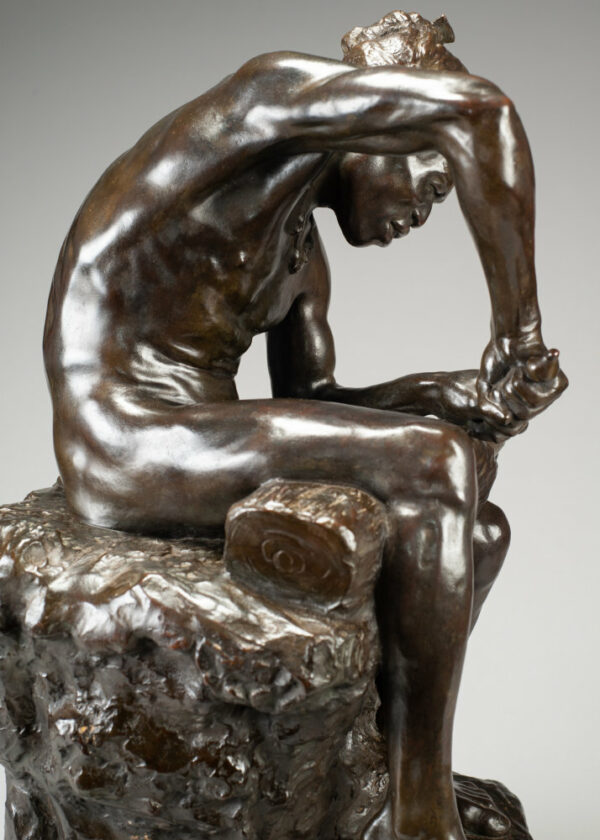
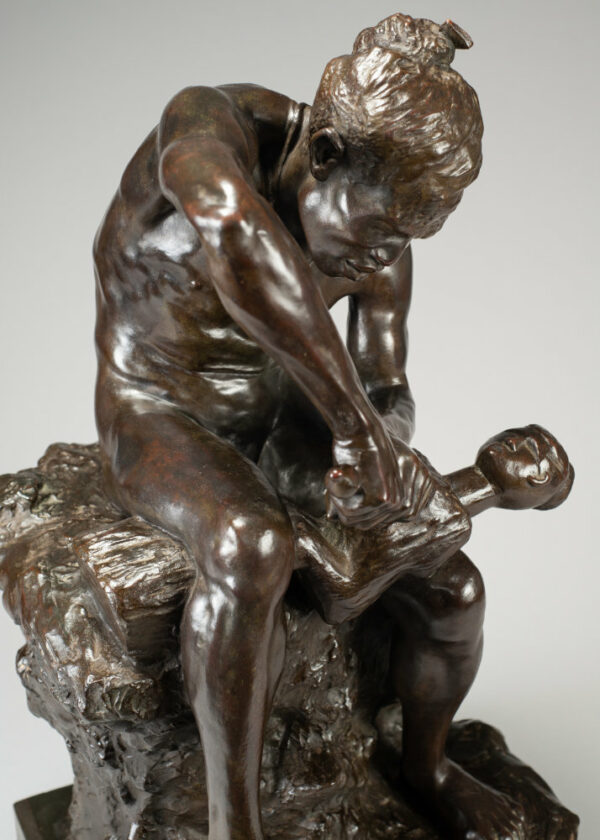
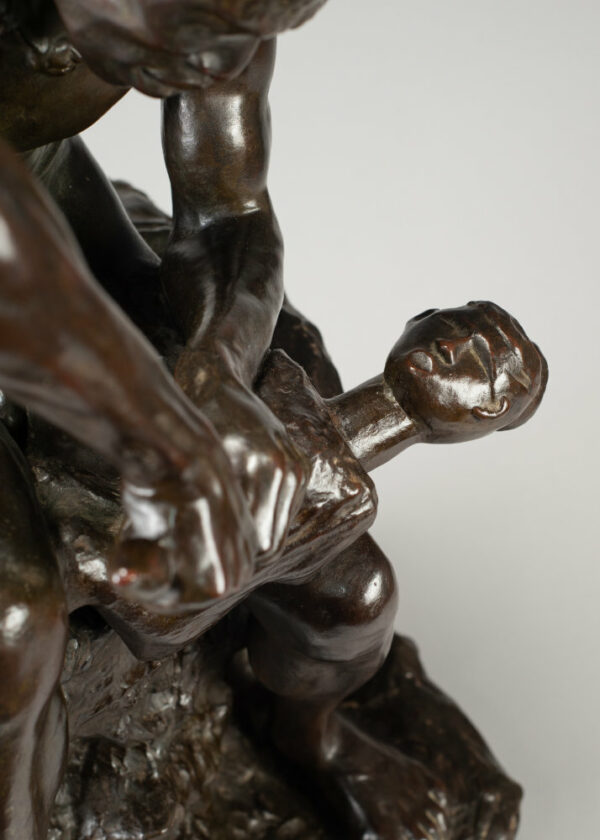
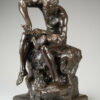
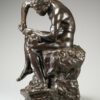
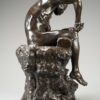
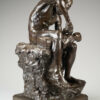
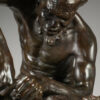
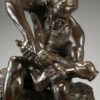
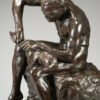
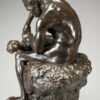
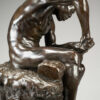
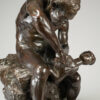
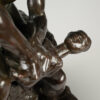
The Idol Maker
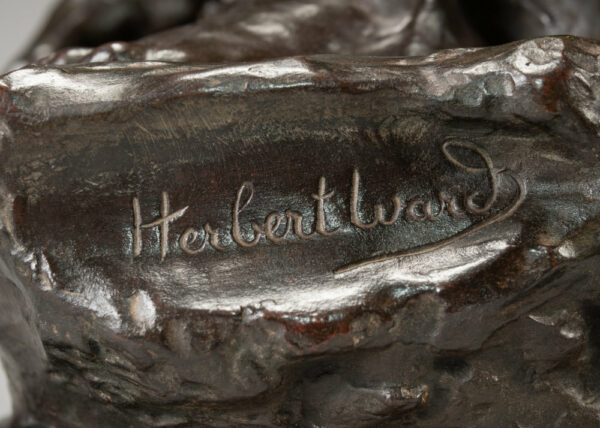
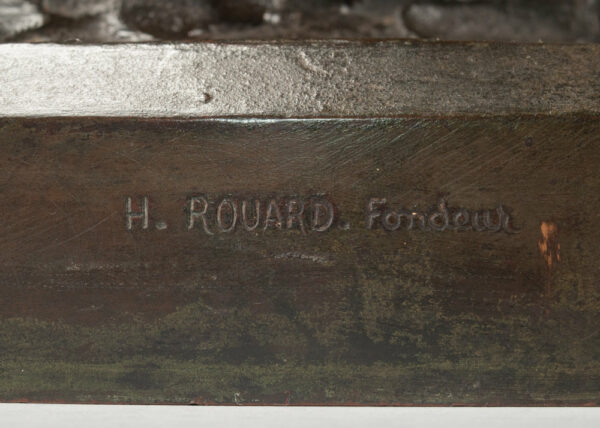
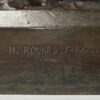
Signed Herbert Ward and inscribed with foundry mark H.Rouard Fondeur
Bronze, rich dark and mid brown patination
Height 23 3/4” (60.5 cm)
Conceived and cast circa 1900
Provenance:
Private Collection USA
Sold Sotheby’s, 16th December 2015, lot 107
The Fine Art Society, London, purchased at the above sale
ABOUT THE ARTWORK
Herbert Ward was born in London in 1863. From an early age he harboured a fascination for exploration and travel, becoming a sculptor, writer and anthropologist. He grew up in a time when society had gained renewed interest in voyaging to undiscovered places, not to conquer, as their predecessors had, but to explore and gain knowledge.
In 1887, aged 24, Ward’s obsession finally took him to Central Africa. He supported himself by working for various trading companies managing the transport of goods and supplies to and from European posts along the length of the Congo River. In 1888, he joined Henry Morton Stanley’s Emin Pasha Relief Expedition, serving the two-year expedition in a similar capacity.
Ward journeyed extensively through Africa and his love of the native people, and their customs inspired him to produce work of rare beauty. He learned their customs and languages and drew inspiration from their way of life.
After travelling to New Zealand, Australia and Borneo, Ward returned to Europe to complete his academic studies. Initially enrolling at the Academie Julian, he later went on to study sculpture at the Royal Academy and at the Salon des Artistes Francais.
In 1902, Ward moved permanently to Paris. He found that Paris provided easier access to African and Caribbean models for his sculptures — the French had excellent foundries for bronze casting — and he enjoyed a greater acceptance of his Congolese subjects by the French art academy and the public. He made his debut at the Paris Salon in the summer of 1902 with Le Sorcier.
His work earned him many accolades and he was rewarded for his talent and skill, receiving numerous medals and honourable mentions, including gold medals from the Societe des Artistes Francaise for his work Le Chef de Tribu in 1908 and L’Artiste Congolais in 1910. After a collection of his work was exhibited at the Salon des Orientalistes, several pieces were purchased by the French State, including La Tete de Jeune Fille in 1908 and La Tete d’Indigine Aruwimi in 1911. Shortly after this exhibition, Ward was made a Chevalier de la Legion d’honneur.
A skilled writer, Ward’s books documenting his travels in Africa reveal much of his thinking and inspiration behind his sculptures. In his work entitled Five Years with the Congo Cannibals (originally published in 1890) he writes about his desire to achieve “honest observation”.
He developed enormous understanding and sympathy for his subjects, so much so that his representations are disturbingly real. Although often brutal and cruel by nature, he saw a gentle side to the Congolese tribes and as a result his sculpture often portrays the tension between these emotions.
Ward’s work has been praised for its detailed ethnographic accuracy, but Ward was always adamant that his pieces were, above all, art and not scientific studies. Theodore Roosevelt wrote of Ward: “All the mystery and the savagery and the suffering … and the harsh beauty of the African forest come out in Mr Ward’s works. Only an artist could have done what he has done, and no artist could have done it had there not lain within him the soul of a great man, a man both strong and pitiful.”
Around 1906, Ward installed his Congo collection on the upper floor of his Paris studio. In this private museum, Ward carefully and painstakingly designed the installation of objects to maximize the display’s aesthetic effect and to serve as a foil for his bronze sculptures of Congo. His collection included over 1,000 weapons and many textiles, carved figures, musical instruments and personal ornaments.
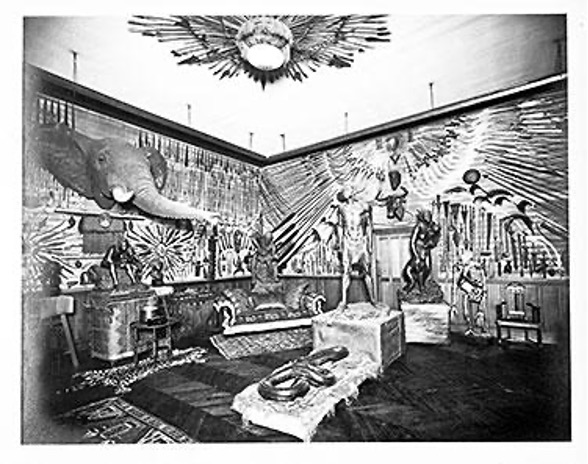 Photograph of the installation of Herbert Ward’s collection in Paris, c. 1911
During World War I, Ward served as a Lieutenant in the No. 3 Convoy of the British Ambulance Committee where he distinguished himself. His exertions weakened his health and he died in 1919. In 1921, his widow, Sarita Ward, donated his collection along with his bronze sculptures depicting vignettes of Congo life to the Smithsonian.
The curators of the Smithsonian’s National Museum (now the National Museum of Natural History) designed the exhibition in Washington to capture some of the drama that Ward had achieved in his Paris display. They hung curtains over the windows to recreate the sombre atmosphere of Ward’s installation, which they described as evocative of the “jungle”. They also mounted antelope and elephant trophy heads on the walls, surrounded by African weapons arranged in decorative patterns. Even so, the museum’s installations were noticeably more restrained than the originals in Paris.
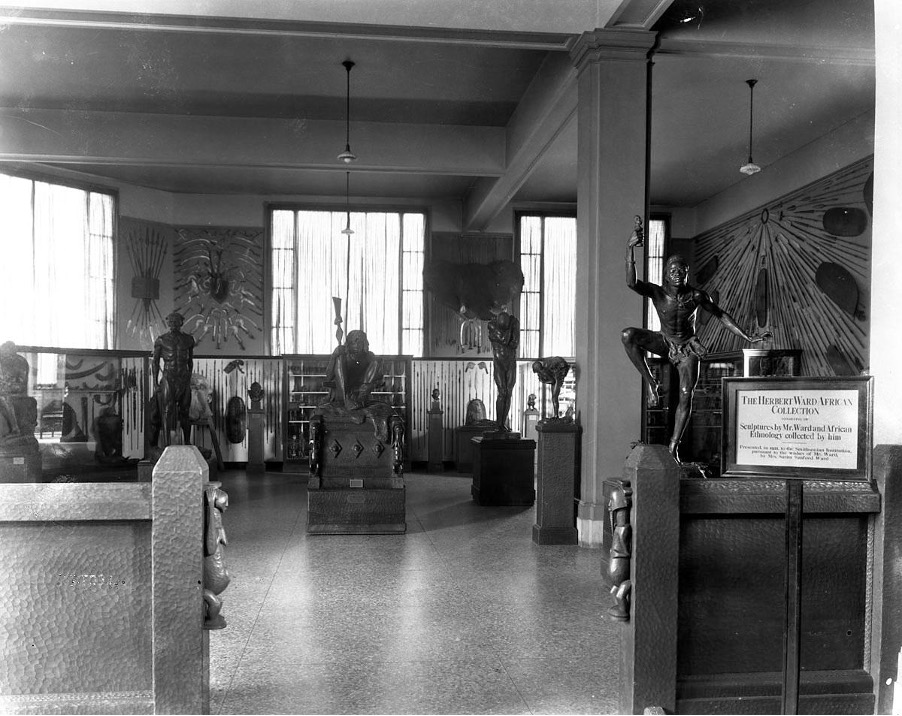 Photograph of the Ward exhibition (c. 1922), Smithsonian’s National Museum (now the National Museum of Natural History).
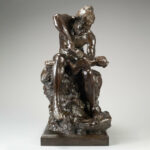
The plaster for The Idol Maker was first exhibited at the Paris Salon in 1906. Large-scale bronze versions are in the collections of the Smithsonian Institution, Washington D.C., and the Royal Museum for Central Africa, Tervuren. A cast of the same dimensions as the present bronze is in the National Museum of Wales, Cardiff (inv. no. A320).
The Idol Maker was created around the same time Ward was working on Les Fugitifs, Le Chef de tribu and Defiance. These works are among his most natural and dignified studies of the native Congolese people, presenting them with power and intensity drawn from authenticity.
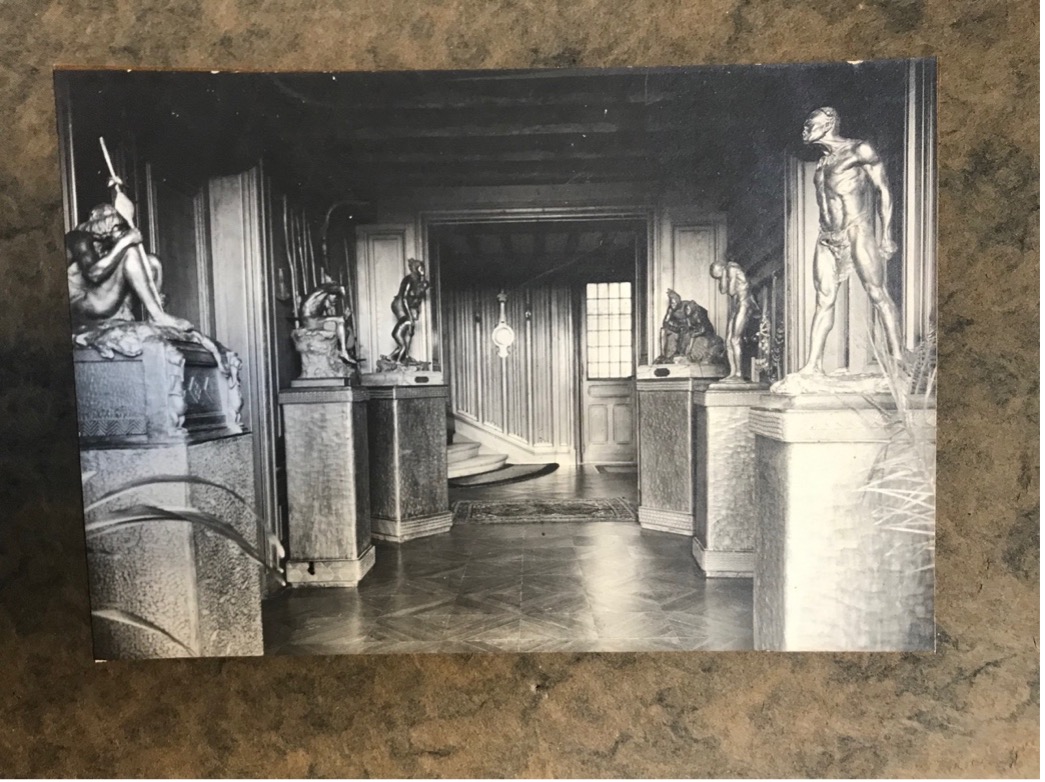 A view of one of the rooms in the Wards home in Romboise, on the banks of the Seine.
Ward produced his works in very small numbers, not needing to sell his work for commercial reasons, but preferring to cast works for specific Museums or collectors. In this scale we are aware of one other cast in a private collection in France, another in the Cardif Museum, given by Mrs Herbert Ward in 1921 and the present example.
The Paris foundry of Rouard started in the early 19th century as Boyer Freres and developed into the foundry known as Jaboeuf et Rouard in 1902. Their work was cast using the sand-casting technique and was of a superb standard, gaining them medals at the International World Fairs in St. Louis in 1904, Liege in 1905 and Milan in 1906. They famously cast works for the International American Sculptor, Frederick Macmonnies.
In 1917, the name of the foundry changed to H. Rouard as Jaboeuf’s health failed, leading to his death at only 58 in 1919. Rouard continued to work with important sculptors, producing fine bronzes for not only Herbert Ward but also Raoul Verlet. H. Rouard ceased to be recorded in the commercial records of foundries by 1935.

 English
  Chinese