
Eduardo Paolozzi
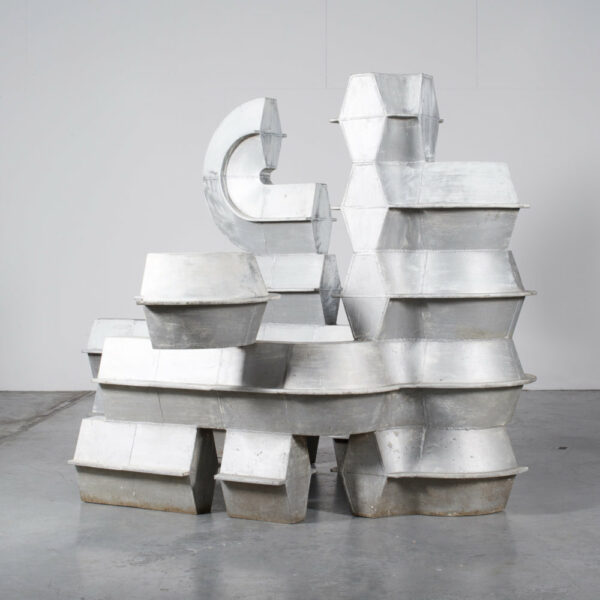
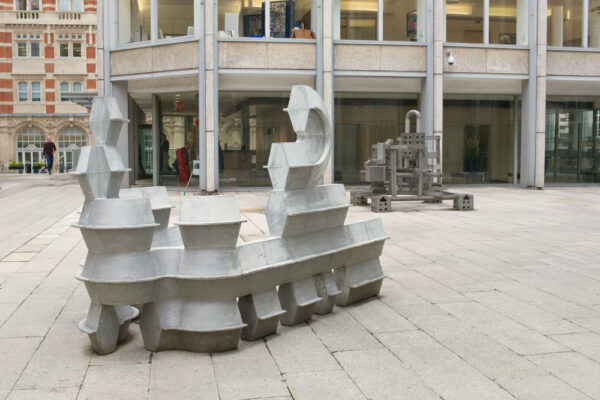
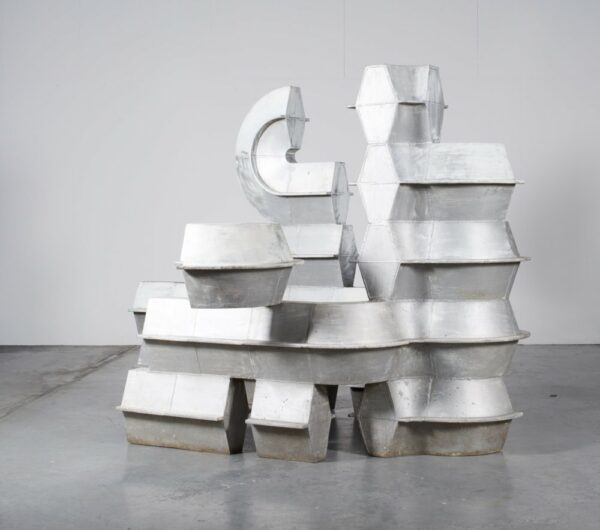
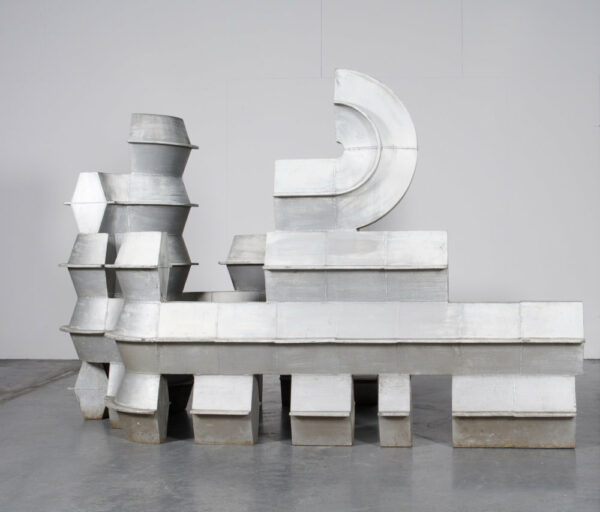
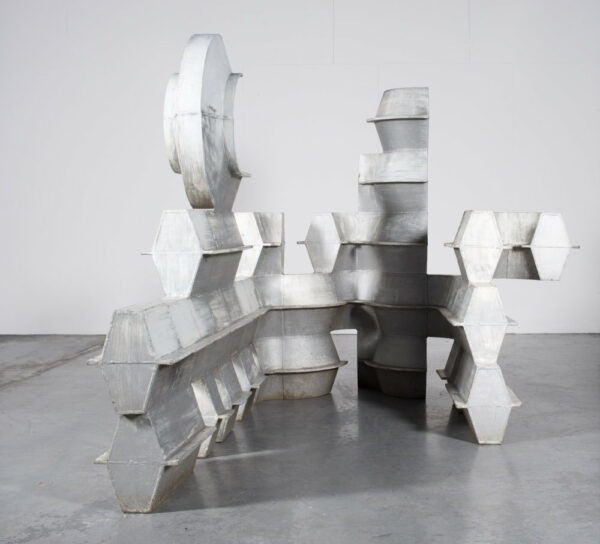
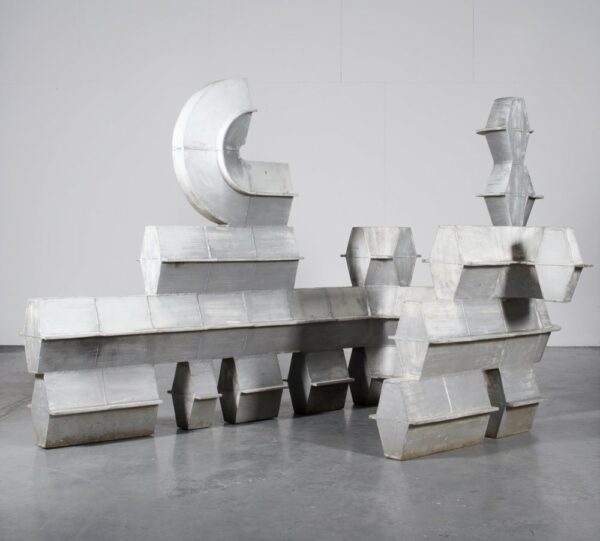
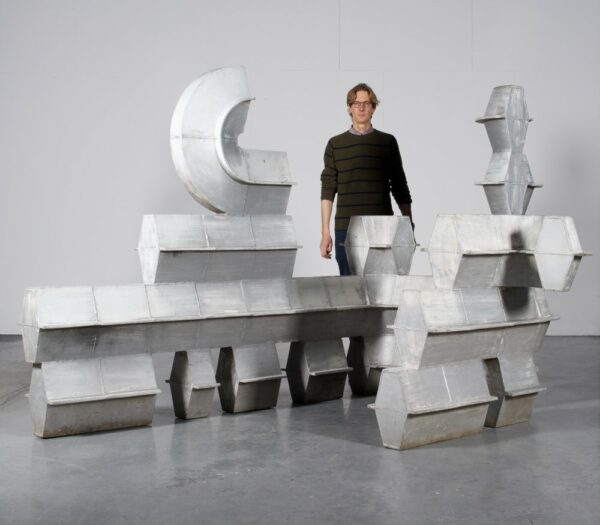
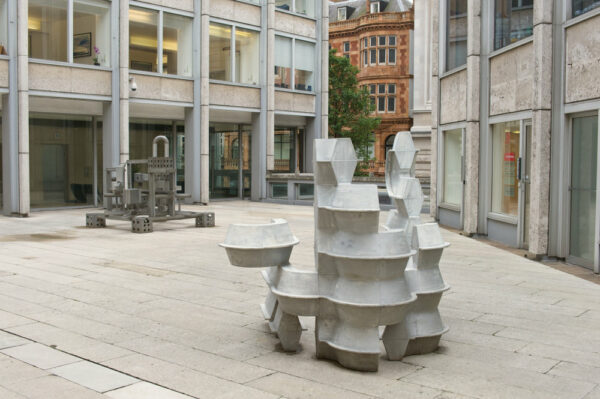
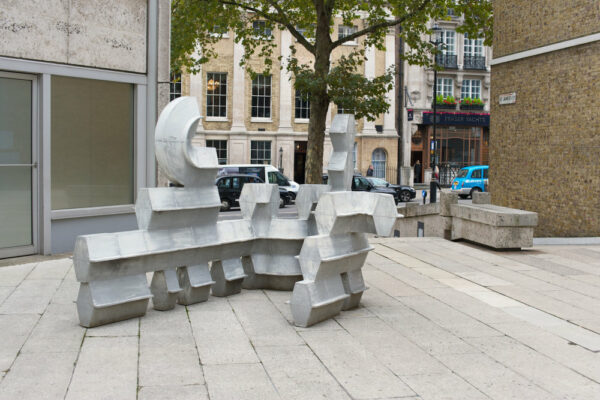
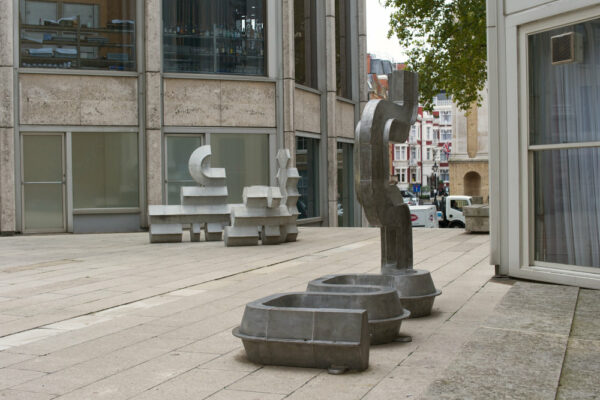
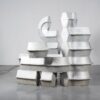
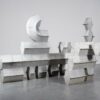
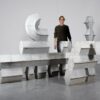
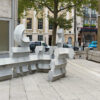
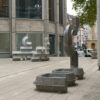
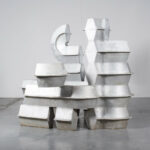
Trishula, 1966
Cast, extruded and welded aluminium
Height: 70 1/2″ (179 cm)
Unique
ABOUT THE ARTWORK
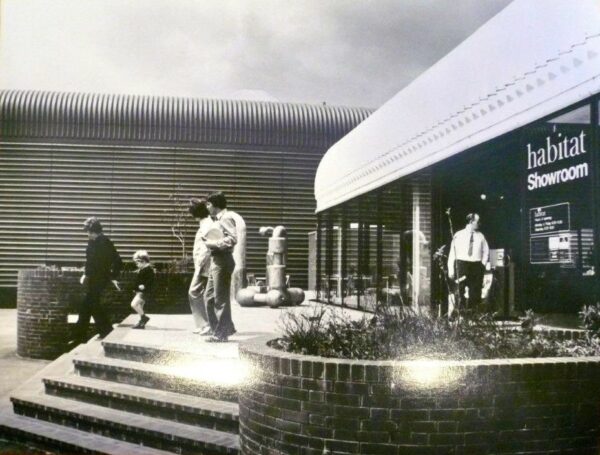
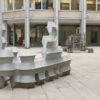
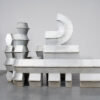
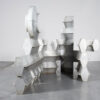
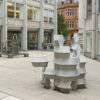
A prominent feature of Paolozzi’s exhibition at the Yorkshire Sculpture Park in 1994 were three sculptures, Suwasa, Trishula, and Kalasan, made between 1966 and 1974. The sculptures were once part of a children’s playground conceived by Paolozzi for his former student Terence Conran’s Habitat store at Wallingford, Oxfordshire. They reveal much about the condition of public sculpture in the second half of the 20th century, and the major contribution Paolozzi’s sculptural language made to it.
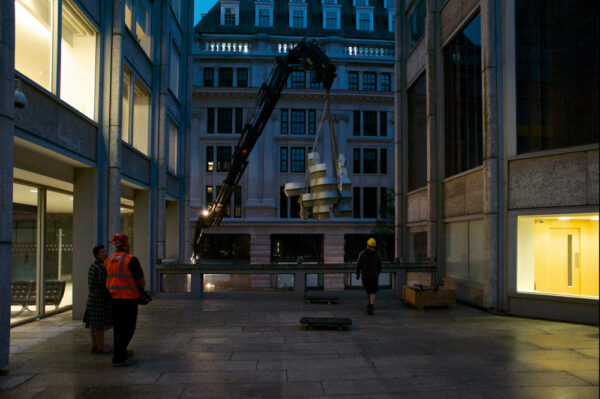
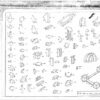
The ‘wall’ sculpture Trishula dates from 1966 and was made from the same lozenge-shaped hexagonal units as Suwasa. The lozenge-shaped hexagonal units formed the basis of several aluminium and concrete ‘wall’ sculptures in 1966-7, such as Pan Am, Mainspar and Alapasti, which date from 1967-8 and were all painted white. Two aluminium ‘wall’ sculptures of 1974, Ciboure and Fuentetodos, were shown, unpainted like the Habitat sculpture, on the terrace outside the National Galerie, Berlin, during the Paolozzi exhibition of 1975.
The year in which the Habitat sculpture was installed, the hexagonal unit were also used on a larger scale for a playground in Santa Cruz, Tenerife. The sculpture, For Gaudi, cast in concrete from metal moulds, was hollow, Paolozzi described, ‘so that children could hide and play in these areas and obviously the arrangement of the forms could be everlasting, not exactly a play on Brancusi’s everlasting column but a reference to it in another dimension’.
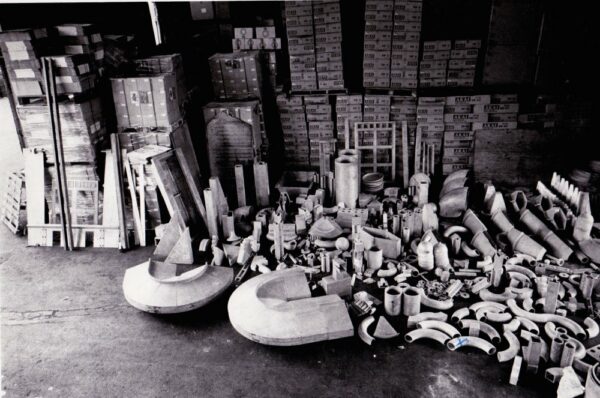
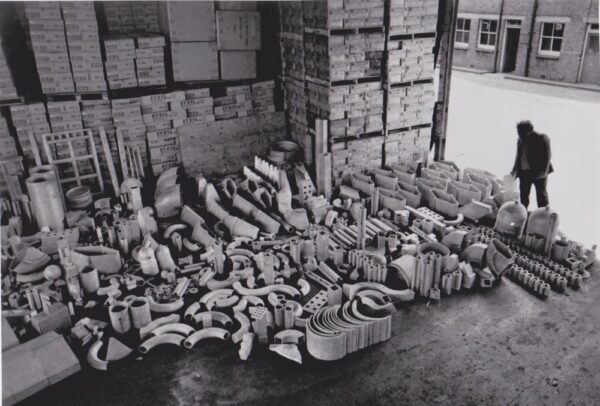
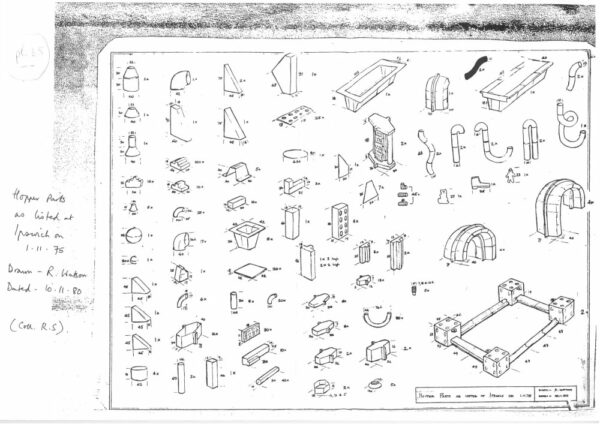
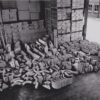
The aluminium units for Trishula, Suwasa and other sculptures in the mid-1960s were made from what Paolozzi described as his ‘vocabulary of aluminium forms’, which were piece moulded and prefabricated at pattern makers in London and Essex and assembled into sculpture on the shop floor of Jubys Engineering Works in Ipswich. Paolozzi described his way of working for the American curator Peter Selz of the Museum of Modern Art, New York, for an exhibition of his work there between September and November 1964:
“For the last three years I have been going to Engineers in Ipswich, Suffolk to have my sculpture made – the event takes place entirely in the welding bay – there the welder and I work together – cutting sawing – tacking sections together filing and finally welding the finished work”

 English
  Chinese