

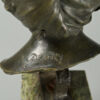
Alfred Drury
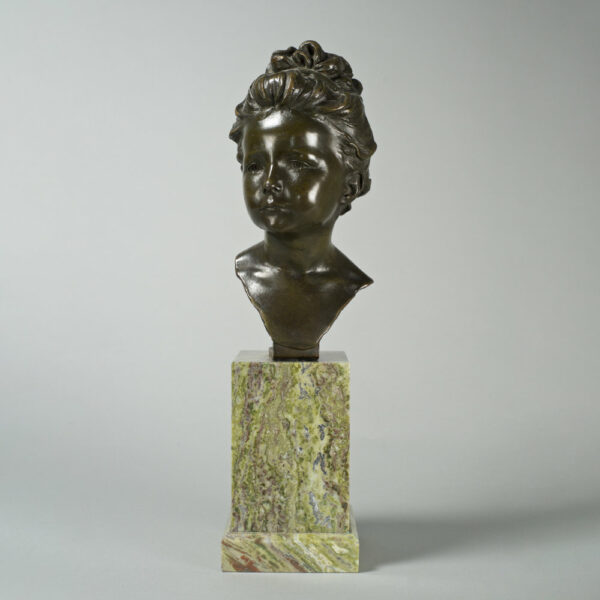
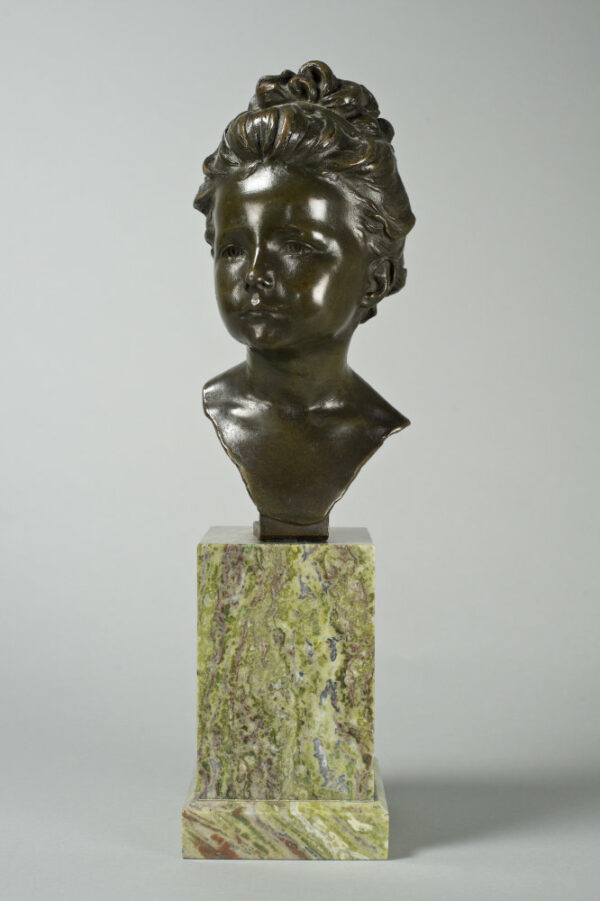
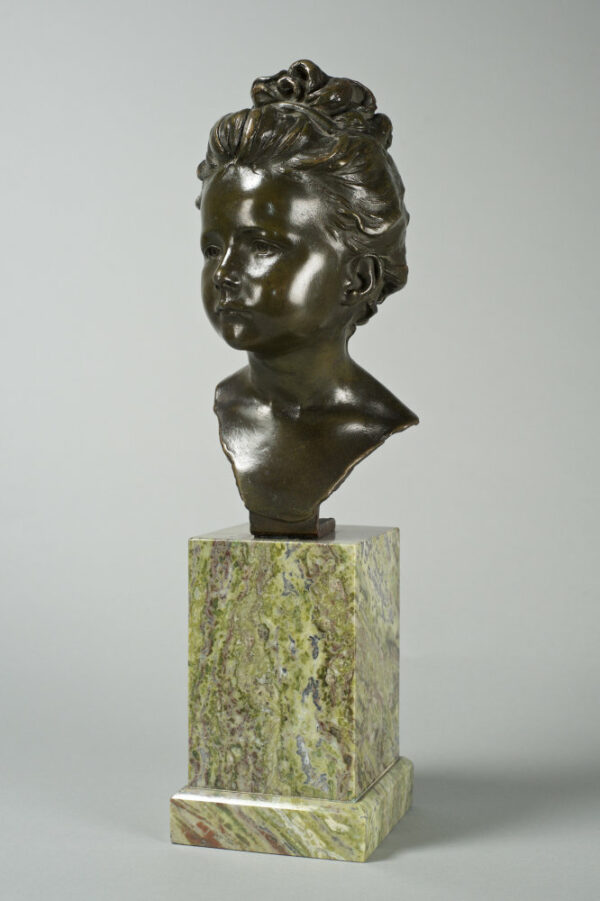
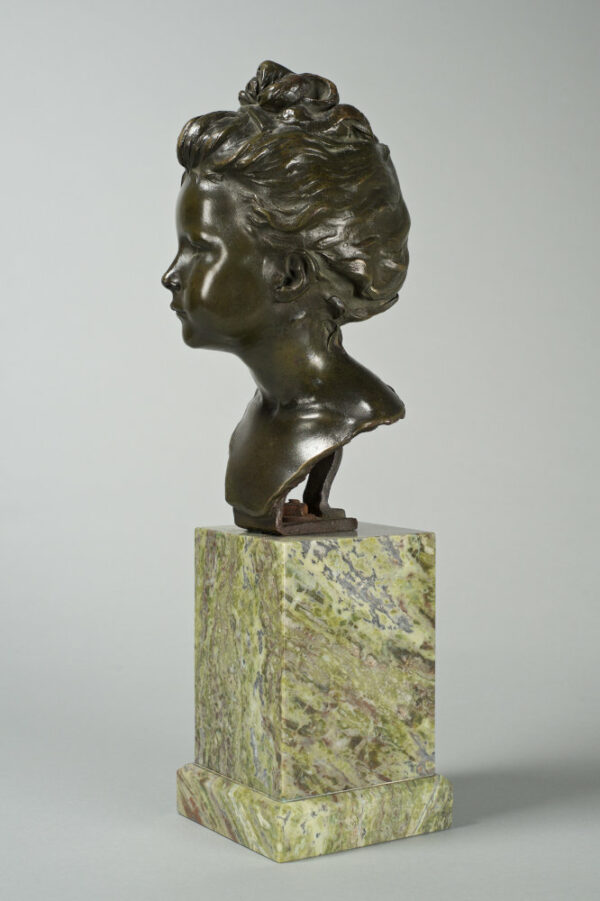
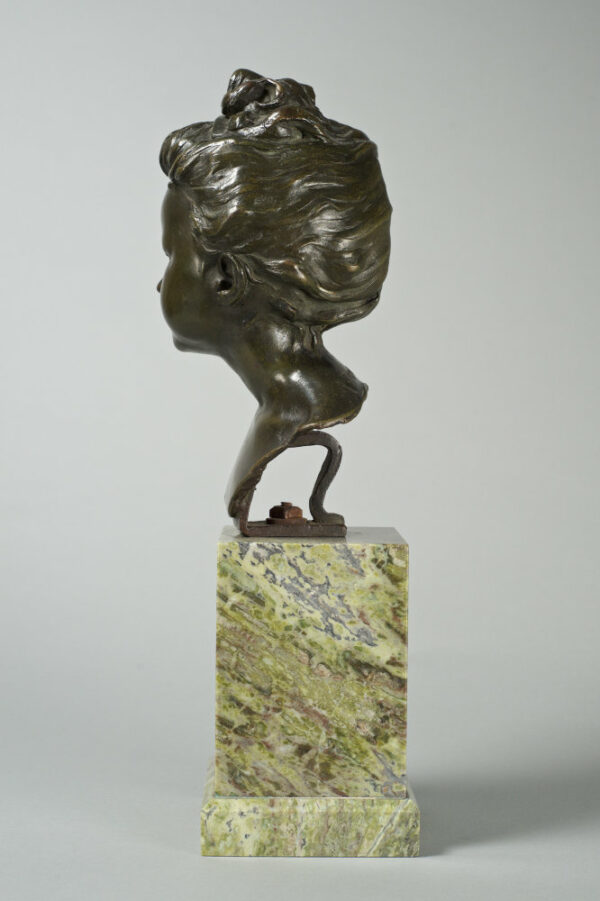
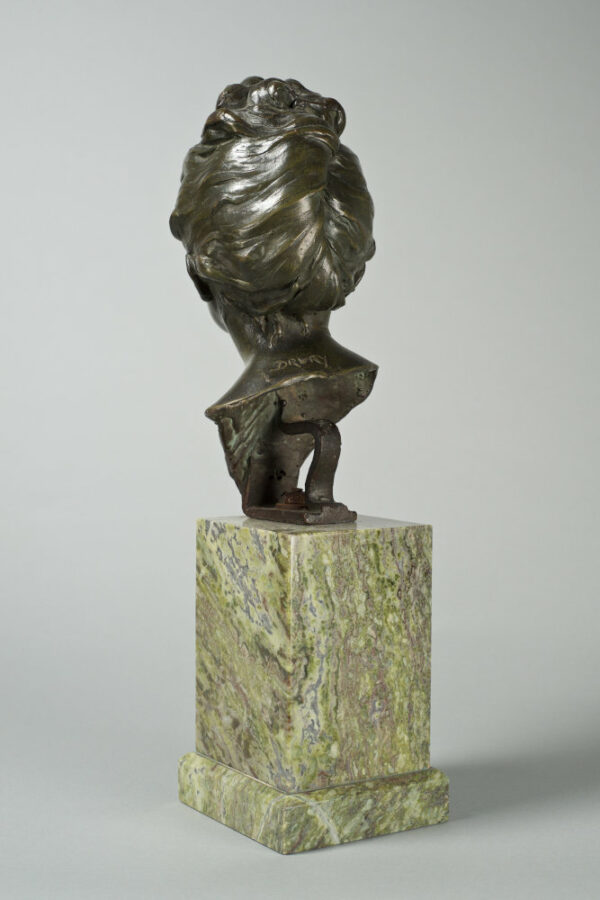
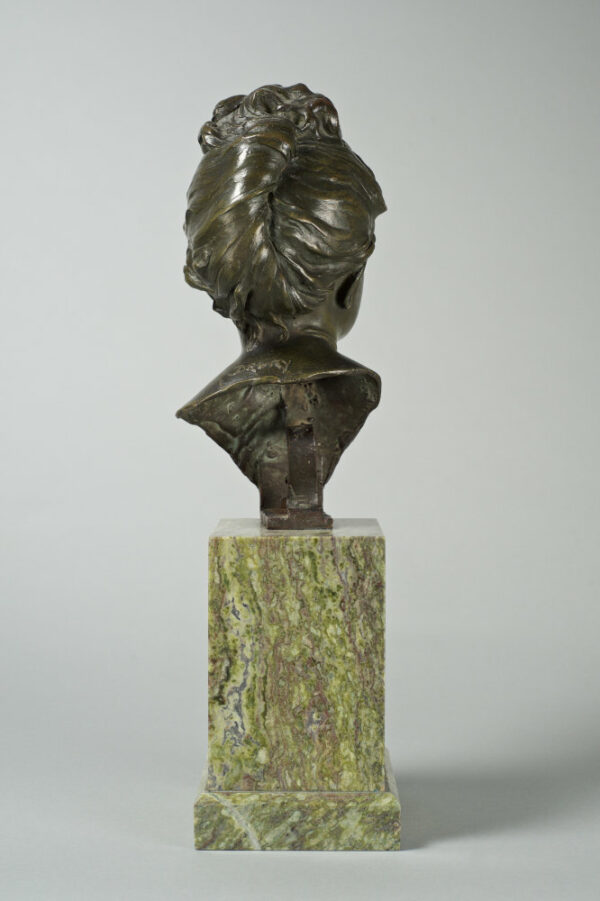
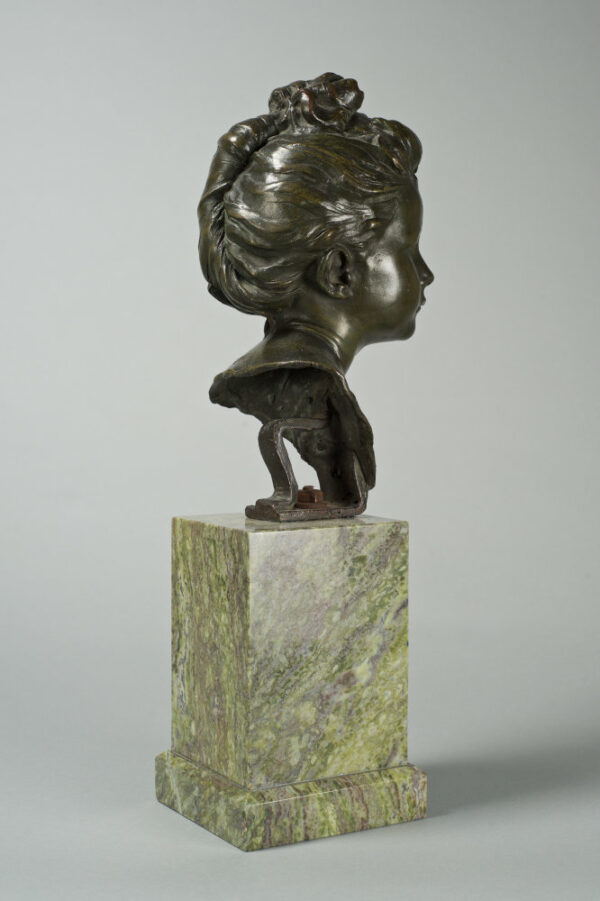
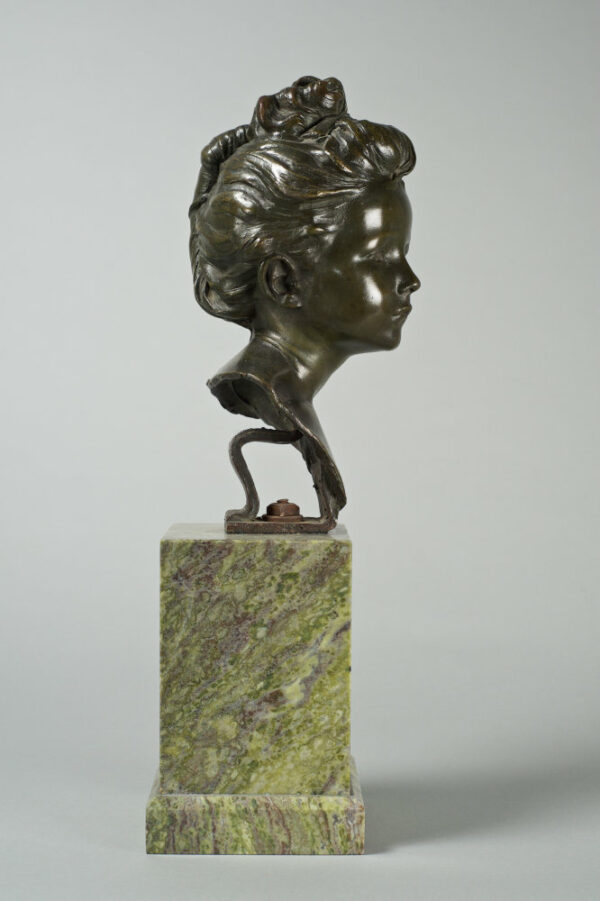
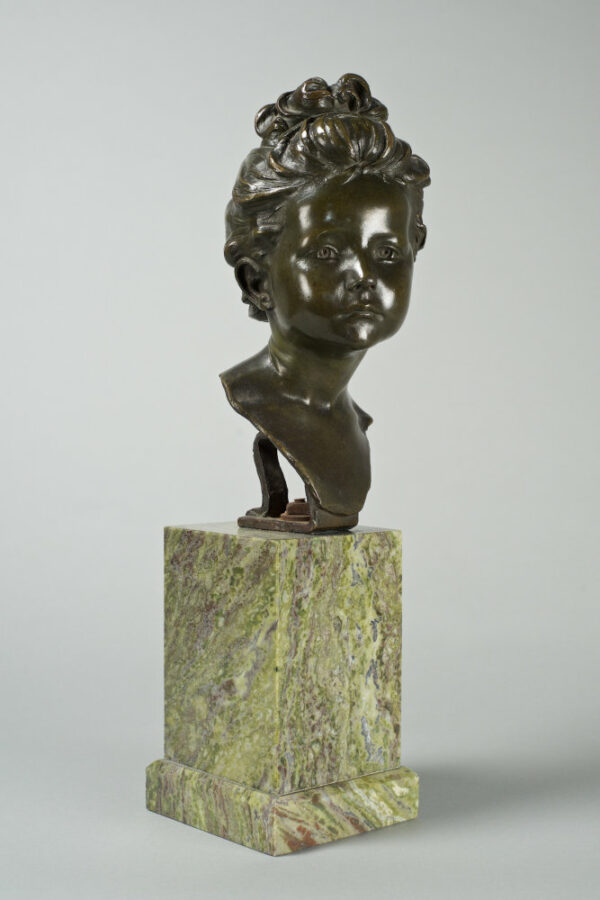
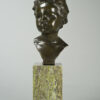
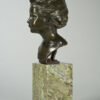
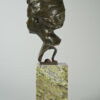
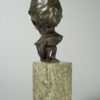
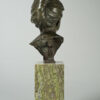
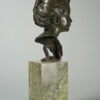
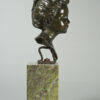
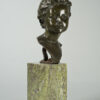
Gracie Doncaster (The Age of Innocence)
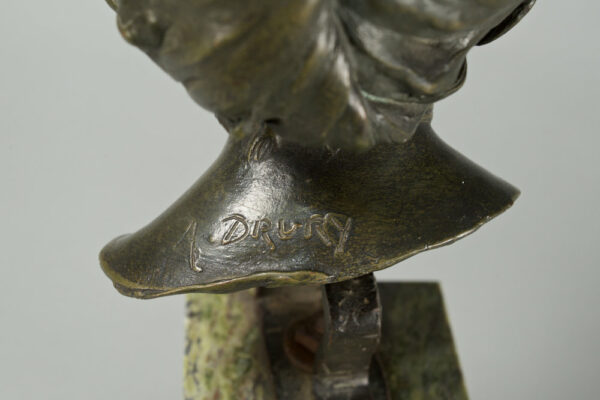
Signed A DRURY
Bronze with light brown and green patina
Height: 9 1/16″ (23 cm)
Conceived and cast circa 1897
ABOUT THE ARTWORK
The Age of Innocence is one of Drury’s most popular and well-known works. The model was conceived in plaster in 1896 and first exhibited in marble at the Royal Academy in 1897. This version incorporated the girl’s shoulders and a dress covering her upper arms and torso.
The work was widely praised by connoisseurs and critics alike, with M. H. Spielmann, author of British Sculpture and Sculptors of Today (Studio Special Number 1901) arguing that the The Age of Innocence significantly ‘heightened the public appreciation of Mr. Drury’s talent.’ Indeed, Benedict Read, author of Victorian Sculpture (1982), later argued that the work should be seen as one of the ‘major icons’ of the New Sculpture movement.
Drury was obviously delighted with the work and in a letter (1901) to Herbert Thompson wrote ‘I am so glad that you like it so much (Thomson had recently bought a cast of the work). Among my smaller works it has certainly given me the most pleasure.’
The model for the work was Gracie, the youngest of three daughters of the Doncaster family, who were great family friends of the sculptor. All three of the daughters would later become the subjects of Drury’s ‘ideal sculpture’ which aimed to convey the purity and charm of youth. Here Drury depicts Gracie slightly titling her head, seemingly lost in a dream. Drury’s depiction of the human form is also of the highest order. The young girl’s cheeks and delicate features are sensitively rendered giving the bronze a soft almost fleshy appearance.
The present cast is an abbreviated version of the original model without the shoulders or dress.
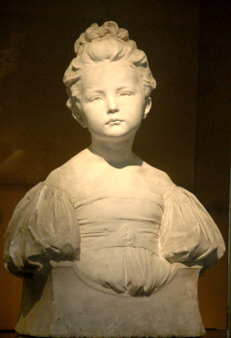 The Age of Innocence, Alfred Drury, Marble, Victoria & Albert Museum
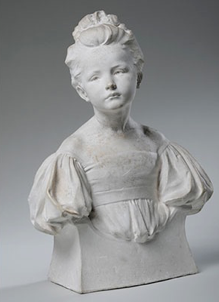 The Age of Innocence, Alfred Drury, Plaster, Henry Moore Institute

 English
  Chinese