
Albert-Ernest Carrier-Belleuse
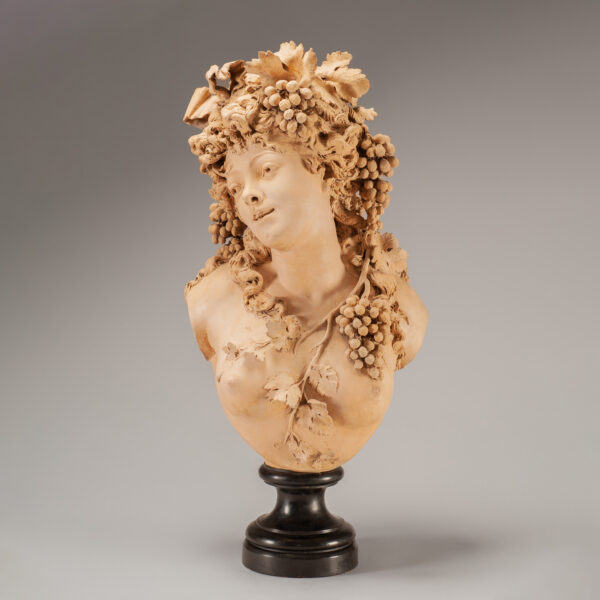
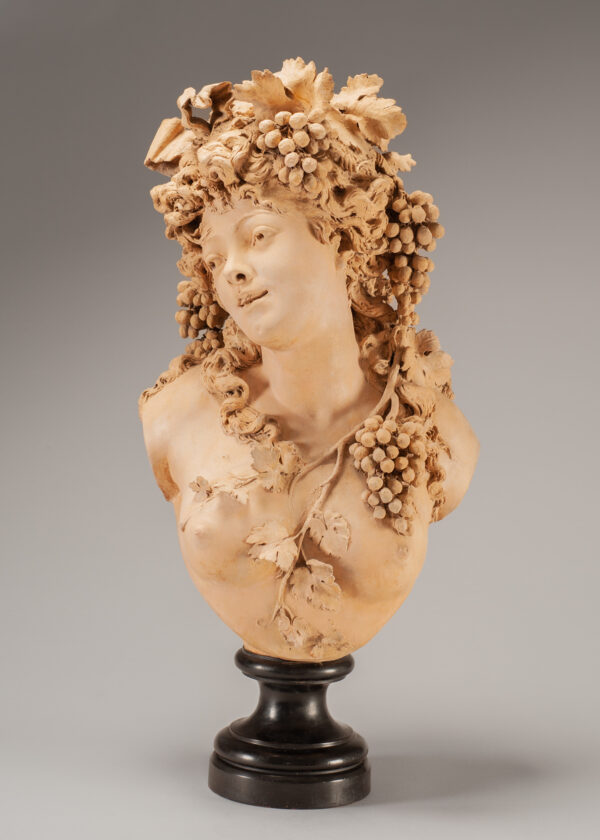
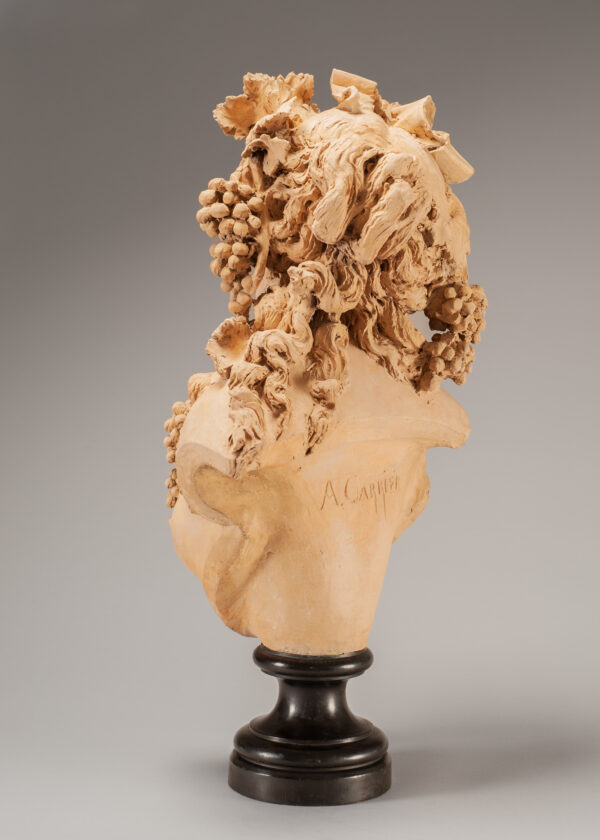
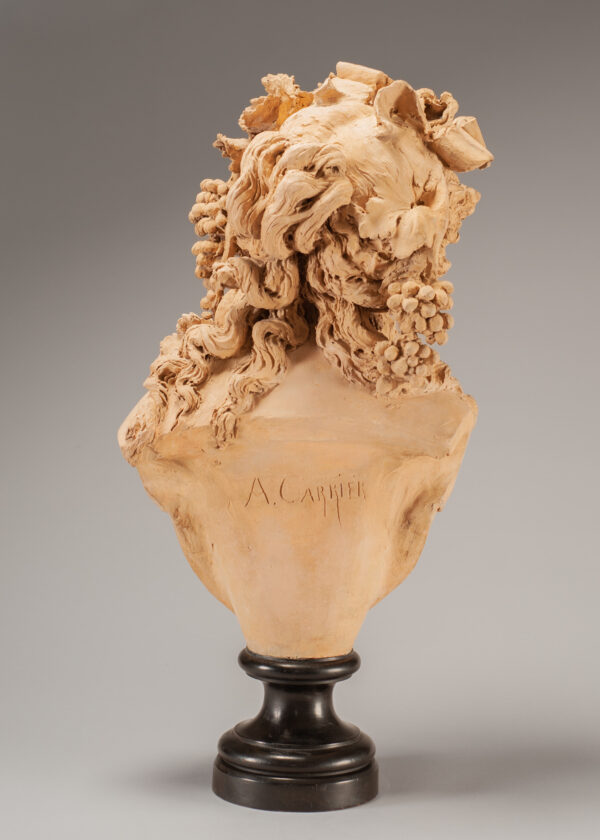
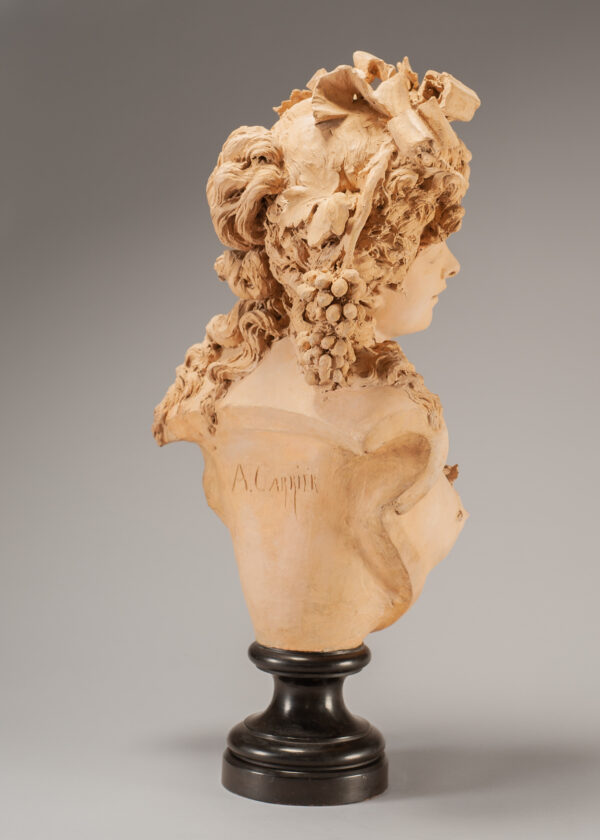
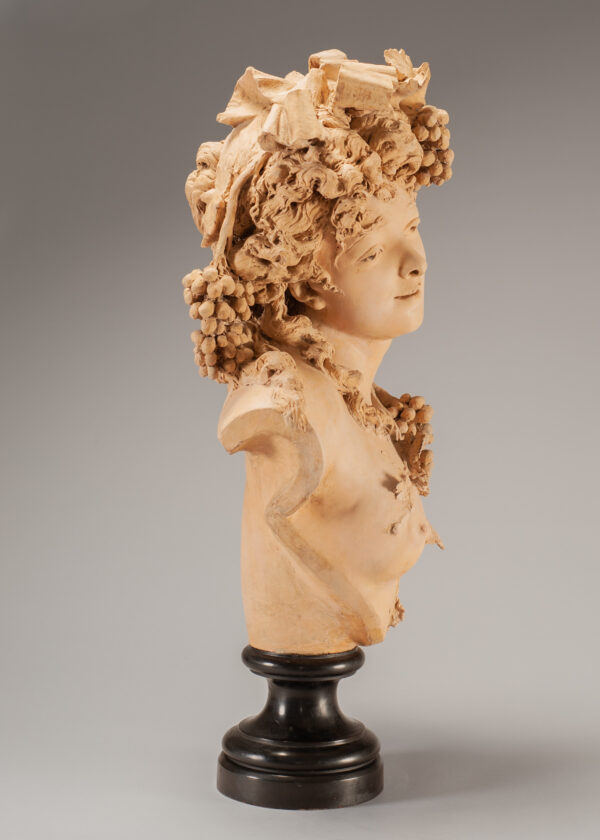
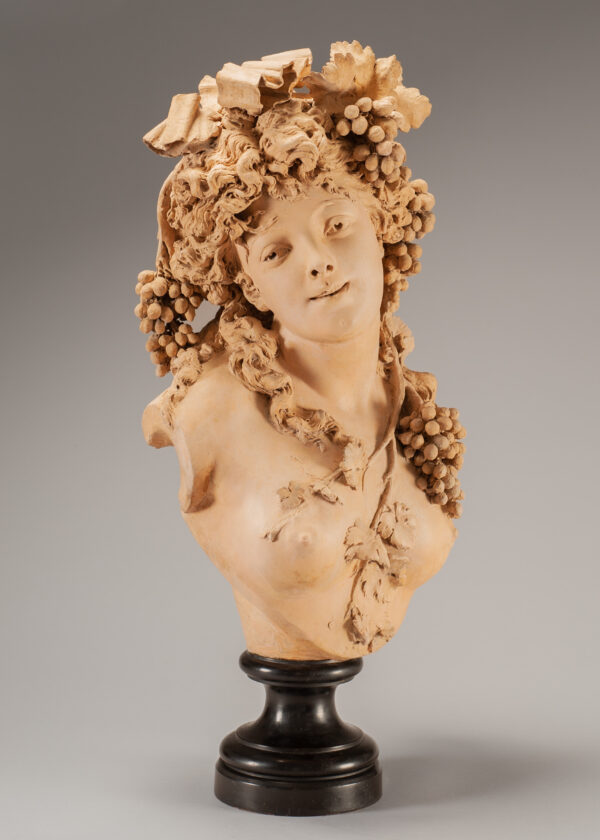
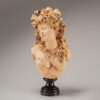
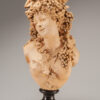
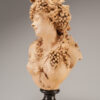
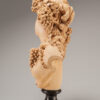
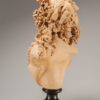
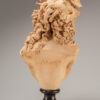
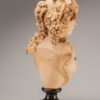
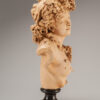
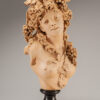
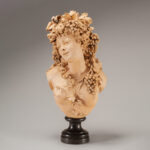
Bacchante
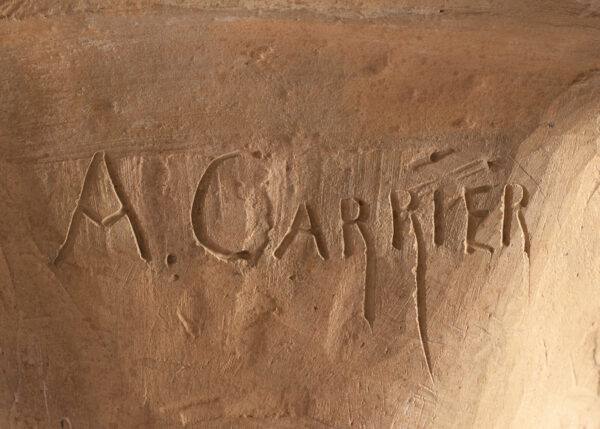
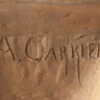
Signed A. Carrier
Terracotta on ebonized socle
Overall height: 26.7″ (68 cm)
Before 1868
ABOUT THE ARTWORK
Albert Ernest Carrier-Belleuse was one of the most successful sculptors in 19th-century Europe. Born in Ainzy-le-Château in 1824, Carrier-Belleuse first exhibited at the Paris Salon in 1851. The artist’s reputation began to grow both in France and abroad thanks to the success of his 1861 Salon entry Salve Regina and later was cemented with his work La Bacchante (1863) which was bought by Emperor Napoleon III.
Carrier-Belleuse led successful studios in both France and Belgium and was hired as artistic director for the renowned porcelain manufacturers Minton & Co, based in Stock-on-Trent, England, where he resided between 1850-1855. He also designed ceramics for Wedgewood and was appointed Director of the Sevres porcelain factory in 1876. His works are housed in major museum collections worldwide, including the Musée d’Orsay, the Victoria & Albert Museum, the Metropolitan Museum and the Getty Museum.
 Étienne Carjat, Albert Ernest Carrier Belleuse, circa 1865
 Carrier-Belleuse, La Bacchante, 1863, marble, Musée d’Orsay, France
The 1863 marble proved to be such a pivotal sculpture in his oeuvre, that the artist requested the original plaster model to be exhibited at the salon again after his death, as one of the works of which he was most proud. This notable purchase also no doubt ensured his popularity with those associated with the French Emperor and hence the creation of our sculpture.
As well as his academic accomplishments, Carrier-Belleuse made his fortune as a sculptor of small-scale bronzes, marbles and works in terracotta, which were particularly popular with the growing French middle class. Throughout his career, he was able to build on his success thanks to his business acumen and his continued critical success with works like La Messie, which won him the Medal of Honour at the Salon in 1867. This fame resulted in not only his appointments as artistic Director of numerous institutions but also won him numerous public commissions like the pediment sculpture of Abundance, on the South Façade of the Great Galerie of the Louvre and the monument to the great military strategist André Masséna, Prince of Essling, Duke of Rivoli, erected in Nice in 1869.
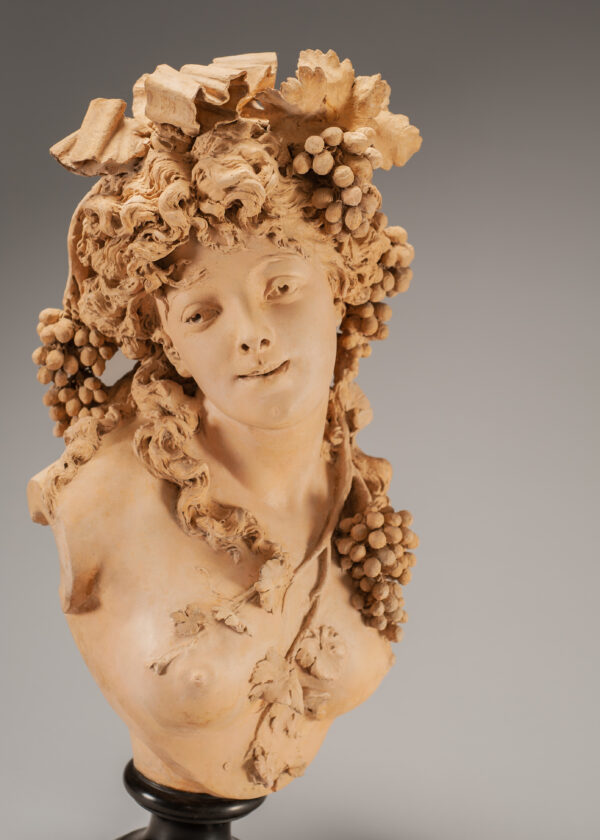
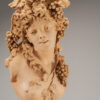
Our bust is a terracotta work symbolising a follower of the Roman deity of agriculture, wine and fertility, Bacchus. These female followers are called Baccchantes or Bacchae. The attributes of foliage and grapes they are frequently portrayed with are symbolic of the wine and harvest.
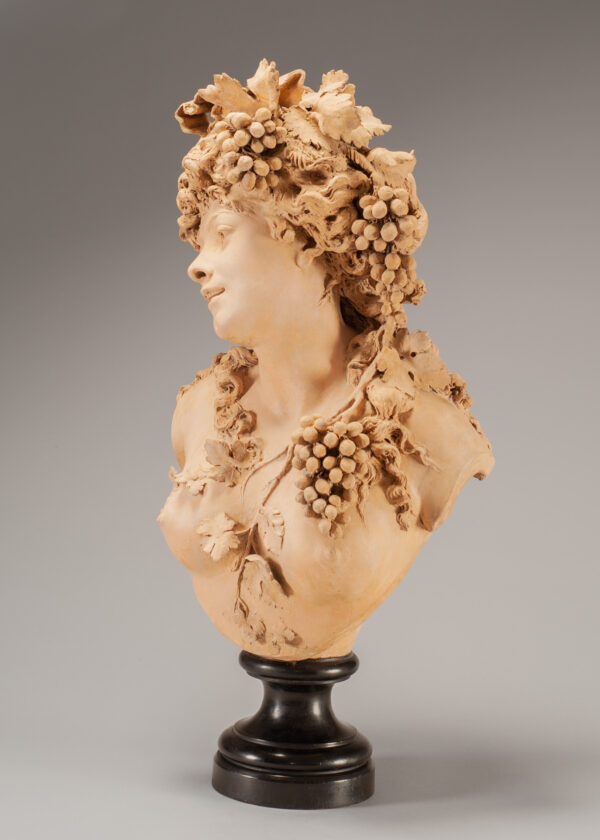
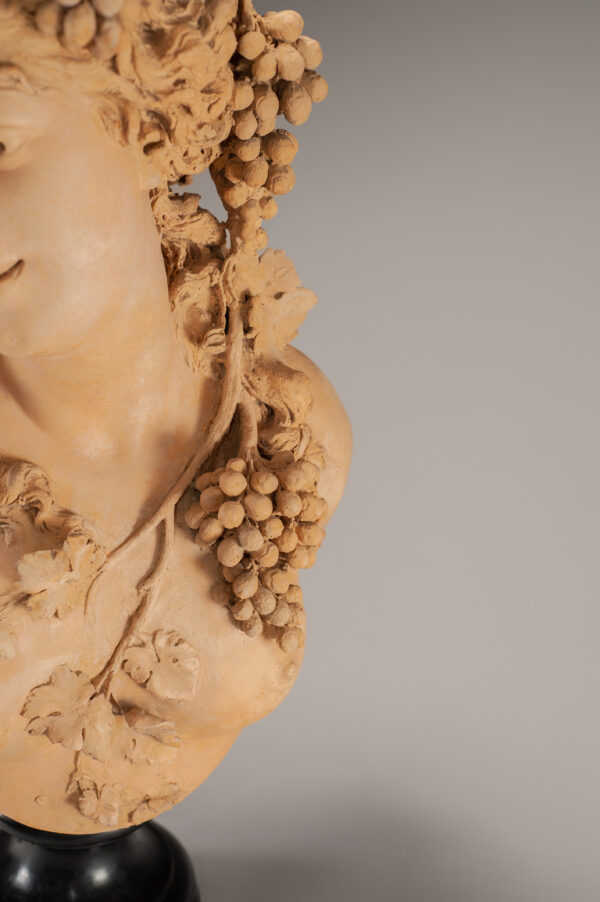
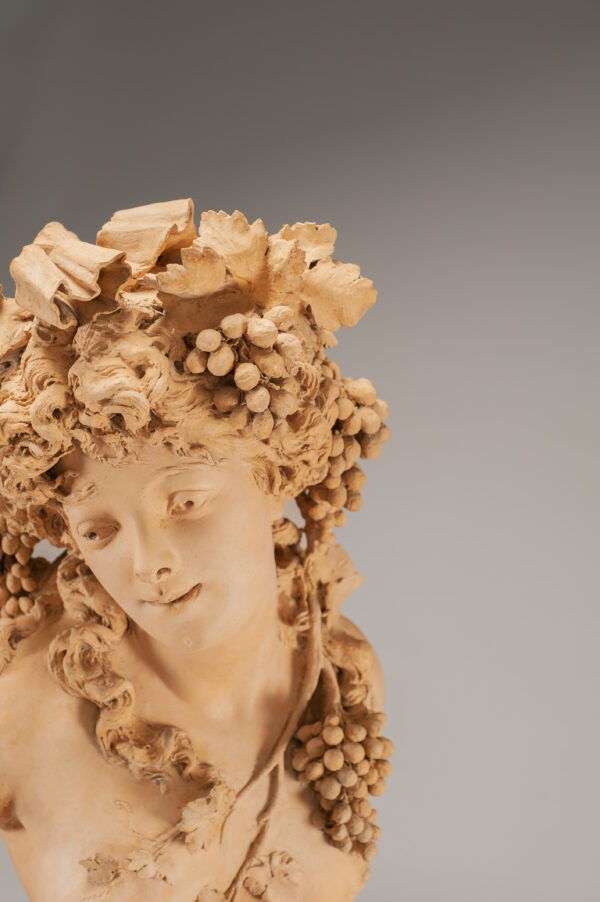
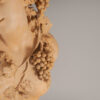
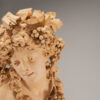
The sculpture has an elaborate ornamentation and detailing, starting at the top with a ribbon inserted into an ornate coiffure interlaced with foliage and bunches of grapes. Bacchante is looking away from the viewer towards her proper right side, a pose which closely resembles the artist’s 1863 marble La Bacchante. In addition to its technical prowess, the current terracotta sculpture exemplifies the popular style Carrier-Belleuse was known for at the time and brought him fame and success.
A writer for the Gazette des Beaux-arts commented on the 1863 Salon Bacchante: “This one has to be made of marble to resist the provocative smile of this follower of Bacchus.” (Mantz, 1963, p. 54).
 Carrier-Belleuse, detail of La Bacchante, 1863, marble, Musée d’Orsay, France
 Carrier-Belleuse, detail of Bacchante, Circa 1870, terracotta, Bowman Sculpture
The present sculpture is signed A. Carrier which dates the work to being prior to 1868, when the sculptor changed his signature to A. Carrier Belleuse, as noted by June Hargrove in her book The Life and Work of Albert Ernest Carrier-Belleuse. It is therefore safe to assume that this work was either a study for his Bacchante of 1863 or a commission which was inspired by it.
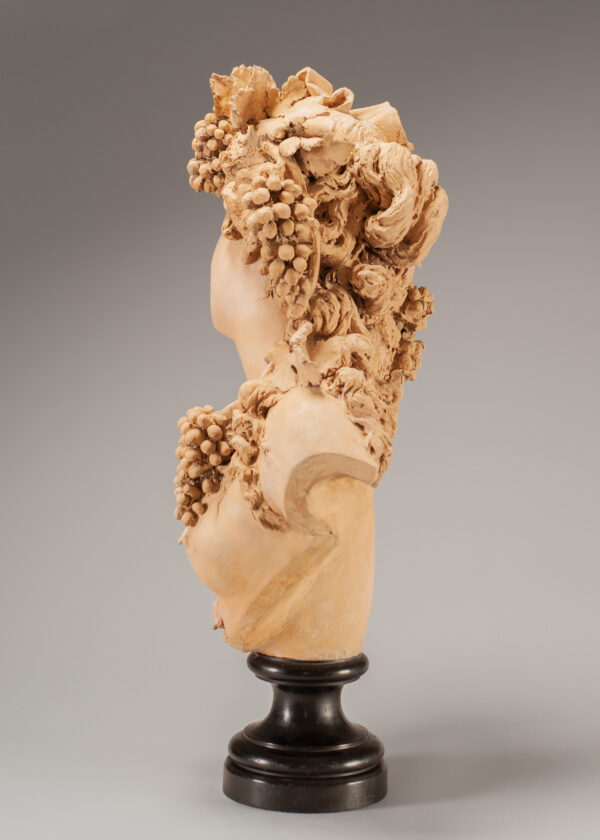
The quality of the terracotta sculptures Carrier-Belleuse sold varied, with the amount of effort and time invested depending on the intended clientele and pricing. While the vast majority of works seen on the market are mass-produced moulded works, this sculpture is entirely modelled by hand, a unique piece of exhibition quality, sculpted by the master himself, with an extraordinary attention to detail.
Terracotta masterworks by the artist of this quality are truly rare, with many of them being part of museum collections such as Girl in a Straw Bonnet at The Metropolitan Museum and Fantasy Bust at the LACMA.
 Carrier-Belleuse, Girl in a Straw Bonnet, circa 1868-70, terracotta, Collection of the Metropolitan Museum New York
 Carrier-Belleuse, Fantasy Bust, circa 1865-70, terracotta, Collection of the Los Angeles County Museum.
 Albert-Ernest Carrier-Belleuse, Bust of Baccante, circa 1860, terracotta, The Museum of Fine Arts, Houston, museum purchase funded by the Francis A. Coates Memorial Fund
 Carrier-Belleuse, Terracotta Model for a Monument to Alexandre Dumas, père (1802 – 1870), about 1883, Collection of the J. Paul Getty Museum, Los Angeles
 Carrier-Belleuse, Terracotta Bust of Gioachino Rossini ( 1792-1868 ) Collection of the Metropolitan Museum New York.

 English
 Chinese