
Aimé-Jules Dalou
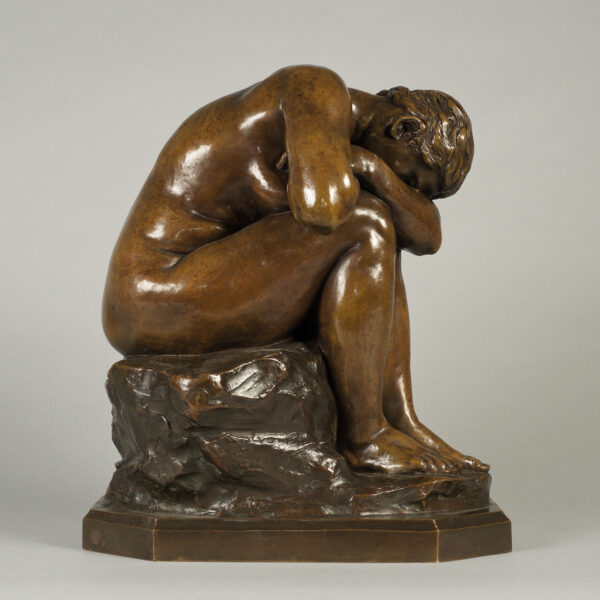
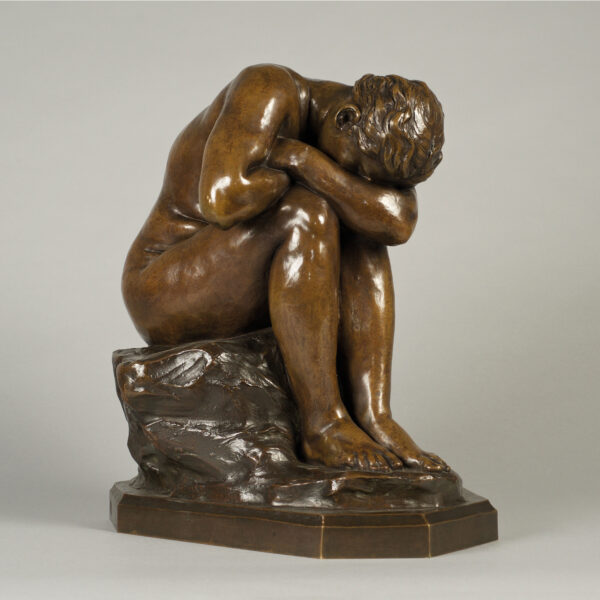
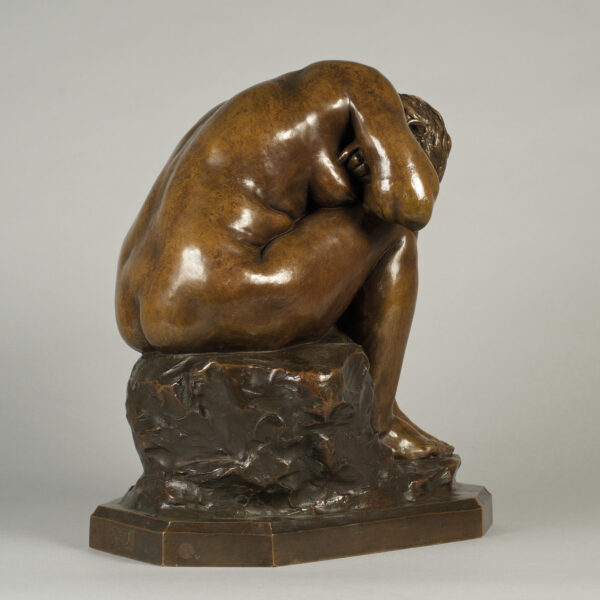
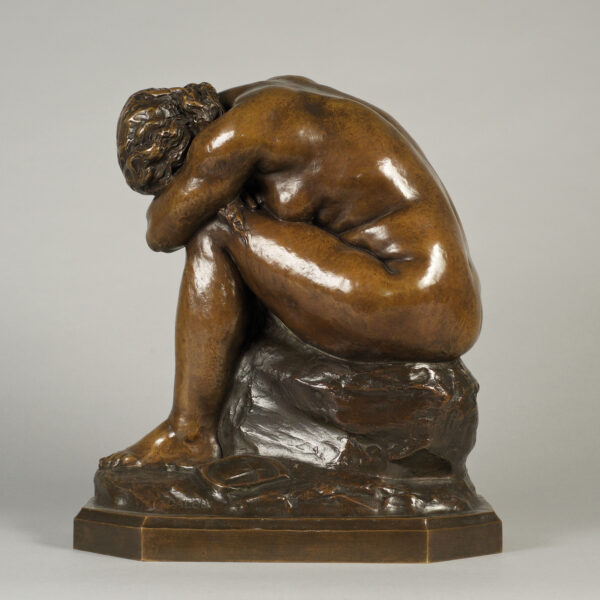
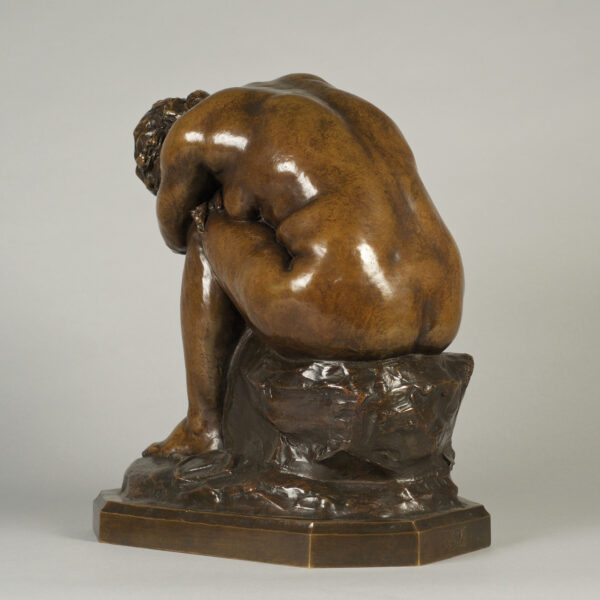
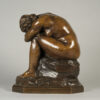
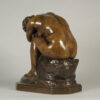
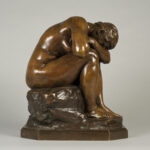
La Vérité Méconnue (Truth Revealed), Grand Modèle
Signed DALOU , inset swith the foundry pastille ‘Susse Fres Editeurs/Paris’ and stamped with the letter ‘W’
Bronze with light brown patina
Height: 13.2″ (33.5 cm)
Conceived circa 1900 and cast after 1902
ABOUT THE ARTWORK
La Vérité Méconnue or the Truth Revealed, belongs to a series of female nudes that Dalou produced between 1890 and 1900.
Dalou sculpted two versions of this model. In the first version, the sitter’s hair is tied in a chignon and the mirror at her feet faces towards the front of the sculpture. In the second version the sitter’s hair isn’t tied and the mirror faces towards the back of the work.
Neither work was cast in bronze during Dalou’s lifetime and it was only when the rights to the models were acquired by the Susse foundry in 1902 that they were cast in an unlimited edition. The first version was only ever cast in one (20.5cm) size. The second version was cast in two sizes (14cm and 35cm). The present work is a cast in the larger size of the second version.
The sculpture is initially seen as a woman with her head in her lap, sad at the reflection she has seen in the cast aside mirror at her feet. The deeper symbolism of the work was first suggested by Henriette Caillaux, the Parisian socialite and wife of the French Republican Prime minister Joseph Caillaux.
Caillaux interpreted the sculpture as a manifestation of Dalou’s anger towards the French state for falsely imprisoning Alfred Dreyfus, the young Jewish army officer. In 1894 Dreyfus had been court-martialed and transported to the military prison known as ‘Devil’s Island’ for allegedly delivering military defense secrets to the Germans. Dreyfus denied the charges, but was vociferously campaigned against by both militarists and Anti-Semites. After seven years of imprisonment, the case was tried again. Once again, he was found guilty, although this time offered an official pardon. Not prepared to leave his reputation tarnished, Dreyfus battled to have the verdict reversed and his name cleared. Eventually, he succeeded, when the proof of his innocence was found in captured German military documents. The traitor it turned out was a French Minister and Dreyfus had been used as a scapegoat.
In Caillaux’s reading of La Vérité Méconnue, the woman symbolises France, hanging her head in shame at having falsely imprisoned such a young, talented and innocent man. Dalou himself was a staunchly left wing and as a member of the Paris Commune played an active part in the Republican party.
Other versions of La Vérité Méconnue are in the public collections of the Musee D’Orsday (Paris), the Petit Palais, musée des Beaux-arts de la Ville de Paris (Paris), the Musée des Beaux-Arts Montreal (Montreal).

 English
  Chinese