
Marochetti was born in Turin in 1805, his father, a professor at Turin University, however, moved the family to France where Carlo, became a French citizen and was educated at the Lycée Napoléon. He went on to study sculpture at the École des Beaux-Arts, and spent long periods in Rome, reportedly passing some of the time in the studio of the Danish sculptor Bertel Thorvaldsen. Marochetti identified with the Romantic school of sculpture and was favoured by the Orléans court during the July Monarchy of 1830- 1848. He gained important early commissions at the Madelaine in Paris, being responsible for the sculpture of the Assumption of Mary Magdalene.
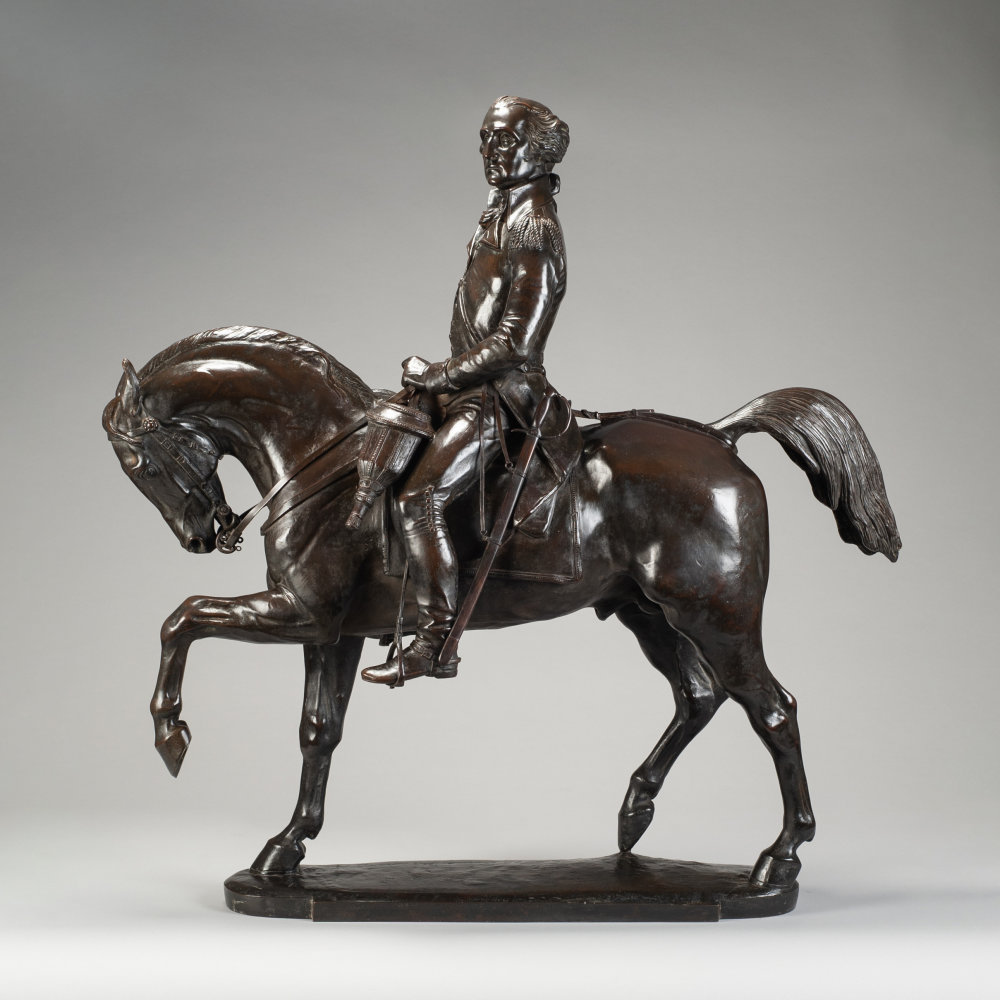
Marochetti was born in Turin in 1805, his father, a professor at Turin University, however, moved the family to France where Carlo, became a French citizen and was educated at the Lycée Napoléon. He went on to study sculpture at the École des Beaux-Arts, and spent long periods in Rome, reportedly passing some of the time in the studio of the Danish sculptor Bertel Thorvaldsen. Marochetti identified with the Romantic school of sculpture and was favoured by the Orléans court during the July Monarchy of 1830- 1848. He gained important early commissions at the Madelaine in Paris, being responsible for the sculpture of the Assumption of Mary Magdalene.
 Sculpture of the assumption of Mary Magdalene, Madeleine Church, Paris.
At this time Marochetti was also working on his powerful equestrian statue of the sixteenth-century Emanuele Filberto of Savoy, which was displayed in the Louvre courtyard before being erected in Turin. Another major work of this early period of Marchetti’s work was for the relief of the Battle of Jemappes for the Arc de Triomphe.
 Marochetti Sculpture of the Duke of Savoy, Bronze, Turin.
 Battle of Jemappes for the Arc de Triomphe, Stone relief, Paris.
His fame having spread to England, Marochetti won the commission to produce the equestrian statue of the Duke of Wellington, which stands in front of the Royal Exchange in Glasgow. As one of the important sculptors fleeing France after the collapse of the French monarchy, he was also introduced to the British royal family. He cut a dashing figure, and the Queen found him to be “very agreeable, pleasing & gentlemanlike”; she commissioned him to sculpt a bust of Prince Albert (Marsden, 2010, 14). More such work followed including his most famous work, Richard the Lionheart, first exhibited at the entrance to the Great Exhibition in London in 1851 and subsequently cast in bronze and placed outside the House of Lords.
 Equestrian statue of Richard the Lionheart, Bronze, The House of Lords at the Palace of Westminster, UK.
Marochetti was now, ‘in all but name, the official royal sculptor’ (Piggott, 2004, 120). His marble likeness of little Prince Arthur (1853) was particularly successful. The Queen thought it “beautiful” and had various miniatures made of it as gifts. This design was used by Minton as well who produced it in ceramic. The Queen also presented a miniature version of the Richard the Lionheart statue to Prince Albert on his birthday in the same year.
These commissions led Marochetti to great financial success and when the Queen visited him at his house in Onslow Square, where he had a studio and foundry in the Mews behind, she saw him directing a workforce of twenty artisans. Interestingly the famous lions in Trafalgar Square, by Sir Edwin Landseer, were cast in Marochetti’s foundry.

 English
  Chinese