



乔治·弗兰普顿爵士
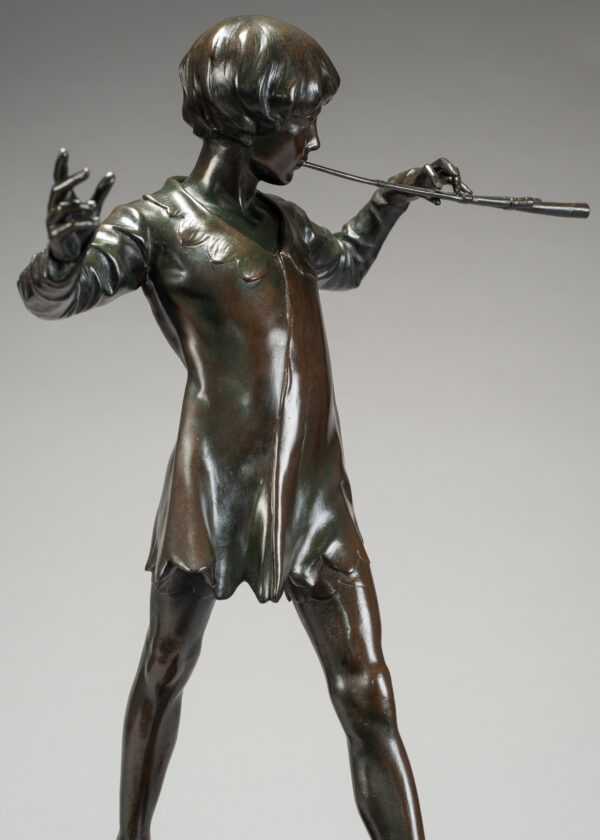
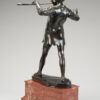
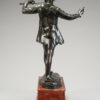
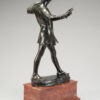
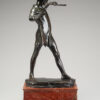
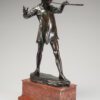
彼得潘
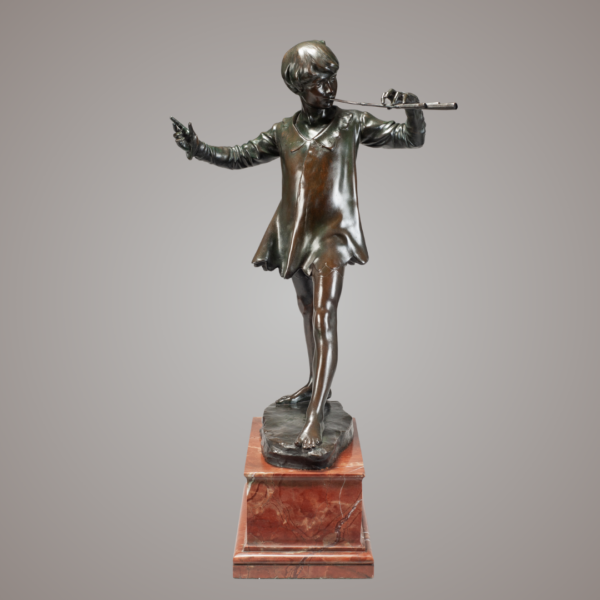
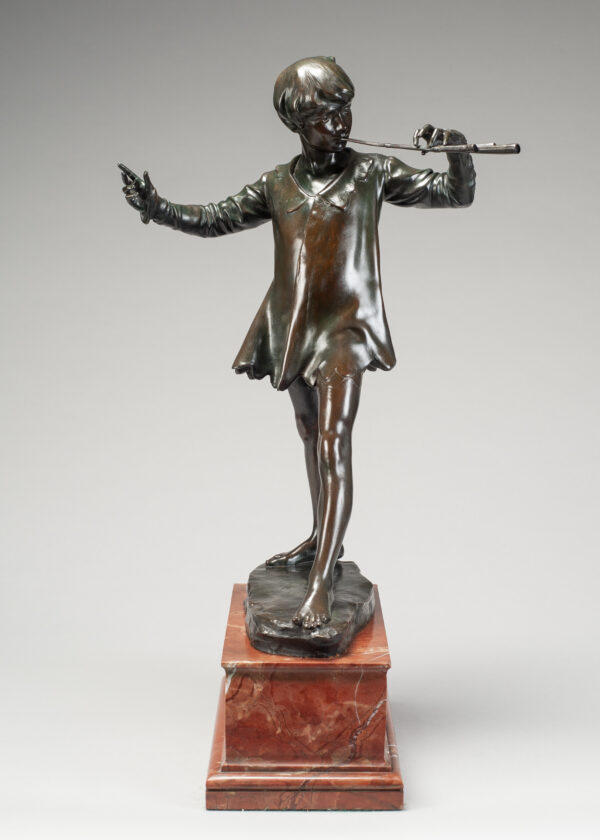
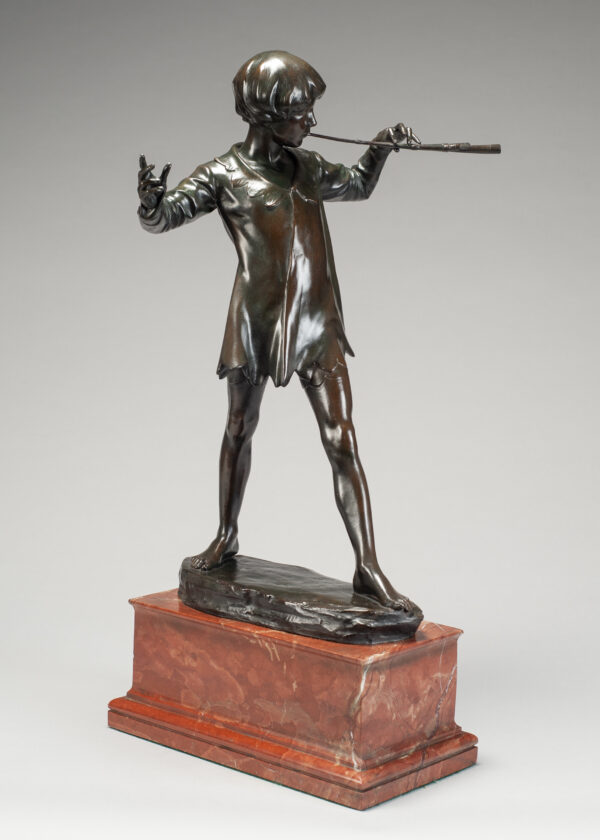
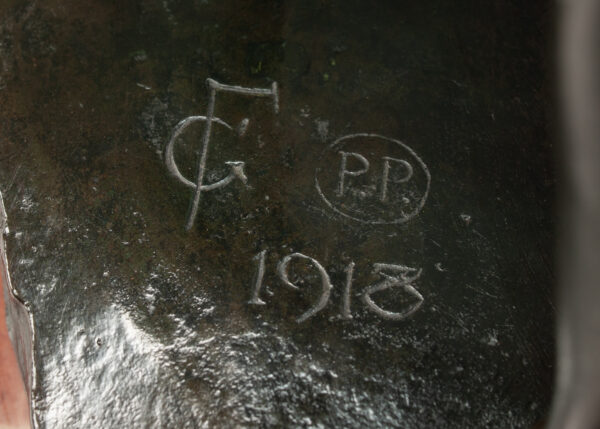
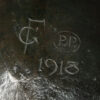
Monogrammed GF inscribed with an encircled P.P. and dated 1918
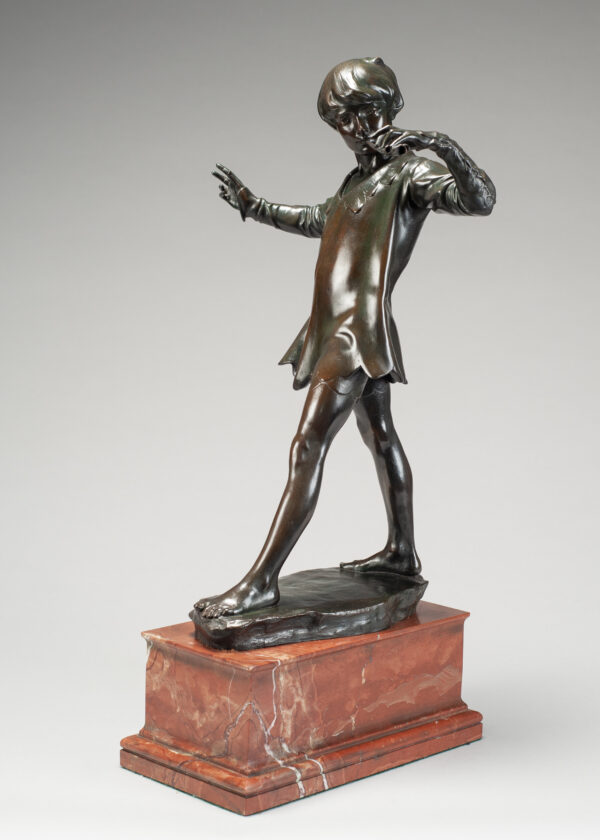
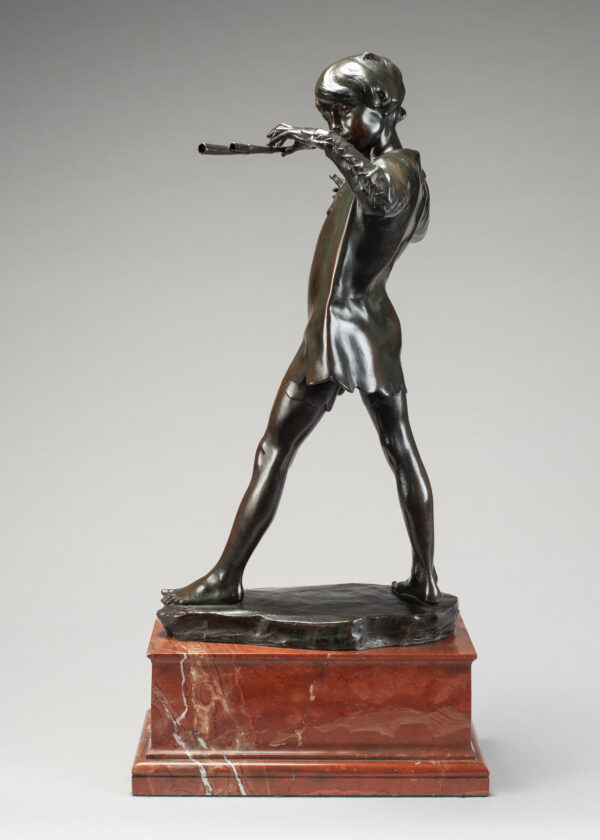
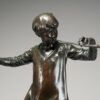
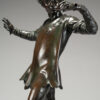
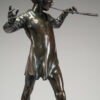
Bronze with rich mid red/brown and dark brown patina
Mounted on a marble base
Height: 18.8″ (48 cm)
Overall height: 20.6″ (52.5 cm)
Conceived in 1911. This cast made in 1918
关于艺术品
Sir George James Frampton was born in London in 1860, the son of James Frampton – a wood and stone carver. At the age of 18, confident of the experience gained in his father’s workshop, the artist moved to Paris to work on the building site of the Hôtel de Ville. He returned to London shortly after, studying at the Lambeth School of Art under W.S. Frith and then at the Royal Academy from 1881 to 1887.
弗兰普顿于 1884 年首次在皇家美术学院展出作品,随后于 1887 年获得金牌和旅行奖学金。他在旅行期间去了巴黎,在那里他进入了法国最成功的雕塑家之一安东尼·梅西埃 (Antonin Mercié,1845-1916) 的工作室。
梅西埃的作品曾启发了许多英国“新”雕塑家,尤其是阿尔弗雷德·吉尔伯特的早期作品。在弗兰普顿当学徒期间,梅西埃帮助弗兰普顿了解了法国浪漫主义运动以及象征主义的复杂性,这些后来成为弗兰普顿后期作品的一个关键特征。
Upon his return to England, Frampton became the leader of the Arts and Crafts movement and was appointed joint head of the London Central School of Art, a post he led throughout the 1890s. His mastery of mixed media sculpture is best shown by his polychromed plaster of Mysteriarch of 1892, now part of the Walker Art Gallery collection, Liverpool. The sculpture is representative of Frampton’s mature, Symbolist aesthetic: never before that time in Britain had a bust been so filled with evocative power and devoid of its traditional function as a portrait. Frampton’s contribution to the movement was not limited to the United Kingdom, as the artist participated in the first show of the Symbolist group La Libre Esthétique in Brussels in 1894.
Frampton was knighted in 1908, marking the importance of his contribution to the development of English sculpture in the late-Victorian and Edwardian period
Frampton is however best known for his statue of 彼得潘 in Kensington Gardens. Commissioned by the character’s creator Sir James Matthew Barrie (1860-1907). This was erected in 1912 at night, so that the public might think it appeared by magic.
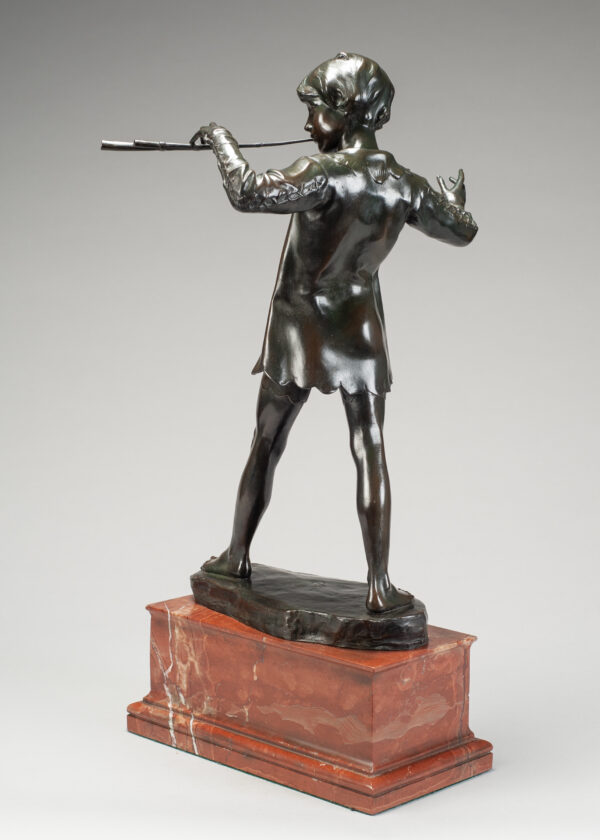
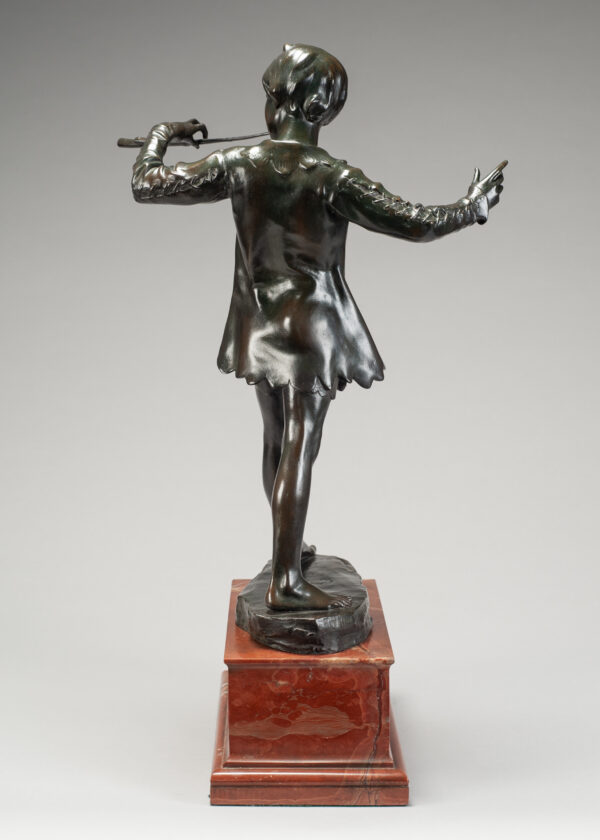
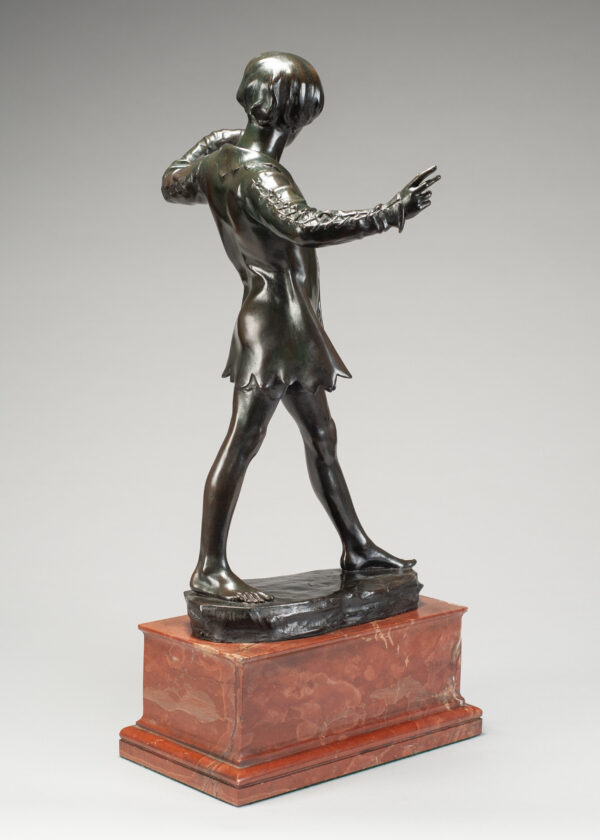
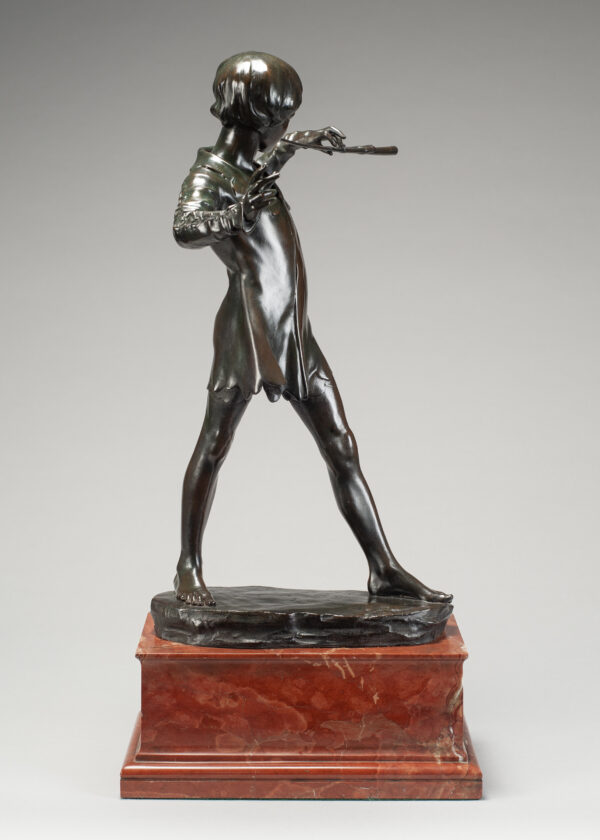
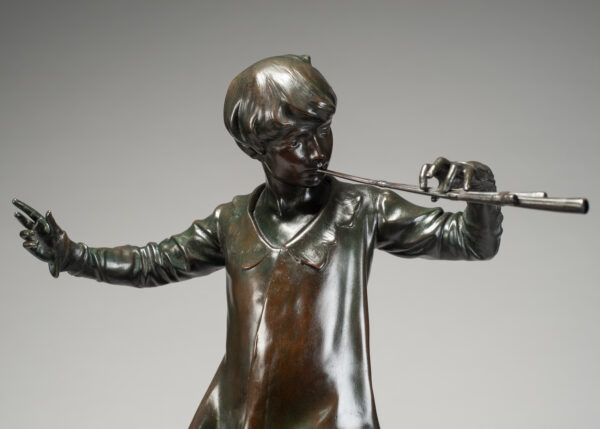
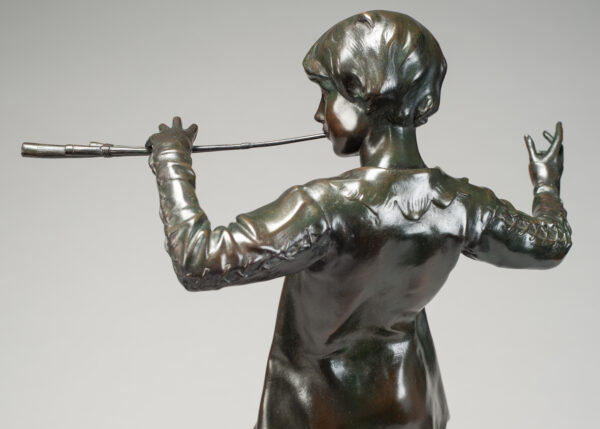
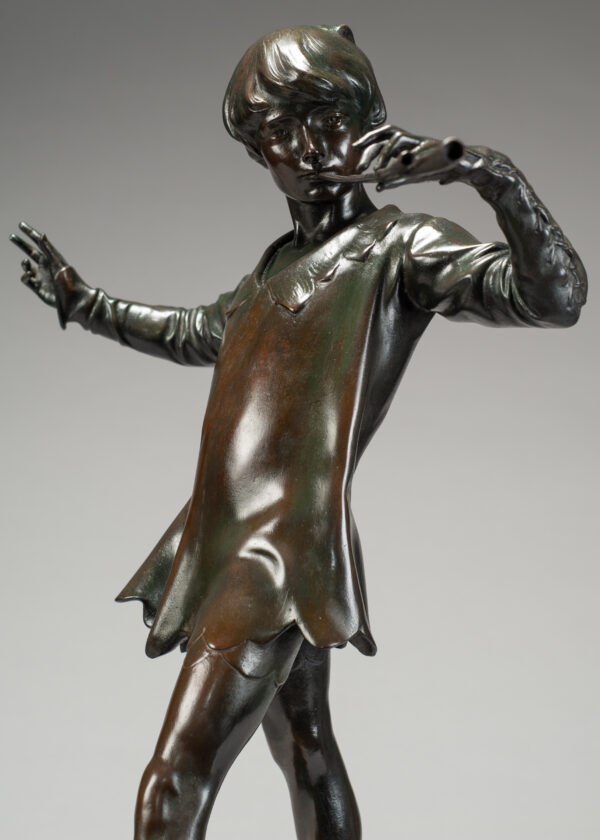
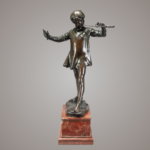
The statue in Kensington Gardens depicts Peter Pan in a very natural and childlike pose, playing his pipes. He is standing on a large “pedestal” which on close inspection is actually made up of fairies, personages, and woodland animals, in a very organic and magical way. It remains not only one of Frampton’s most well-loved works, but also one of London’s – it has been voted as the city’s most popular statue. The wonderfully lifelike representation of Peter Pan is whole-heartedly in the style of the Romantic era (1880s). This is in contrast to the starker, more hard-edged and avant-garde movements in vogue when this piece was sculpted.
This particular version of Peter Pan is a reduction of the original in Kensington Gardens, without the “woodland” pedestal. Instead he is standing on an oval base. It was cast in 1915 and has the initials PP (standing for Peter Pan) inscribed on the base. He has the delicate poise of a woodland sprite, and is happily playing his pipes, one arm outstretched, one foot forward, as though he is dancing to the sounds of his magical music.
Other casts of the sculpture occupy prominent public locations in Liverpool, Brussels, Camden (New Jersey), Toronto (Ontario), St John’s (Newfoundland) and Perth (Western Australia).

 Chinese
  English