

奥西普·扎德金
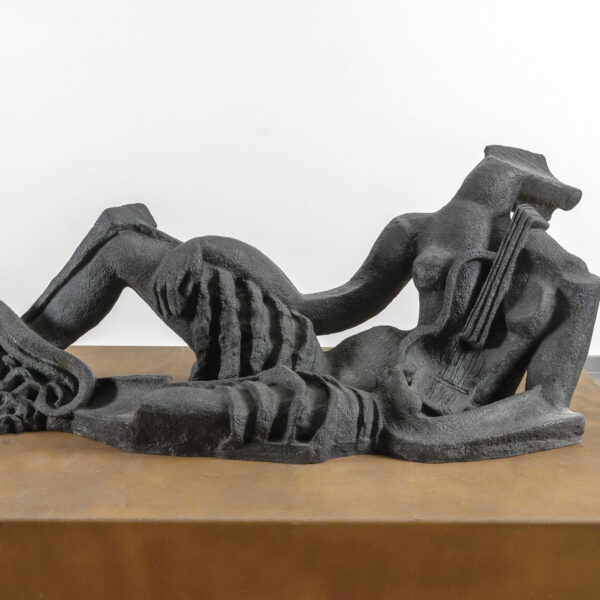
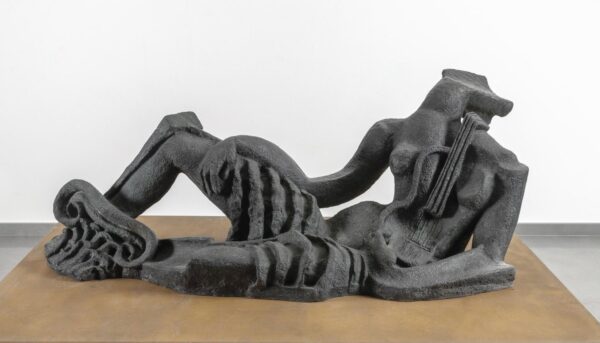
Sculpture Pour Jardin (1943-1944)
SOLD
Signed and numbered O.Z and number 1/6
Stamped, Modern Art Foundry/ New York
Bronze, with rich brown/black patina
20.6″(52.5 cm) by 54.5″ (138 cm) by 24″ (61 cm)
Cast circa 1943-1944. Edition of 6 plus 1 Epreuve Artist
关于艺术品
In 1890, Ossip Zadkine was born in Vitebsk, today Belarus, just like his surrealist colleague Marc Chagall. In 1909, Zadkine arrived in Paris where he enrolled at the Académie des Beaux-Arts. He got to know the work of Auguste Rodin, and his admiration for the idiosyncratic sculptor made it hard to conform to academic education. After just six months, he said goodbye to school to pursue his own path in sculpture.
Gradually, Zadkine forged his own style. Impulsive, direct, and full of enthusiasm, he tackled his sculptures. In Paris, he frequented the crème de la crème of the avant-garde. Under the influence of artists like Jacques Lipchitz, he immersed himself in cubism. Yet the movement’s rigidity did not suit him, and he consistently played with figuration throughout his career.
Zadkine deconstructed his figures into pure shapes, composed of sober and severe contours that echo a Greek or Roman inspiration. “Statue pour jardin” (1943-1944) is a classical reclining figure, posing on one elbow. The body is a synthesis of volumes, shaped by the interplay of elegantly stylized matter and carefully hollowed voids. The figure’s twisted posture, with one hand resting nonchalantly on the thigh, creates a sense of movement that breathes life into the bronze statue.
In his arm, the figure holds a guitar; at its feet lies an Ionic capital — poetic elements that underscore the character’s sensitivity and his love for musical and architectural beauty. Whimsical lines create a dramatic chiaroscuro in which light and shadow generate a theatrical effect. Zadkine brings a classical touch to cubism’s otherwise cerebral aesthetic, crafting a sculptural language that is entirely unique.


 Chinese
 English