








古斯汀努斯·安布罗西
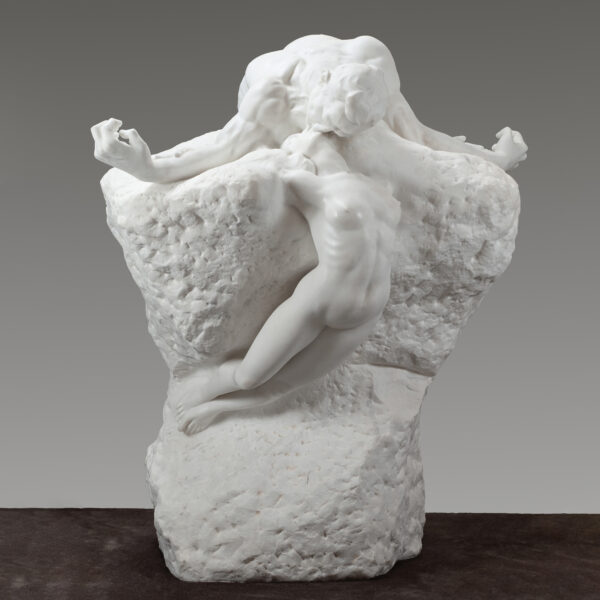
普罗米修斯
签名:Ambrosi 日期:1920 年
卡拉拉大理石
高度:45.27 英寸(115 厘米)
The first version of this work was carved out of a giant 31-ton block of marble by Ambrosi in his small studio in war-torn Vienna between 1916-1918. This work is now in the collection of the Belvedere Museum, Vienna
关于艺术品
“In the sculpture ‘The Eternal Longing’ or ‘Promethidenlos’ both man and woman are forged like rocks, they are crucified to themselves through their passion, which is the great outlet of longing. Both hostile forces want to escape and yet are searching for each other.” – 古斯汀努斯·安布罗西
古斯汀努斯·安布罗西虽然有意大利血统,但他于 1893 年 2 月出生于奥地利艾森施塔特。他早年对音乐的热爱不幸因一场儿时疾病而受阻,七岁时他失去了听力。然而,安布罗西将他的创意和艺术天赋转而发挥在绘画和雕塑上。他花了许多时间在雕制数百个石膏模型上,从早期就可看出这些模型表现出超龄的成熟度。
In 1909, Ambrosi’s family moved to Graz, where the young prodigy studied under various decorative sculptors. At the age of 16, the young artist was working as an apprentice when he witnessed a workman break his neck after falling from high scaffolding. This incident had a profound effect on Ambrosi and inspired the highly acclaimed work, Man with a Broken Neck. The piece, which was first shown at the Fine Arts Society of Styria shortly after it was produced, represented a major break-through in the artist’s career.
The sculptor enrolled at the Vienna Academy in 1912 and studied under Josef Müllner, a professor of sculpture and member of the Vienna Secession. Ambrosi’s talent earned him the coveted State Prize in 1913, at only twenty years old. This included being awarded an artist’s studio by the Emperor, Franz Joseph II.
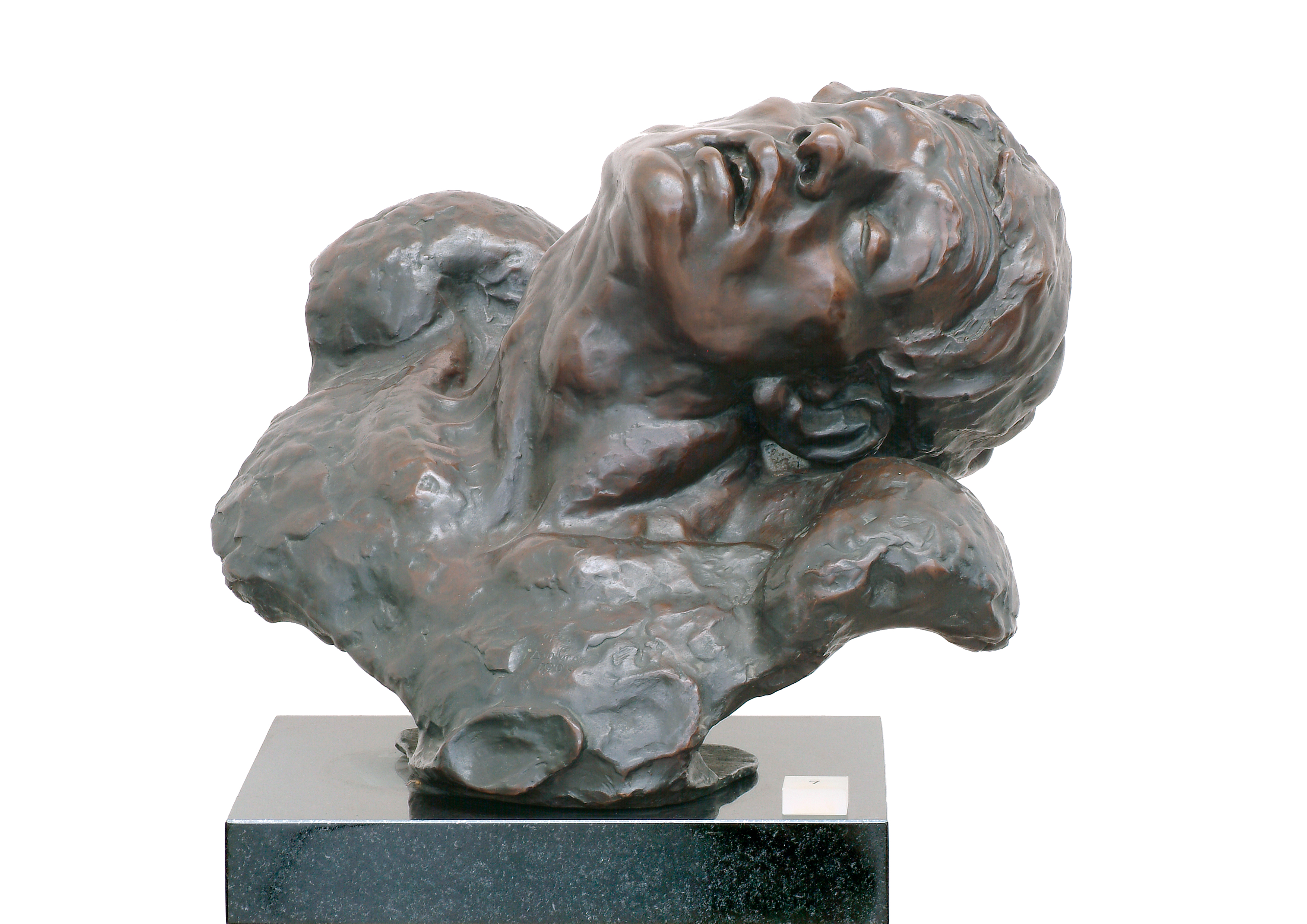 古斯蒂努斯·安布罗西, 脖子断了的男人, 青铜,1909 年,© 维也纳贝尔维德宫。
By 1925, the volume and span of Ambrosi’s work had become truly remarkable, ranging from portraiture to symbolist and figurative work. Certain sculptures, such as Ambrosi’s Cain (1916), were compared to the work of Michelangelo for their emotional charge. The artist’s style was simultaneously likened to that of Rodin, whose figures, like Ambrosi’s, would often emerge from blocks of roughly hewn marble.
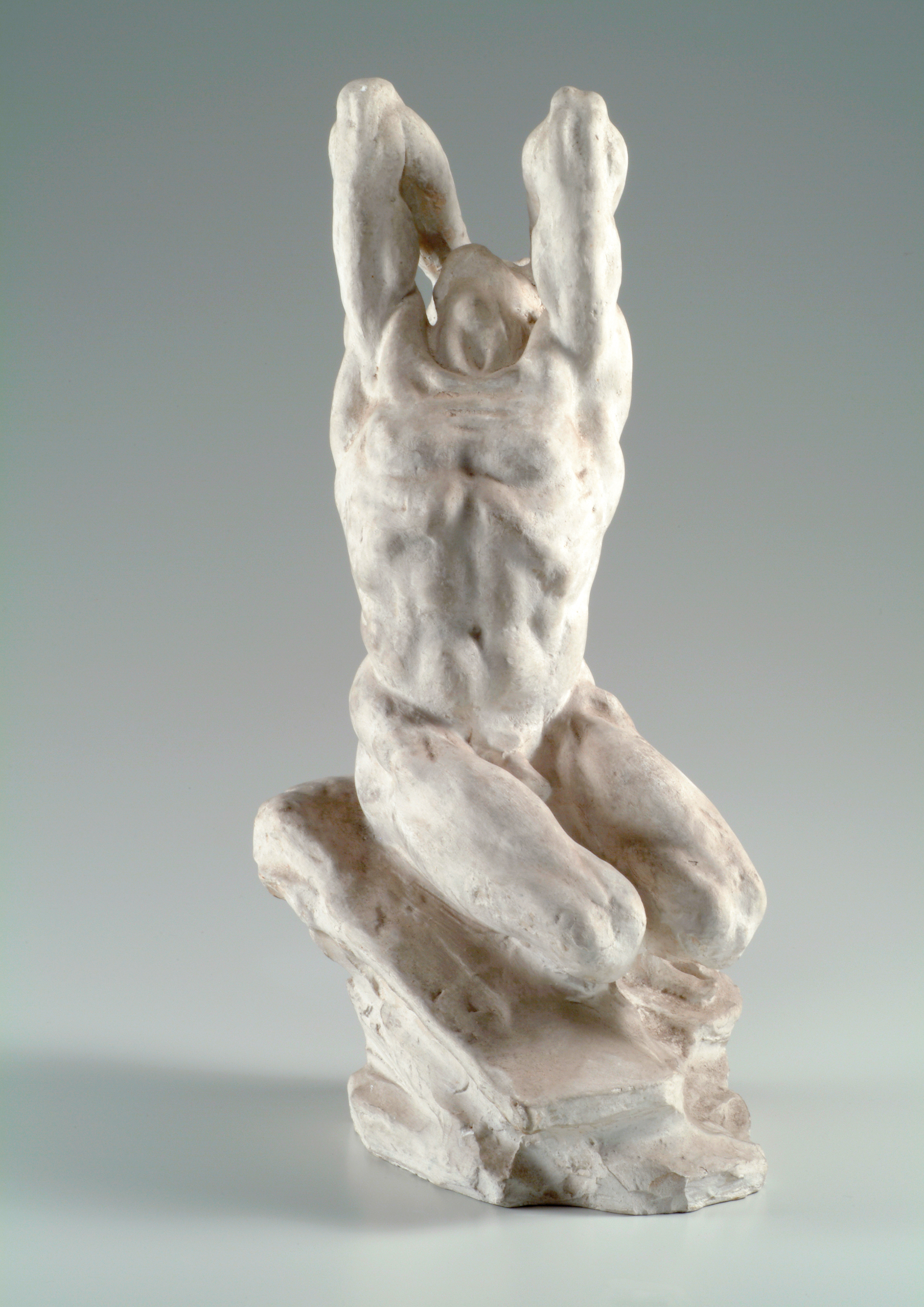 古斯蒂努斯·安布罗西, 该隐, 大理石,1912 年,© 维也纳贝尔维德宫。
安布罗西的肖像作品令人印象深刻,代表了欧洲重要的知识分子和艺术家,如康斯坦丁·莫尼耶、弗里德里希·尼采、理查德·施特劳斯和弗朗茨·舒伯特。他受列支敦士登亲王弗朗茨·约瑟夫二世和奥地利总统卡尔·伦纳的委托,为他们雕刻肖像,还受梵蒂冈的委托,为教皇庇护十一世、庇护十二世和约翰二十三世制作半身像。
In 1932, Ambrosi became a member of the Vienna Künstlerhaus and was, by 1956, an associate member of the National Sculpture Society in New York. During his career, Ambrosi exhibited throughout Europe and remained active until his death in July 1975. In October 1978, as a tribute to the sculptor and his contributions to the decorative arts, the state opened the Gustinus Ambrosi Museum, which continues to exhibit a permanent collection of his work.
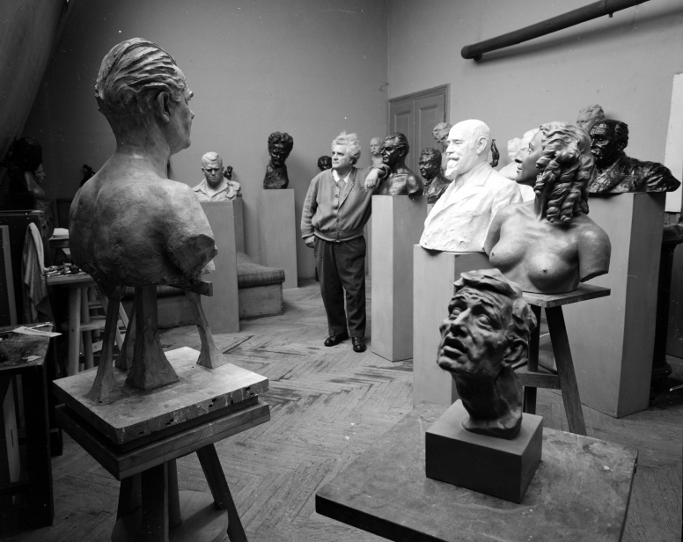 安布罗西在他的画室,1949 年。
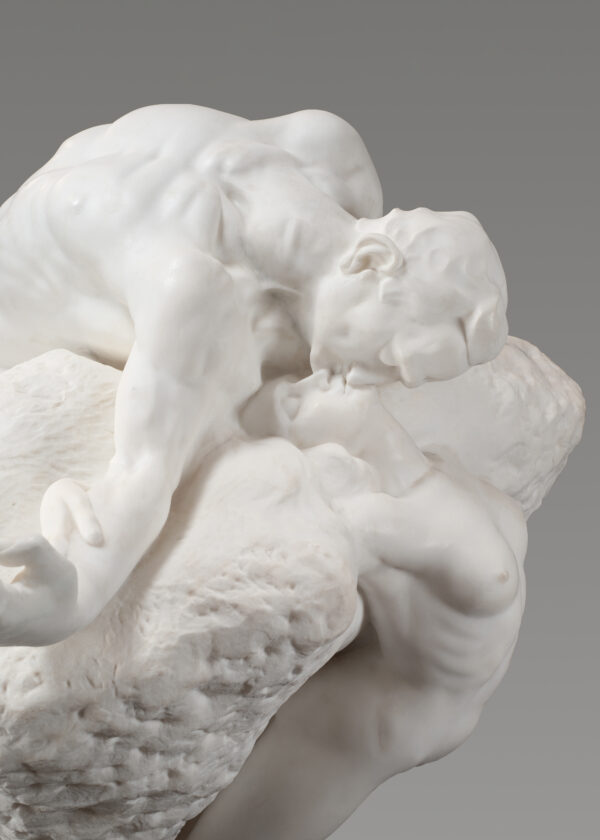
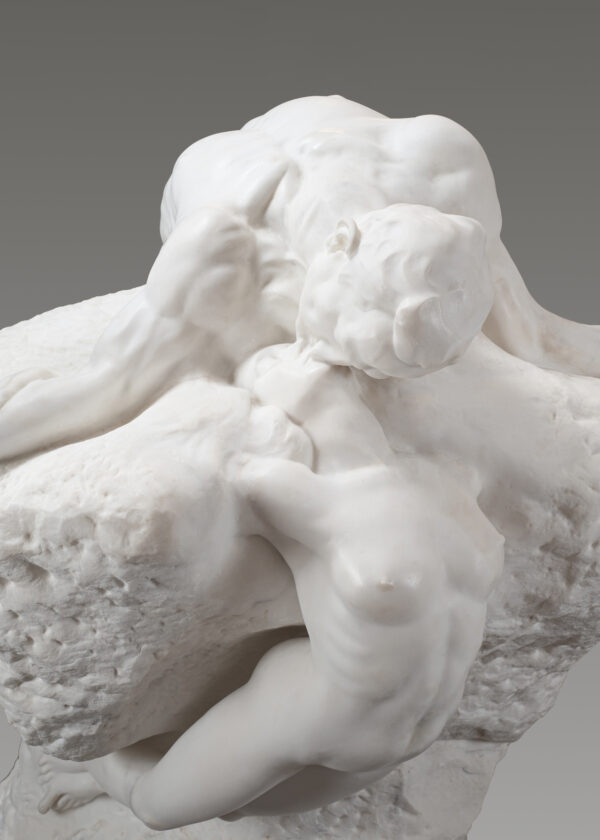
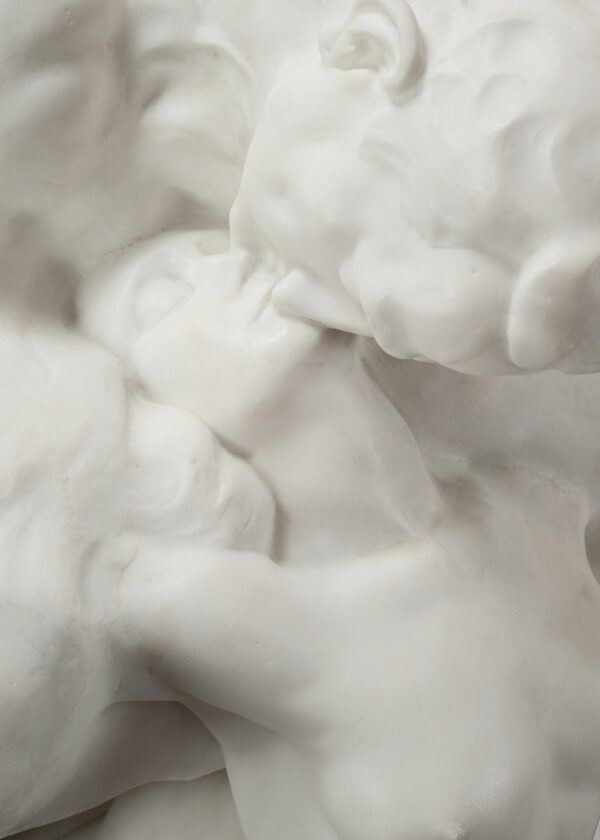
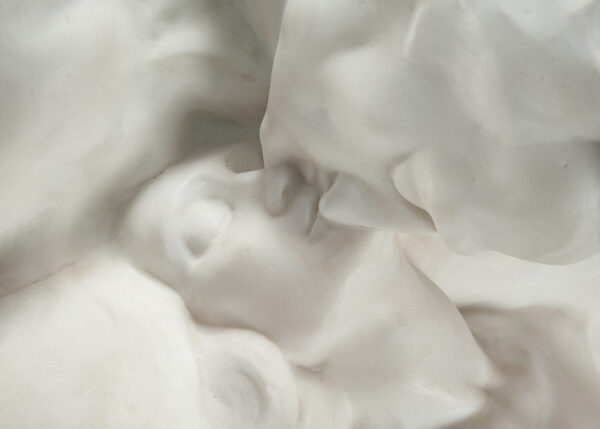
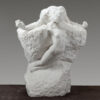
本作品 普罗米修斯 depicts male and female figures seemingly bound to each other through a rugged rock in a state of tortured passion. With backs and necks arched, they emerge from the underside of the rock, mirroring each other’s cruciform posture. The artist’s superb detailing of each figure’s body enables us to feel the strain and torment of their crushing love. Their skin stretches taut across tensed muscles and exposed ribs and veins, suggesting that if they were but a fraction more apart, their lips would never touch.
The figure’s faces create a stirring contrast with their bodies. There’s a sense of peace and fulfilment in their kiss; a moment of pleasure through the pain. So too do their hands depict their simultaneous joy and suffering. The male’s fingers are curled inward, frozen in a pained claw-like grip of air. The woman’s arms appear to reach through the rock and her hands rest tenderly along the male’s forearms. It’s a seemingly poignant suggestion of the woman’s simple pleasure of touching her lover and the male’s crucifying pain of being prevented from doing so.
Through the torment of eternal longing, a concept that fascinated Ambrosi, 普罗米修斯 depicts both romance and tragedy. The rock that binds these lovers also forces them apart. Yet they care not for freeing themselves and instead relentlessly pursue one another with such abandon that they are left trapped and utterly defenceless.
Ambrosi’s 普罗米修斯 was perhaps inspired, in part, by the story of Prometheus, who according to Greek mythology sculpted the first human out of clay. He was celebrated as the father and protector of mankind. His love for his creation led him to steal fire from the gods and give it to humans, which angered the god Zeus. Zeus punished Prometheus by having him tied to a rock for eternity, his entrails repeatedly pecked apart by vultures, only to grow back the next day.
According to Plettenbacher, author of the monograph of Ambrosi’s work, another major influence in the creation of 普罗米修斯 was the poem of the same name by Gerhart Hauptmann, published in 1885. Hauptmann was one of Germany’s leading authors and poets, winning the Nobel Prize for Literature in 1912. Ambrosi was an admirer of the author since childhood, as Ambrosi himself tried his hand in poetry writing throughout his life. When, in 1914, the famed author sat for a portrait in the young artist’s studio, the two minds met in academic discussion.
Hauptmann wrote his poem ‘Promethidenlos’ following the 19th-century concept of the Promithiden, made popular by the philosopher Siegfried Lipiner. The philosophy sought to explain mankind’s oft-tragic relationship with unrequited passion, in which individuals continue to love and worship partners, ideas or objects that do not sustain them or reciprocate their love. These “Promithiden” – derived from Prometheus – continue to suffer for their love without concern for self-preservation.
Hauptmann’s poem reflects this philosophy in the story of a young sailor, who suffers through existential angst about the world’s innate tragedy as well as pining for the love and affection of a young woman who rejected him. The woman returns to the sailor’s mind in dreams, who, trying to express his sorrow to his fellow shipmates and through poetry, continues to be shackled to his past.
In Ambrosi’s 普罗米修斯, the male figure bound to the rock bears a striking resemblance to Prometheus, yet the inclusion of a female counterpart gives this piece more depth than a mere homage to Greek mythology. It instead becomes a testament to the fierce, punishing and ultimately inescapable struggle of love, as expressed by Ambrosi’s literary idol, Hauptmann. It could also be surmised that Ambrosi’s own personal suffering influenced this timeless work or at least enabled him to draw from experience when carving. The simultaneous loss of his first artistic passion and hearing was likely Ambrosi’s first experience with tragedy at the age of seven. His suffering continued as a young artist, as he spent two years (1916-1918) carving the first marble version of 普罗米修斯 out of a giant, 31-ton block despite being impoverished and living in a small studio in war-torn Vienna. Ambrosi was determined to finish the piece, despite the toll it must have taken every day. He was committed, through a selfless love that was eternal, unrequited and impossible to abandon. Just like the two lovers in 普罗米修斯, Ambrosi allowed himself to be utterly vulnerable for his passion, if only for the briefest moments of joy. It’s this monumental and eternal statement about the futility of fighting love that makes 普罗米修斯 one of Ambrosi’s most defining works.
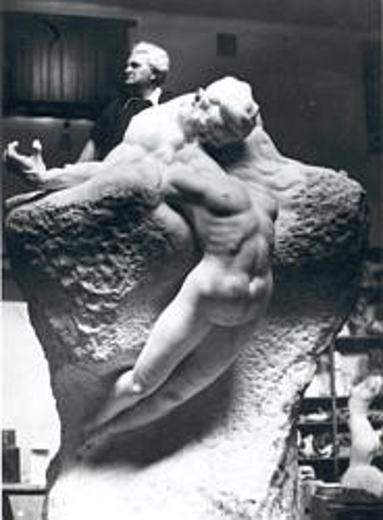 Ambrosi with the 普罗米修斯 in his studio.
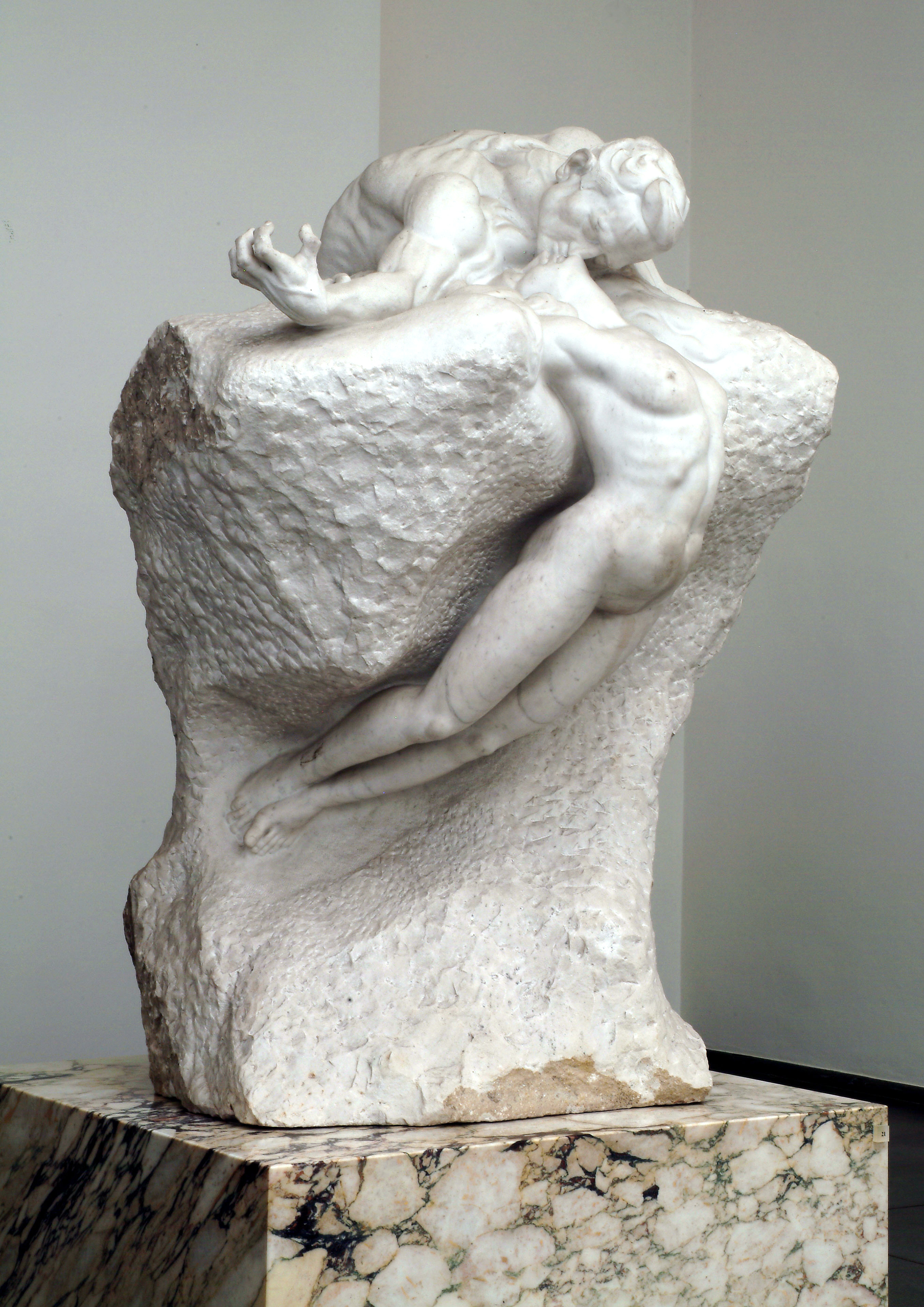 古斯蒂努斯·安布罗西, Promethidenlos, 1916-18, marble, © Belvedere, Vienna.

 Chinese
 English