







弗朗茨·冯·斯图克
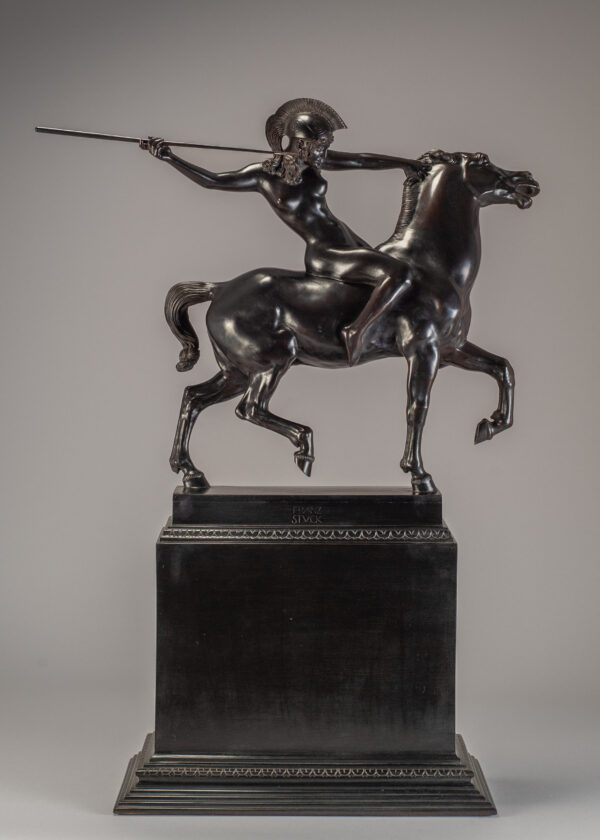
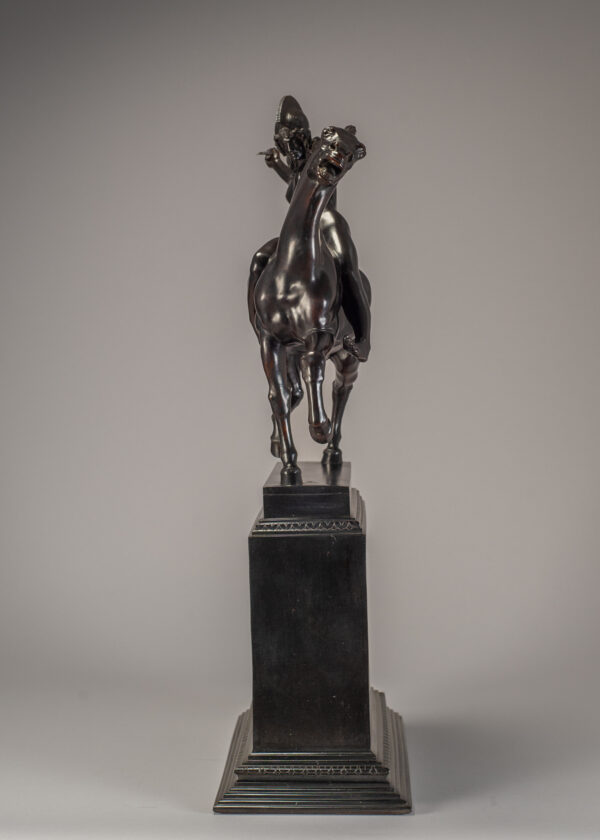
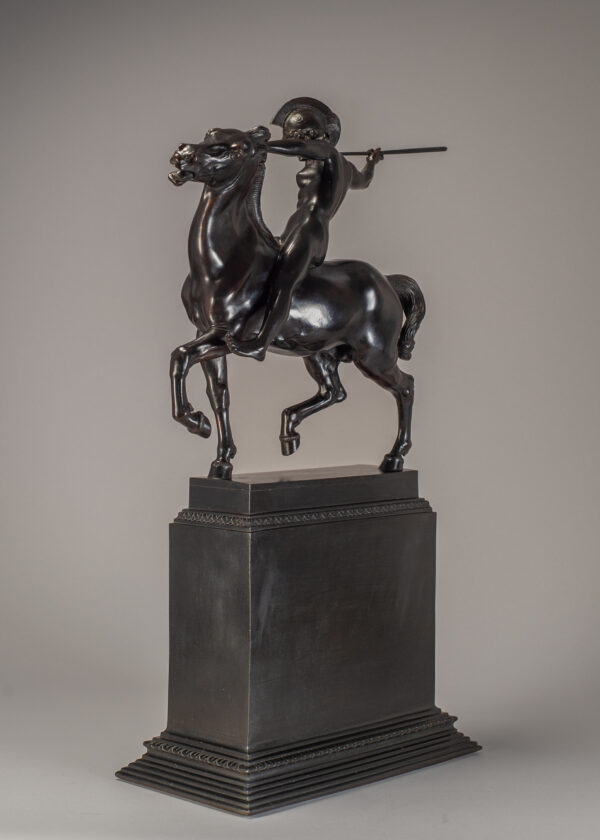
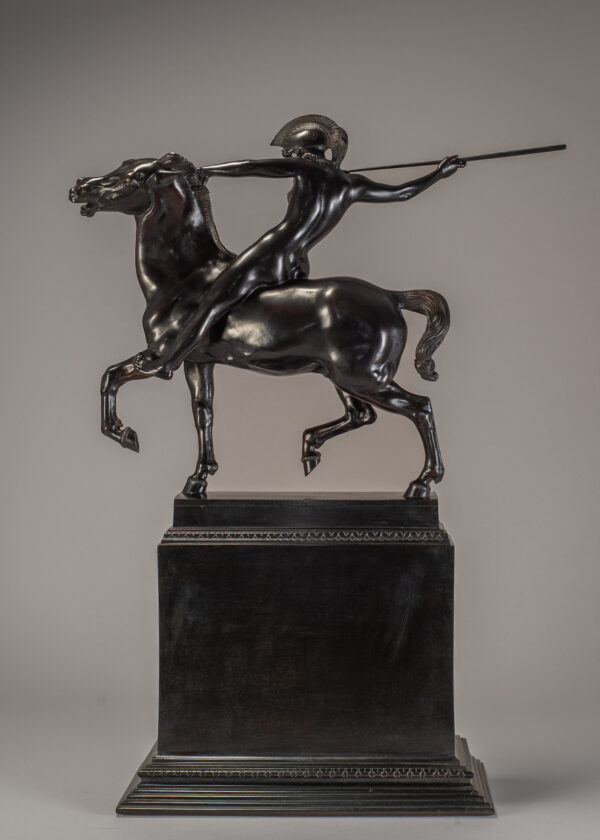
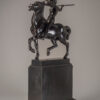
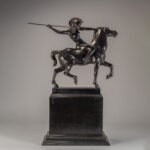
Amazon
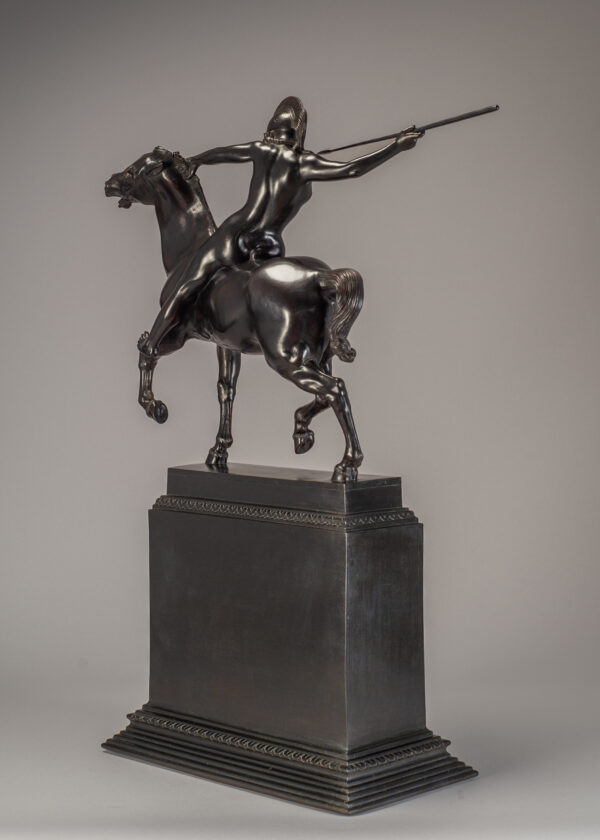
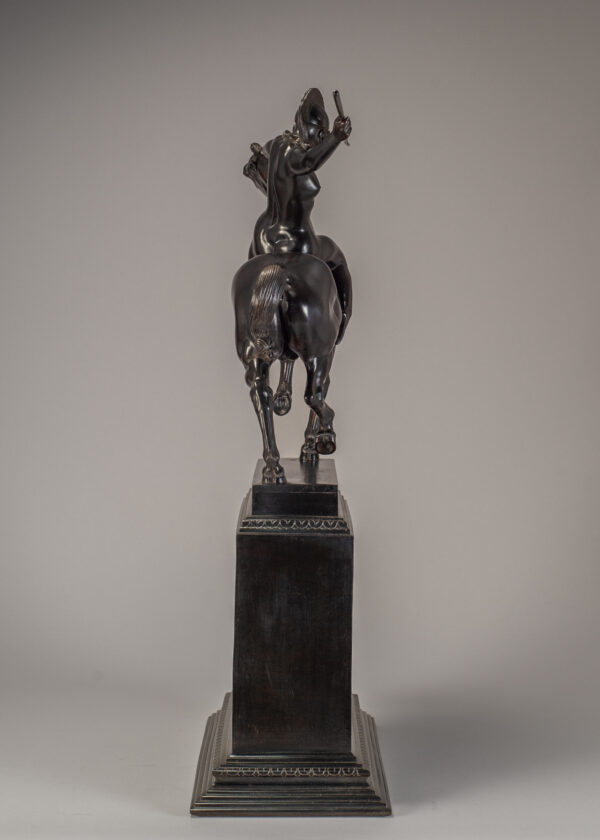
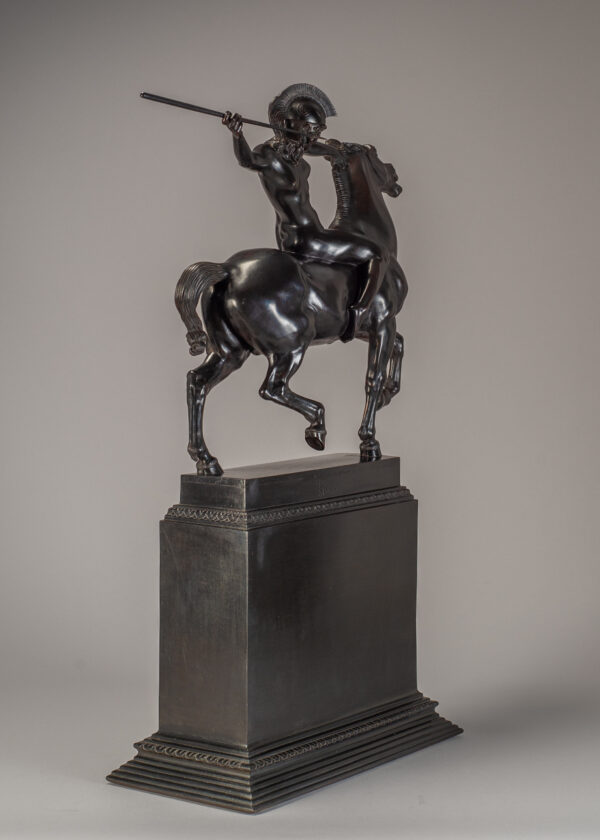
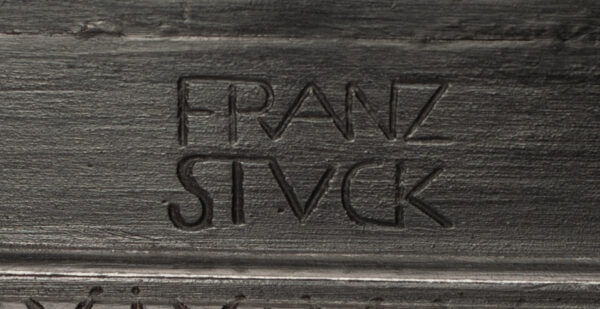
Inscribed FRANZ STVCK
Stamped with the foundry mark GUSS C. LEYRER, Munchen
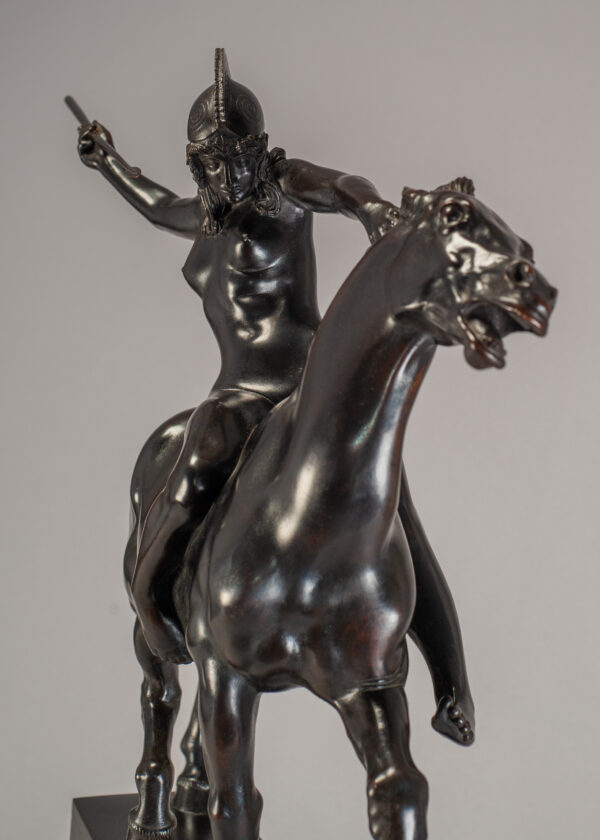
Bronze with black and red patina
Height: 25 ¼” (64 cm)
Conceived in 1897, cast before 1906
At this date, sculptures were not produced in limited editions but in general in response to demand. This work is, however, an especially early example cast before 1906, when the sculptor was awarded the title of Von; after this date, all signatures included this title.
关于艺术品
Von Stuck was born in Tettenweis, a village in Lower Bavaria, as the son of a miller. He studied in Munich, first at the School of Decorative Arts, then from 1882 to 1884 at the Academy of Fine Arts. Since he had to support himself, he became an illustrator for the Fliegende Blaetter, a satirical magazine, and subsequently he became known as a draughtsman.
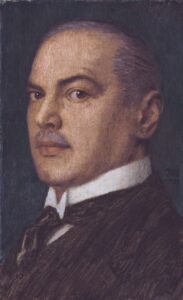 弗朗茨·冯·斯图克, Self-portrait, 1923, oil on board 38.1 x 24, Christie’s
26 岁时,他首次在公众面前崭露头角,作品在慕尼黑玻璃宫展览会上获得奖牌。此后,他事业有成,早早便名利双收。1890 年,他在巴黎世界博览会上获得金牌;1893 年,施图克成为慕尼黑分离派的创始人之一。1895 年,他在慕尼黑学院任教,培养了康定斯基和克利等著名学生。
Around 1890, Von Stuck turned to sculpture and produced a number of statues and statuettes. The first major work was the 受伤的半人马 1890 年, 运动员 1892年。
 弗朗茨·冯·斯图克, Monumental Amazon, Villa Stuck, München, Germany
In 1897 Stuck married an American widow, Mary Lindpainter, and began work designing his own residence and studio, the Villa Stuck. His designs for the villa included everything from layout to interior decorations; for his furniture, Stuck received another gold medal at the 1900 Exposition Universelle in Paris. Its harmony of architecture and decoration is a synthesis of Stuck’s paintings, sculpture, furniture, and architectural design in situ. Stuck was ennobled on December 9, 1905. He died on August 30, 1928, in Munich; his funeral address memorialised him as ‘慕尼黑辉煌时期的最后一位艺术王子”。 他被葬于慕尼黑森林公墓,与其妻子玛丽葬在一起。
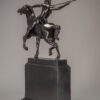
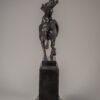
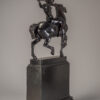
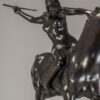
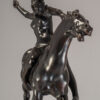
Whilst constructing the Villa Stuck in 1897, Stuck also first conceived Amazon, which represents one of his most famous sculptures as well as an enduring theme in his work. The subject of the Amazonian female warrior first appears in Stuck’s paintings around 1897, but he soon realised the dramatic potential of this theme with the present work.
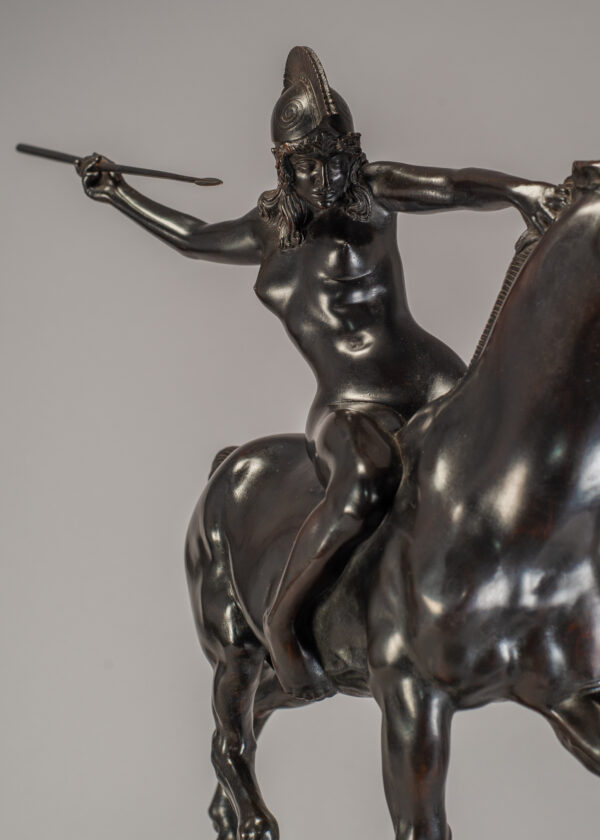
The carefully balanced composition, with its smooth, highly finished surface, is typical of Stuck’s neo-classical approach at this stage of his career, and the idealised female rider throwing a spear is another example of Stuck’s fascination with beautiful but deadly ‘femme fatales’.
The figure of the Amazon played a significant role in Ancient Greek and Roman mythology; in particular, Penthesilea and Camilla in Virgil’s Aeneid. Renowned for their prowess in battle, the Amazons were a fierce tribe of female warriors whose Queens battled against legendary heroic figures such as Achilles. Reflecting the complex relations between gender in antiquity, the enigmatic symbol of the Amazon has captivated and perplexed individuals for centuries, inspiring numerous artistic and theatrical interpretations such as Heinrich von Kleist’s 1808 tragedy Penthesilea and more modern representations such as the iconic comic book figure Wonder Woman.
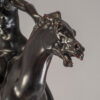
Von Stuck’s interpretation of the Amazon is distinctly linked to the act of battle, as her body is poised mid-throw, highlighting the strength of her torso and the particular muscularity of her limbs. The skill of the rider is emphasised through Von Stuck’s choice to depict her riding bareback, which draws attention to the connection between her and the horse. The rider’s face is set in an expression of grim determination, with her brow furrowed and her lips pressed together in concentration as she readies her arm to throw the spear over her right shoulder. Beneath her, the horse rears its head, emphasising the elegant curvature of its neck, which is juxtaposed against the wild facial features and bared teeth.
Through this powerful work, Von Stuck creates a fascinating dialogue between beauty and violence, elegance and power, and presentations of female identity.
This work is an especially early casting, inscribed FRANS STVCK, before he received the title Von in 1906. Other casts of this work are currently on display in the Leopold Museum, Vienna and are also housed in the collection of the Metropolitan Museum of Art, New York.

 Chinese
 English