

















爱德华·昂斯洛-福特
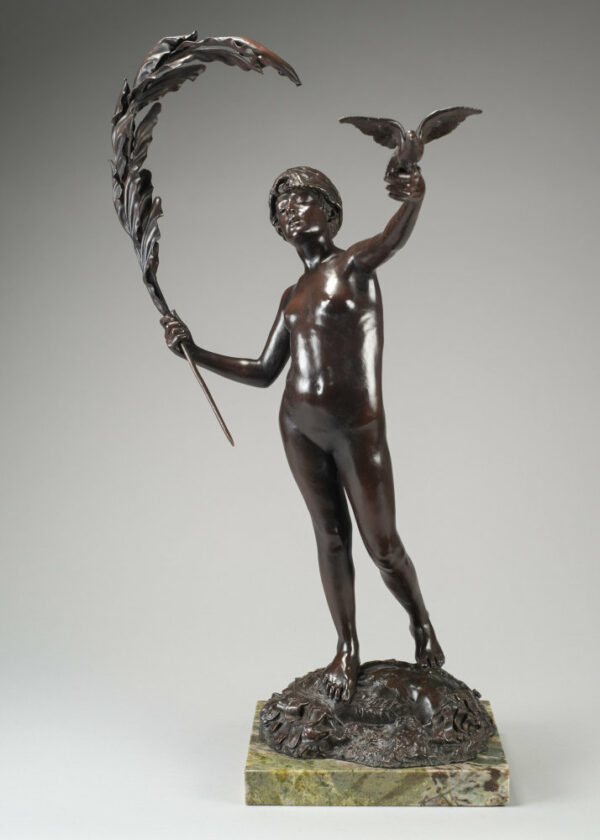
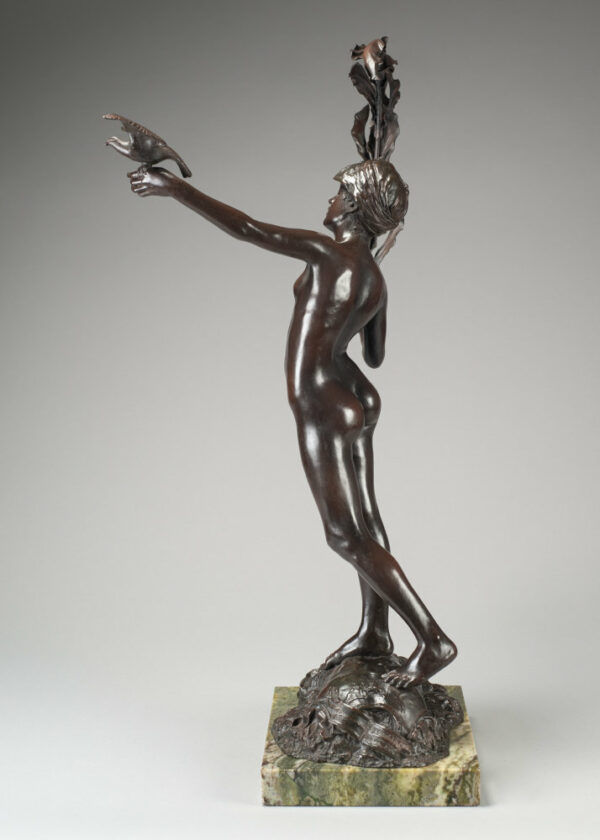
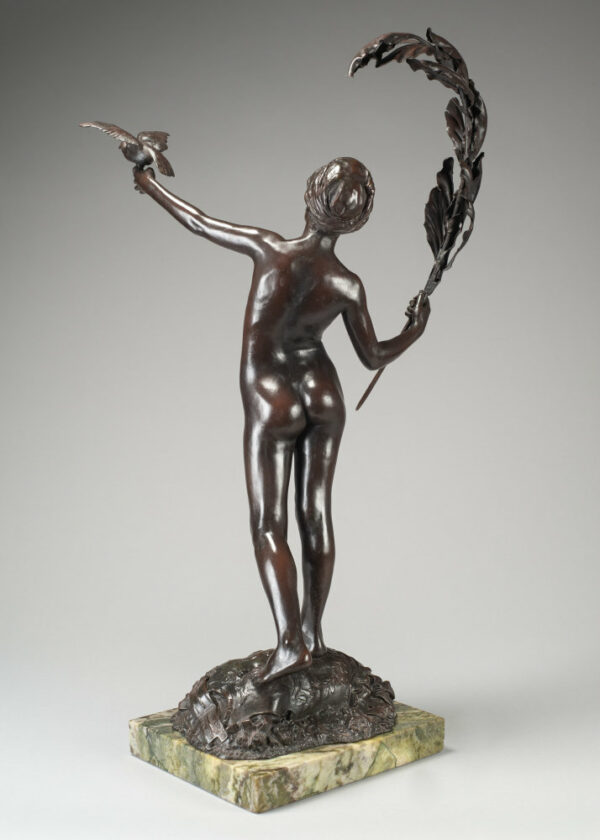
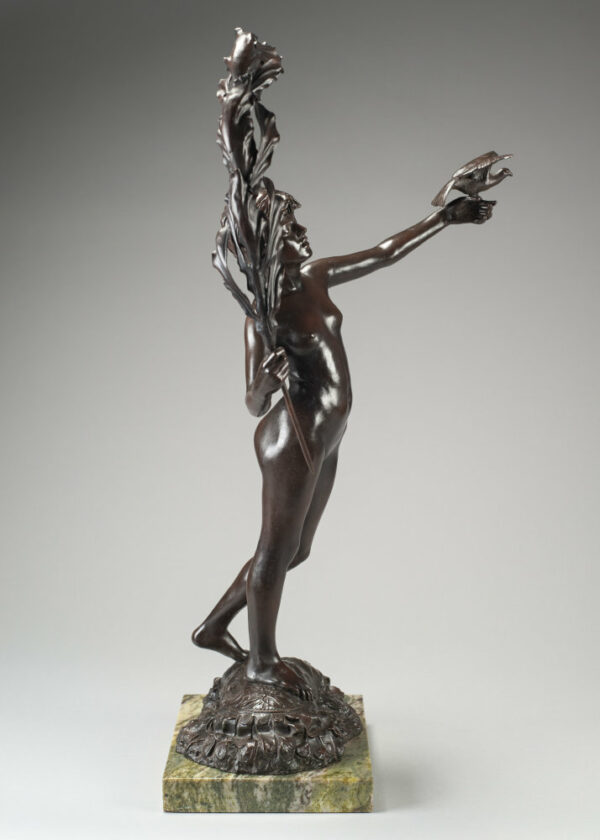
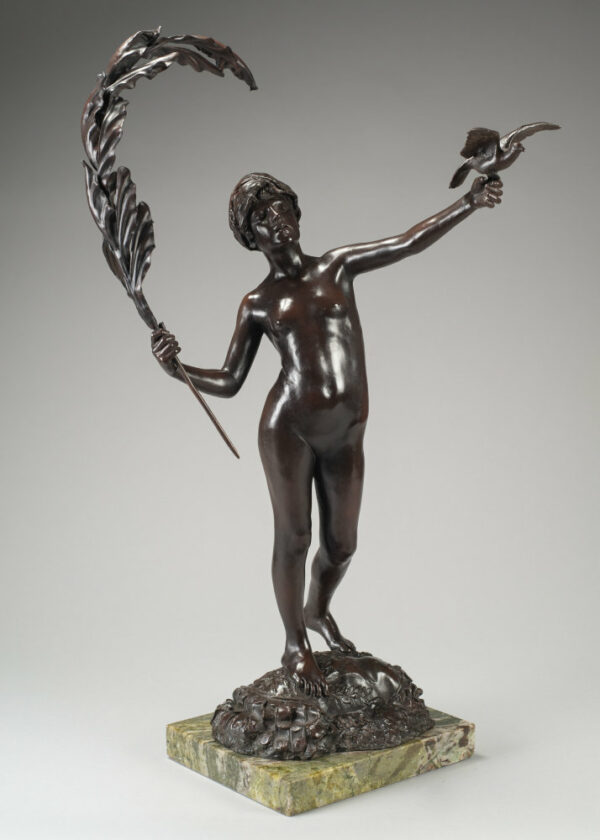
和平
签名:E. Onslow Ford 伦敦 1890 年
青铜色,深棕色光泽
高度:17.7 英寸(45 厘米)
构思于 1889 年,铸造于 1890 年左右
关于艺术品
爱德华·昂斯洛·福特 1852 年出生于伦敦。与许多同时代艺术家不同,这位艺术家最初在欧洲学习。18 岁时,他在安特卫普的皇家美术学院学习了一年绘画。后来,在他的一位教授迈克尔·瓦格穆勒的鼓励下,他前往慕尼黑美术学院学习雕塑。
Ford returned to London with his newly wed wife, Anne Gwendoline von Kreuzer, in 1874. Ten years later, the sculptor took a studio opposite Alfred Gilbert in Fulham, and they became firm friends, sharing their European experiences and experimenting with the cire perdue method of casting.
Having established his practice as a portrait sculptor, it was only in 1884 that Ford plead his allegiance to the New Sculpture movement. In that year, 莱纳斯 was exhibited at the Royal Academy together with Rodin’s Age of Bronze, which was first created in 1876 and made the fortunes of the master in Paris. As well as deriving inspiration from the French master’s composition, 莱纳斯 also demonstrated Ford’s ability to assimilate the contemporary English taste, imbuing his model with mythological references.
在 19 世纪 80 年代和 90 年代,福特在皇家艺术学院取得了许多成功。他的模型 蠢事 (1886), 跳舞 和 音乐 (1890), 歌手 (1889) 和平 (1891年) 掌声 (1893 年)为维多利亚晚期女性题材的描绘树立了新标准,是艺术家最杰出的作品之一。尤其是 歌手 和 掌声 (now at TATE Britain) are agreed to be two of the best examples of 19日-century mixed media sculpture.
The success Ford received at the Royal Academy attracted many commissions for monuments and public works. Amongst these are the monument to General Gordon (1890), which depicts the distinctive general proudly sat astride a camel. While the piece’s composition is particularly impressive, it is the Shelley Memorial (1892) at University College, Oxford, which has been considered by many Fords’ most exceptional memorial sculpture.
Part of his series of ideal nudes, Onslow-Ford’s full-size plaster of Peace was exhibited at the Royal Academy in 1887, where it was considered by the critic Edmund Gosse to be ‘the most delightful contribution to the exhibition’三年后,一件真人大小的青铜雕塑也亮相,该作品现收藏于利物浦沃克美术馆。
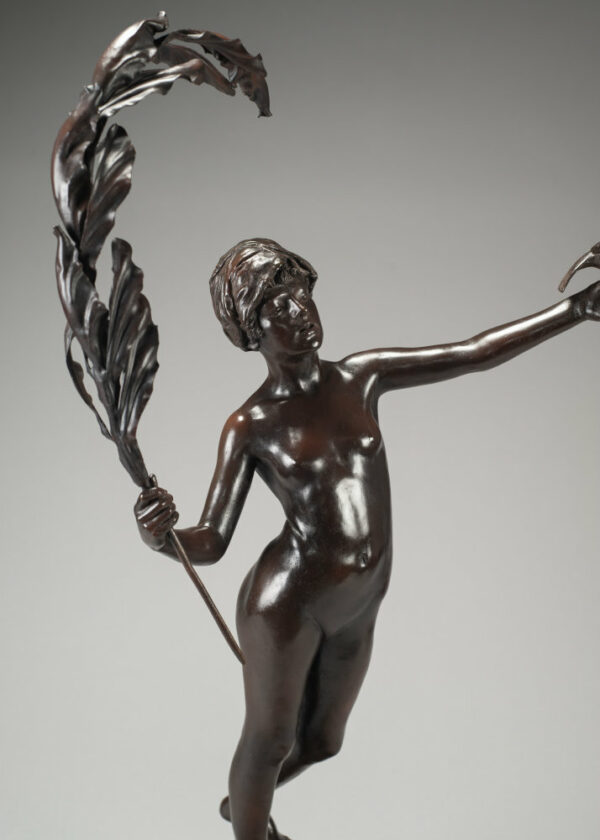
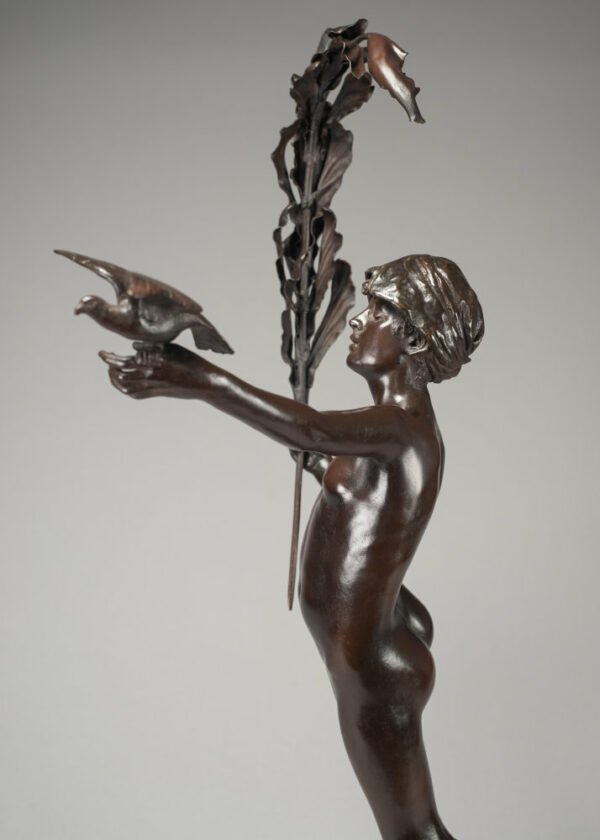
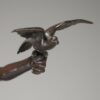
Peace is here depicted as a youthful female figure, following its traditional iconography, holding the palm branch of victory in her right hand and a dove in her left, standing on a piece of armour – the symbol of subdued war. Ford’s innovation does not relate to the subject’s iconographic attributes, but rather to its composition. Peace is represented as a lively young girl and captured mid-movement, devoid of the stiffness that would have characterised ancient or neoclassical depictions of the same subject.
和平 was one of Ford’s first ever works to be cast in bronze in a reduced scale for Arthur L. Collie. Collie’s business had opened in 1889, sharing his premises with the renowned fine art dealer Thomas Agnews at 39 Old Bond Street. His endeavour was fundamental for the spreading of New Sculpture aesthetics to a wide British public in the form of affordable, high-quality reductions of popular artists’ works.
On 31 May 1890, an article by an anonymous contributor appeared on the London Saturday Review, addressing the novelty of Arthur Collie’s endeavour. In the article, the author states how ‘Mr Onlsow Ford’s elegant and spirited work specially lends itself to reproduction in miniature. No specimen in Mr Collie’s gallery is more delightful than the Peace, a little nude female figure in a caressing and conciliating attitude, waving a palm branch’. Five years later, Gosse’s article in Magazine of Art, entitled ‘Sculpture in the House’, Peace was illustrated in domestic settings alongside statuettes by Frederic Leighton and Hamo Thornycroft, demonstrating the success of Collie’s undertaking and the widespread popularity enjoyed by the ‘New’ sculptors.


 Chinese
 English