

Ludwig Cauer
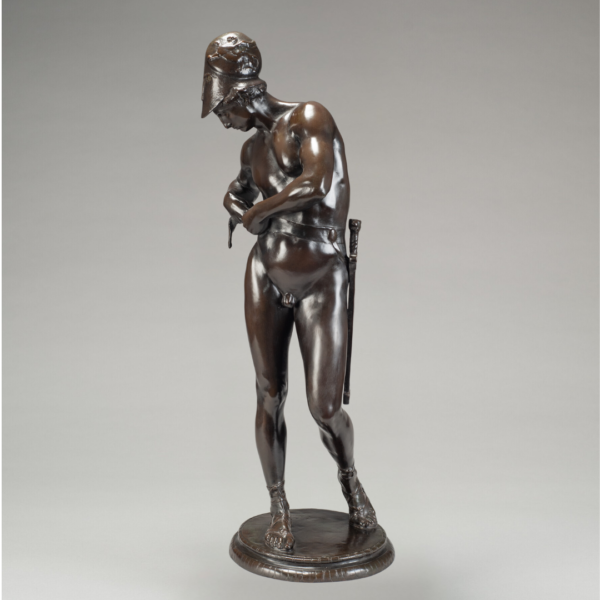
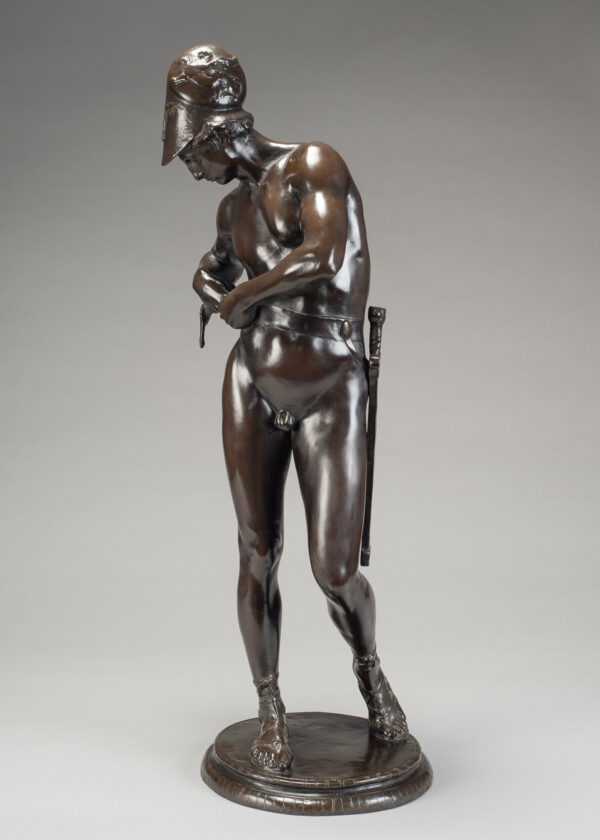
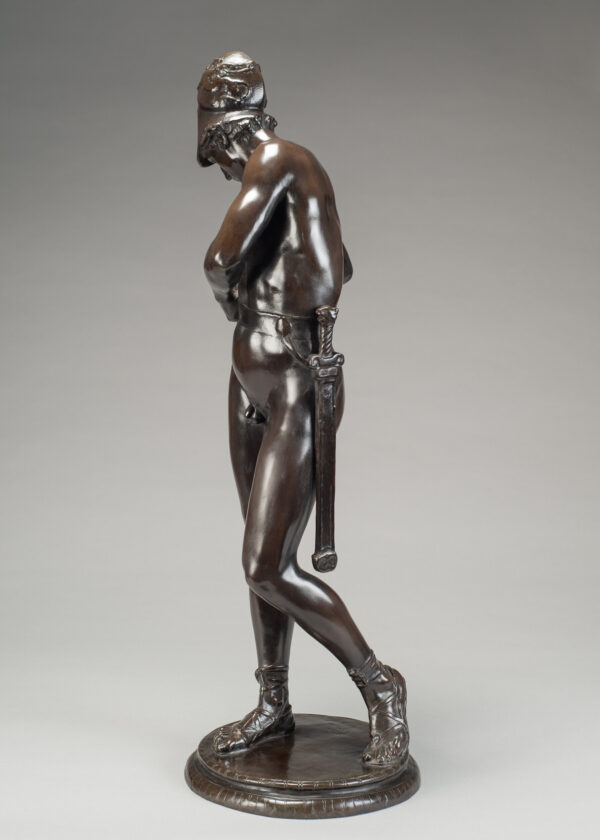
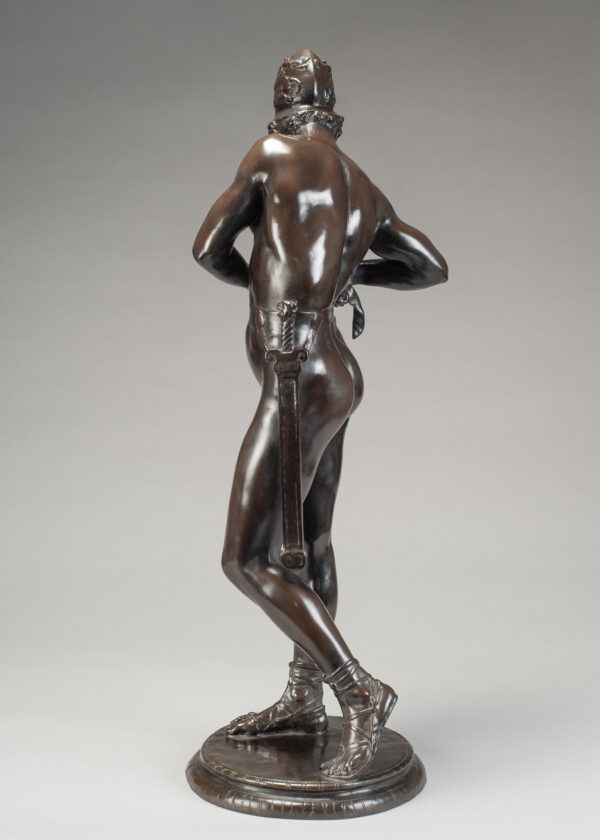
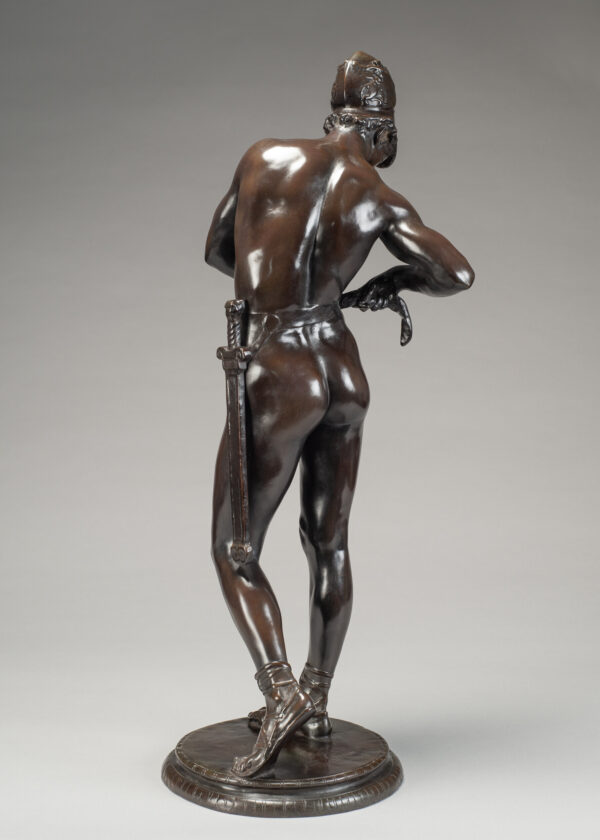
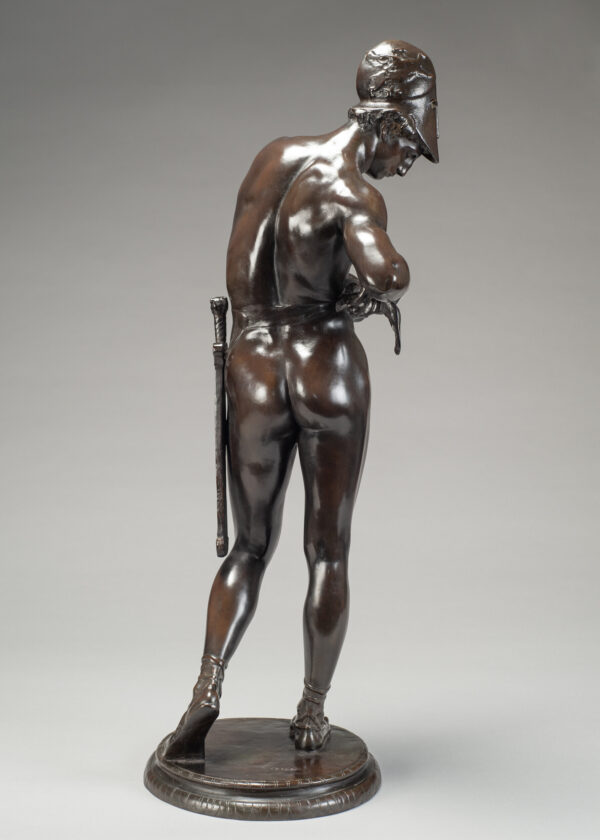
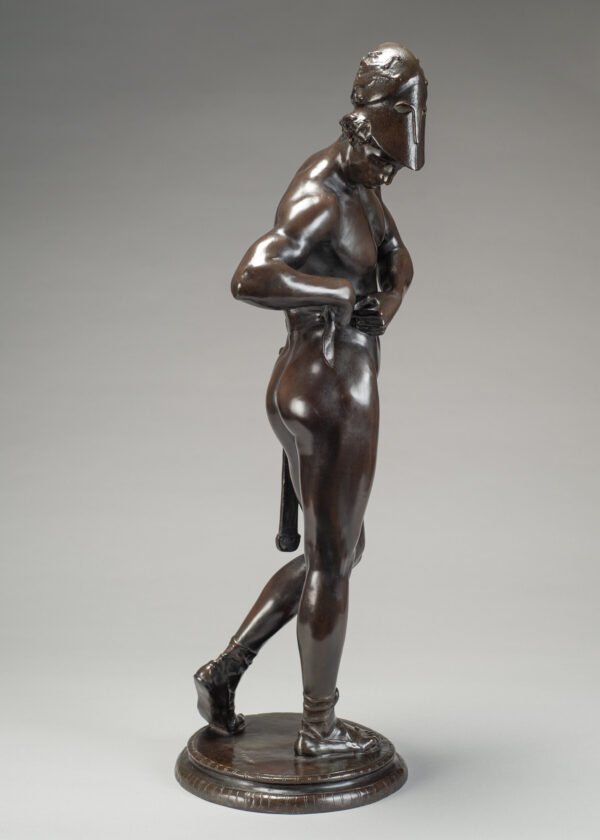
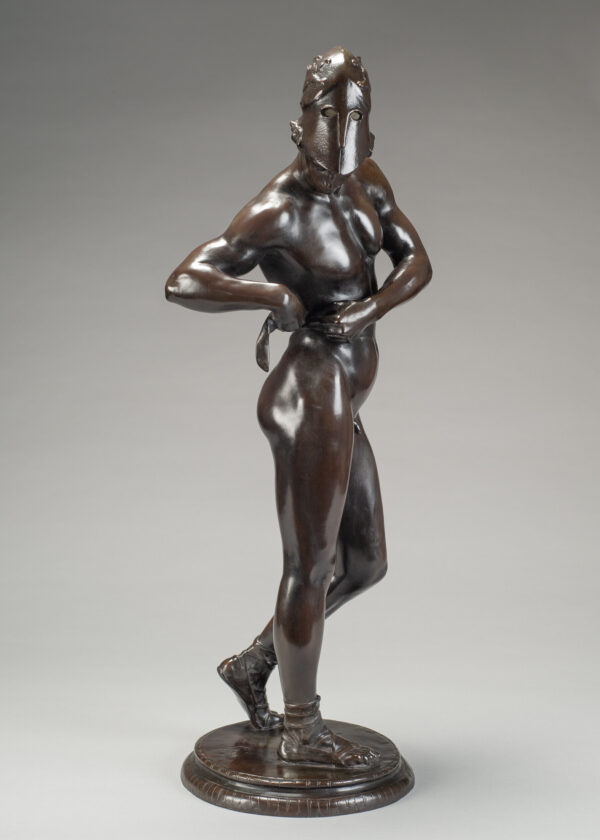
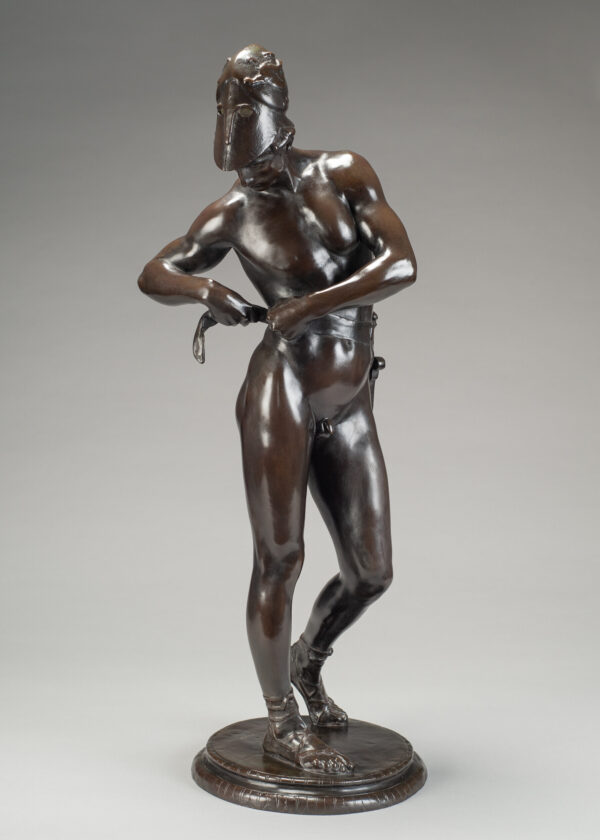
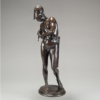
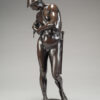
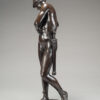
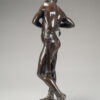
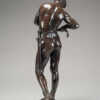
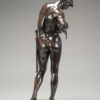
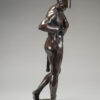
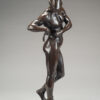
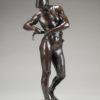
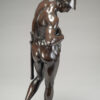
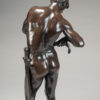
Telemachus, Son of Odysseus, Binding His Sword
SOLD
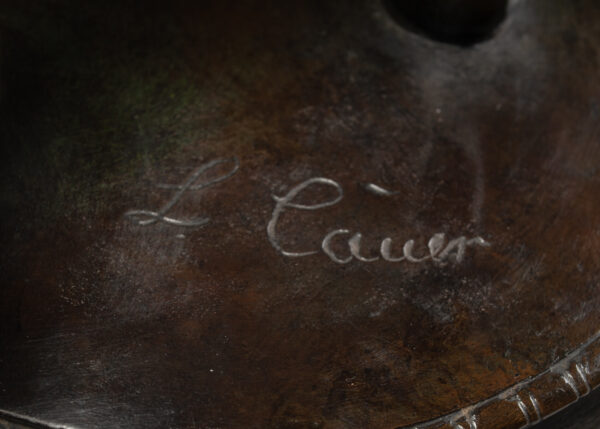
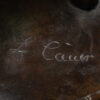
Signed L Cauer
Bronze, rich mid and dark brown patination
Height: 26″ (67 cm)
Conceived 1888 and cast circa 1890
ABOUT THE ARTWORK
Born in Kreuznach on the 28th May 1866, Cauer initially studied under his father Carl, the renowned portraitist and figurative sculptor. He continued his studies in Berlin from 1882–1885 under Reinhold Begas and Albert Wolff before travelling to Rome and Florence in 1889 and London from 1891 to 1893. He eventually settled in Berlin after spending a period of time studying in Paris where he received an honourable mention at the Salon of 1895 and a third-class medal at the Exposition Universelle with the sculpture Telemachus.
It was during his time in London that Cauer first exhibited Telemachus. Conceived in 1888, it appeared at the Royal Academy in 1892 along with his renowned and monumental work, Durst-Gruppe, which caused a minor sensation due to its relentless naturalism and vigorous subject matter.
 Ludwig Cauer, Durst-Gruppe, London 1892 Bronze, Priegerpromenade, Bad Kreuznach
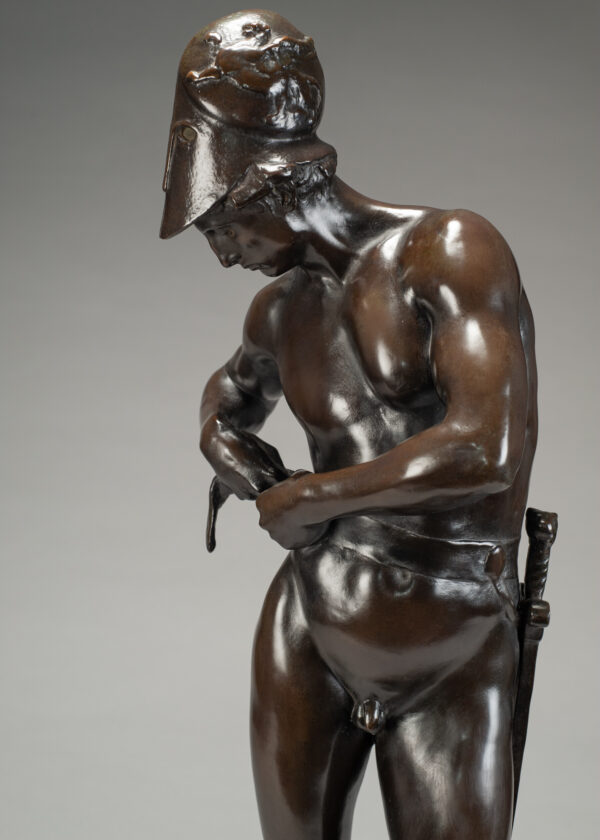
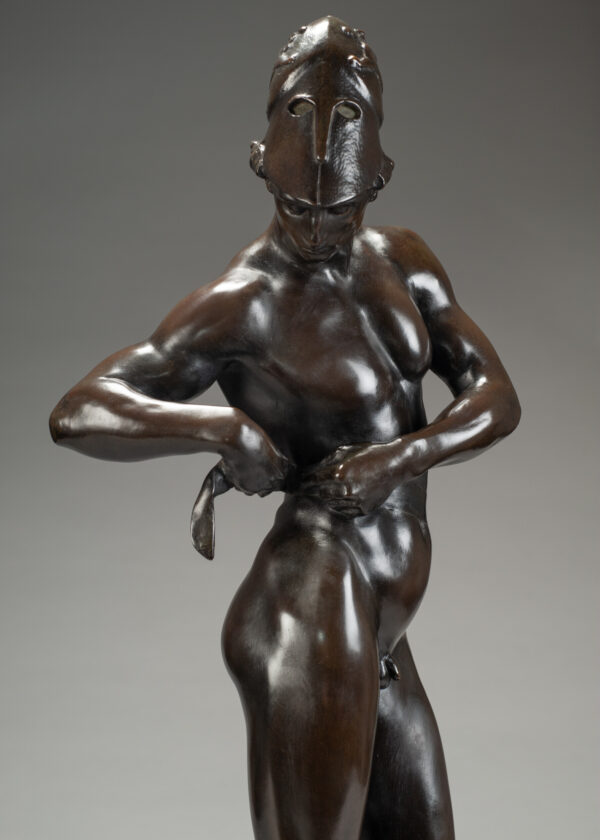
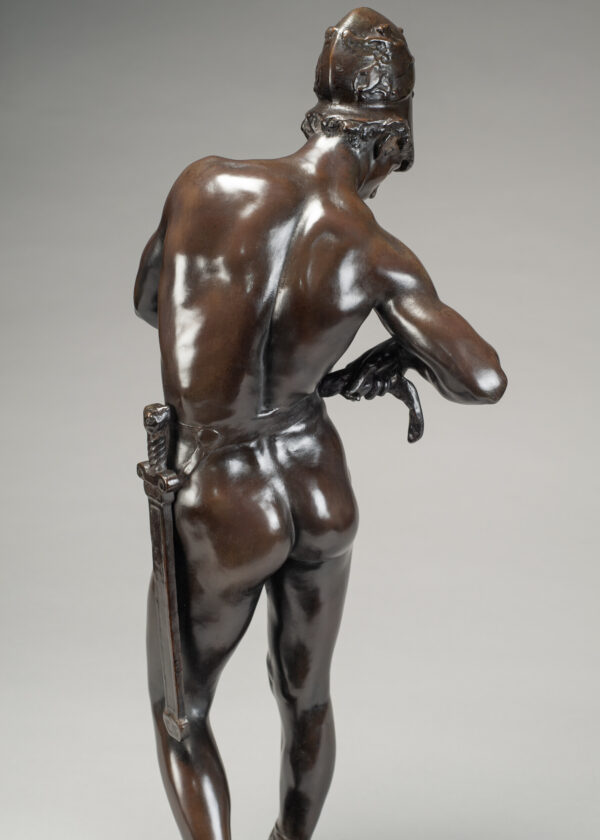
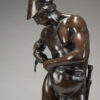
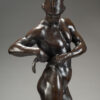
The present bronze depicts the young Telemachus, son of Odysseus, preparing to fight against the suitors who have besieged his father’s house, holding his mother against her will. He twists and flexes his body to fasten his sword belt and tilts his head forward to reveal a magnificent and threatening Corinthian-style helmet. This helmet, when worn, disguised Telemachus from the suitors, prior to confronting them to free his mother and reunite her with Odysseus.
Around the time that Cauer conceived the sculpture, the prominent German archaeologist Heinrich Schliemann would have been exhibiting the results of his excavation in Troy (1864–79). The excavation included many ancient Greek artefacts including helmets and no doubt would have inspired many artists of the period.
The twisting, elegant form of the young man is reminiscent of Alfred Gilbert’s famous depiction of Perseus Arming Himself for Battle. There can be little doubt that Cauer experienced the same influence of the great bronzes of the Renaissance during his time in Rome and Florence. He has combined these influences with his own style, handling the subject with surprising virtuosity.
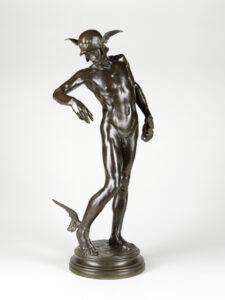 Perseus Arming Himself for Battle, Sir Alfred Gilbert
It is remarkable how few casts of Telemachus there are despite its prominence and popularity. Apart from the cast housed in the collection of the Berlin National Gallery and a further cast in a private collection in Hanover, the present example is the third and only other known cast.


 English
  Chinese