







Boleslas Biegas
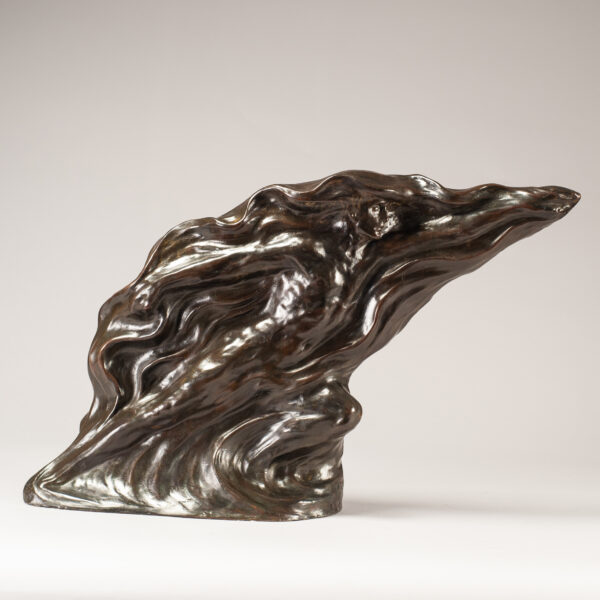
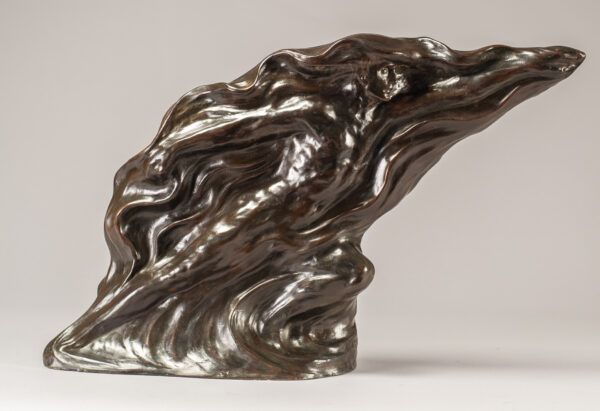
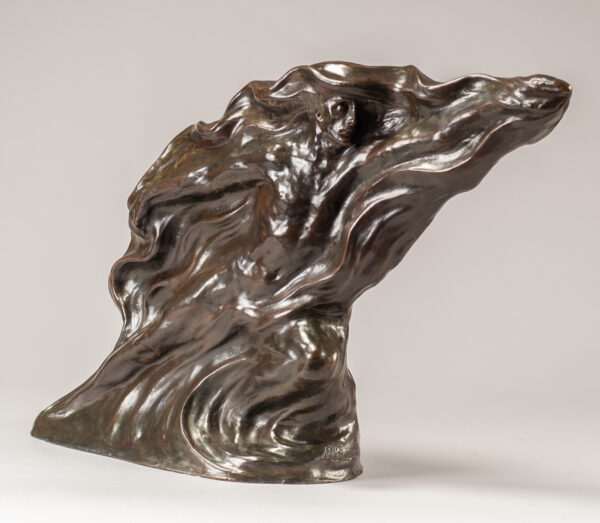
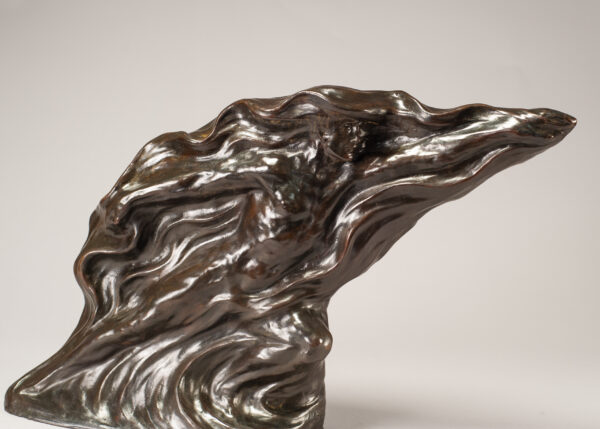
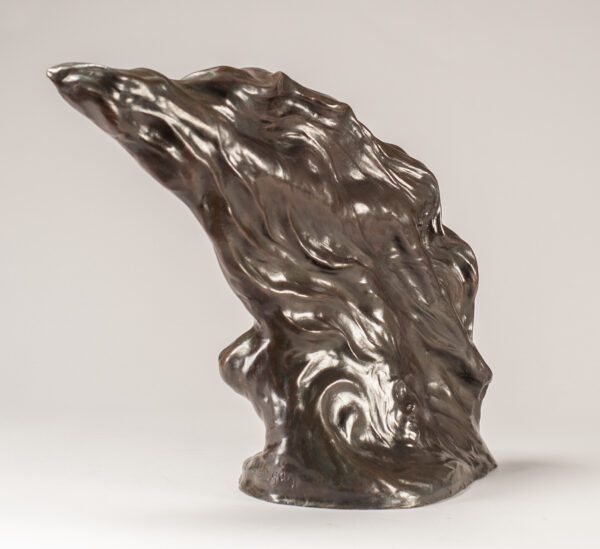
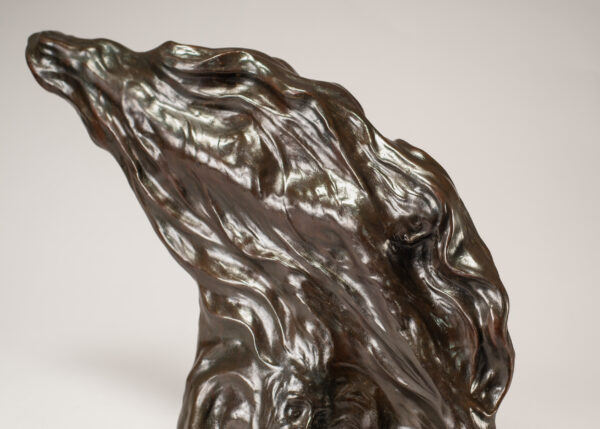
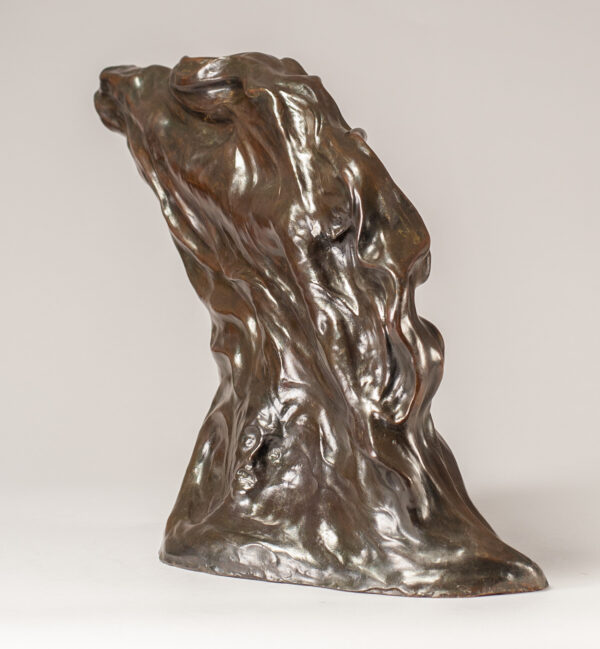
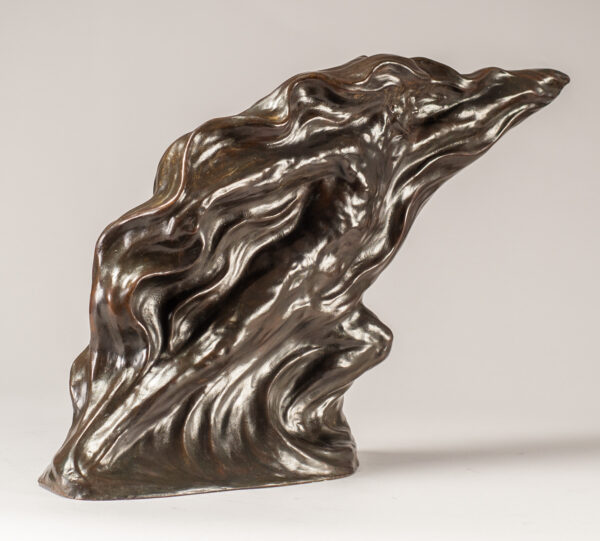
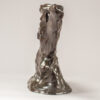
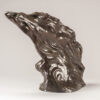
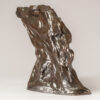
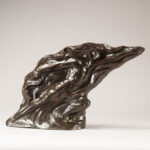
The Wave
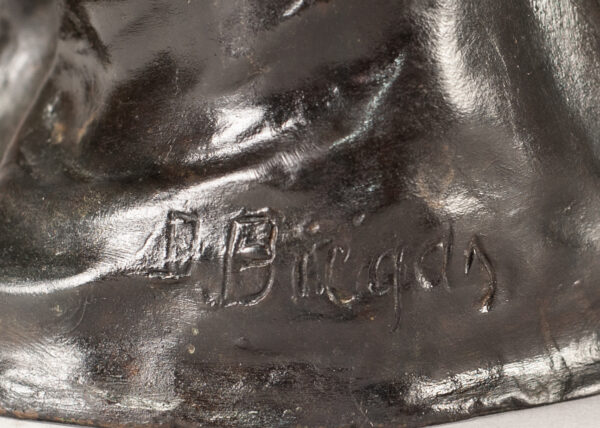
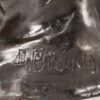
Signed B. Biegas
深棕色铜锈
高度:15 英寸(39 厘米)
Conceived and cast circa 1905/1907
Exhibited Biegas Exhibition, Galerie des Artistes Modern, Paris, 23 March-4th April 1908 ref. No 38 La Vague, bronze
Certificate of authenticity by the Comité Biegas available
关于艺术品
Boleslas Biegas was born in Koziczyn, Poland, and studied at the Fine Arts School of Krakow until 1901, when he left, no longer able to tolerate the restraints of academic training. He moved to Paris in 1902, where he was warmly received by the Symbolists, who were involved with the journal La Plume. Having dedicated an issue to Auguste Rodin in 1900, La Plume printed a special edition dedicated to Biegas and helped organize an exhibition of his works. This exhibition was considerably more successful than his attempts to exhibit at the Paris Salon, where his works were removed from public view by order of the local police chief. This action was perhaps not unjustified, as he had depicted heads of state and political figures in the form of worms.
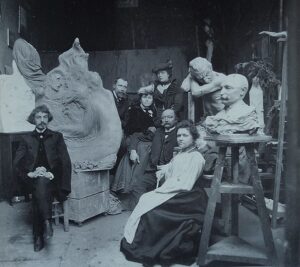 Boleslaw Biegas, Richard Wagner, Bronze 1904, Montreal Museum of Art, Canada
Biegas was a multi-talented artist, excelling in sculpture, painting, and literature. His relocation to Paris marked a turning point in his career, leading to significant success. Over the course of his career, he held 16 solo exhibitions, primarily in Paris but also in London, Kiev, and Saint-Petersburg. The most notable of these was his 1908 showcase at the Galerie des Artistes Modernes in Paris, which featured 81 works, including both sculptures and paintings. Beyond solo exhibitions, his art was frequently displayed in group presentations and prestigious salons, such as the Paris Salon des Indépendants, Salon de la Société Nationale des Beaux-Arts, and the Vienna Exposition de la Secession.
Biegas benefited greatly from the patronage of Baron Henryk and Baroness Jadwiga Trütschell, who supported him as if he were their own son until their deaths. This patronage provided him with the financial freedom to create without constraints and to produce bronze works for exhibitions. Among his most celebrated pieces in the early stages of his career were his stylized portraits of prominent literary and musical figures, such as Wagner (1904) and Beethoven (1904), which were exhibited at the 20th Exposition de La Secession Viennoise. Recognized as a trailblazer, Biegas was seen as heralding a new artistic direction that challenged the prevailing sculptural norms of the era. In Paris, he associated with influential contemporaries, including the rising star Picasso and the already renowned Rodin. At the height of his career, Biegas enjoyed international acclaim, with exhibitions across the globe and representation in galleries in London, Washington, and Paris.
 Boleslaw Biegas, Richard Wagner, Bronze 1904, Montreal Museum of Art, Canada
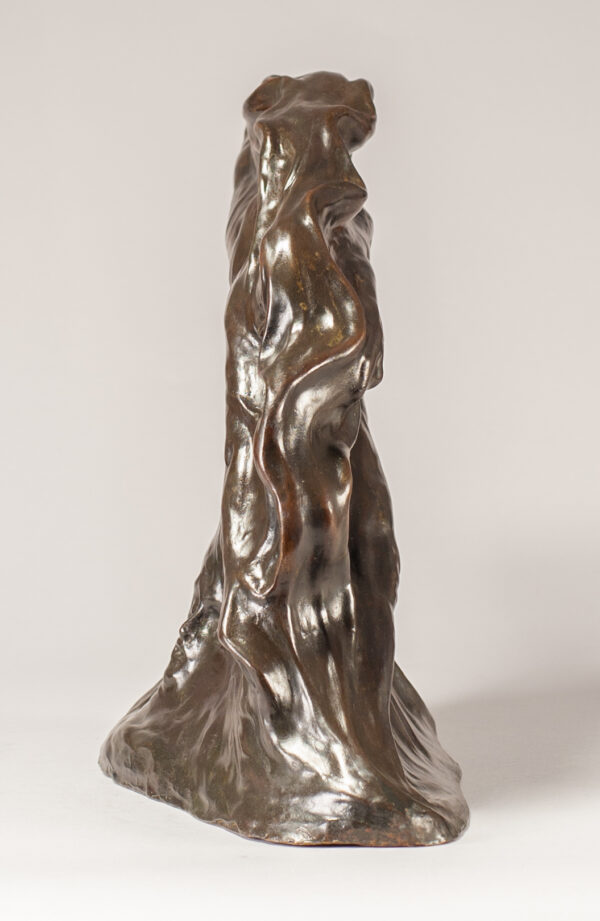
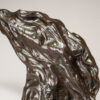
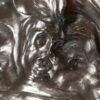
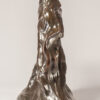
Stylistically, Biegas was initially aligned with the Symbolist movement before transitioning toward Spherism, a style that emphasized circular movement and geometric forms. During his Symbolist phase, which marked his most innovative period, his sculptural works were distinguished by their flowing, wave-like shapes. The current sculpture La Vague stands as a quintessential example of this style, showcasing the artistic innovation that established Biegas as a leading figure in the avant-garde. The sculpture’s central figure captivates the viewer with its striking pose, simultaneously appearing as part of the crashing wave and as a distinct entity. The figure’s left arm extends forward, gracefully enveloped by the wave’s powerful surge. The sculpture’s sweeping, fluid form masterfully captures the dynamic motion of stormy waters, evoking the natural elegance and rhythmic movement of the sea. The composition continues on the reverse, depicting a figure in a diving motion, utilizing the same compositional lines as the figure on the front. A third figure emerges on the bottom left of the reverse, its face seemingly rising from the water’s ripples. As a whole, La Vague has an imposing composition mystified with symbolic visual language.
La Vague is first recorded as part of the artist’s 1908 solo exhibition at the Galerie des Artistes Modernes. This exhibition was the largest of his career at the time, featuring a total of 81 artworks, 51 of which were sculptures. Based on current research, it is believed that no other lifetime casts of La Vague were ever made, making this sculpture a pivotal piece in Biegas’ oeuvre. It not only embodies the innovative style for which he became renowned but was also showcased at what is arguably the most significant exhibition of his career. At the time, sculptures were not typically produced in limited editions but were instead created in response to demand. In the experience of Bowman Sculpture, this is a rare—and possibly unique—lifetime cast. The rarity of this work is further endorsed by the Certification of the Comité Biegas, researched by Xavier Deryng, which includes the work in the catalogue raisonné. A copy of this certificate will accompany the sculpture.
The artist established a museum dedicated to his work in 1950 in Paris, known as the Musée Boleslas Biegas. Located within the Polish Library in Paris, the museum remains operational today. Additionally, several other prominent institutions hold works by the artist, including the Montreal Museum of Fine Arts, the Warsaw National Museum, and the Musée d’Orsay in Paris

 Chinese
 English